
Pablo Picasso Scène d'intérieur: l'atelier (1963) | Original Hand-Signed Etching for Sale
Is seeing really believing?
For centuries Western artists had been judged by how closely they could imitate reality, but what if art could see beyond sight itself? What if it could go further?
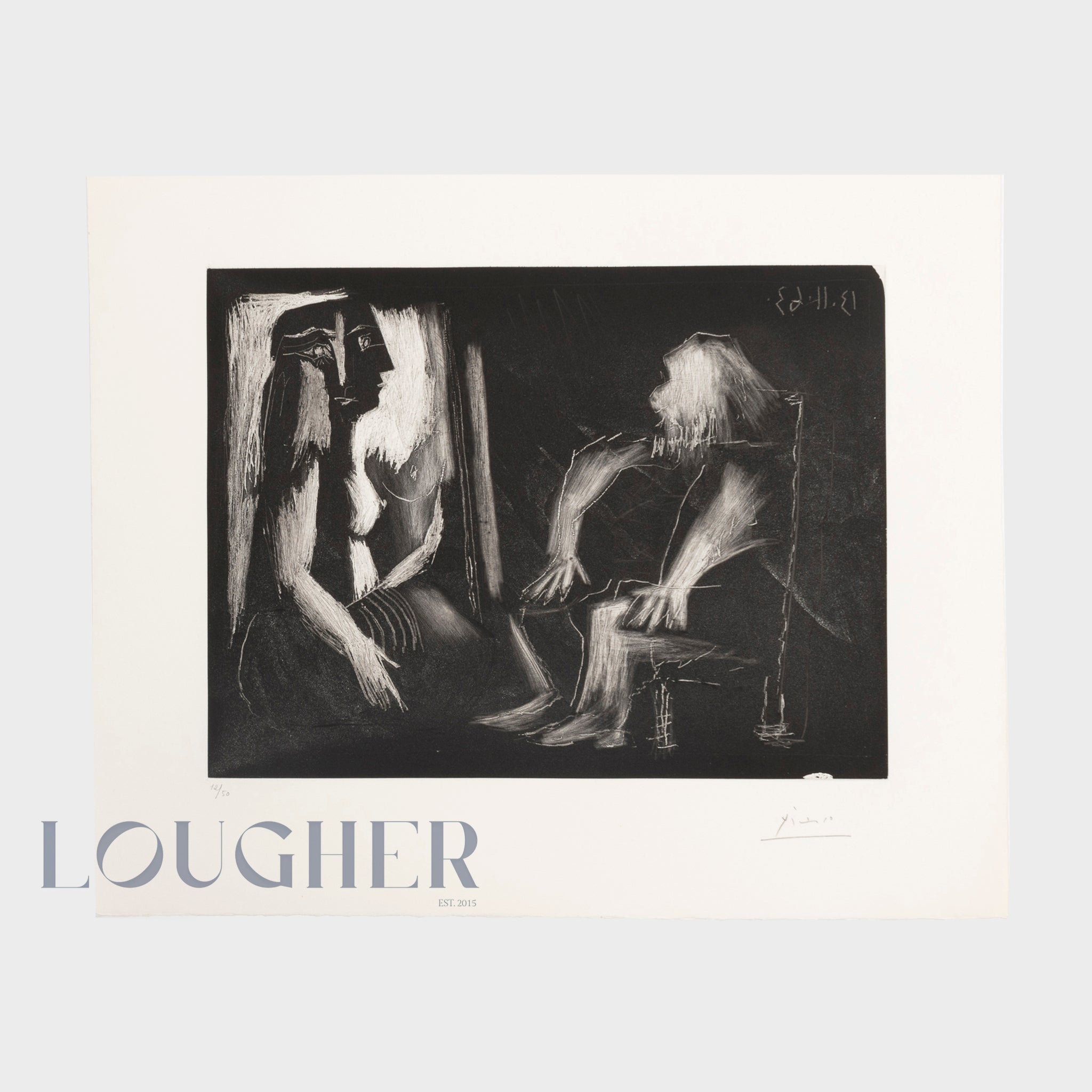
This original hand-signed Picasso etching, Scène d’intérieur: l’atelier (1963) (Bloch 1128; Baer 1125), is one of the most compelling prints from the artist’s celebrated Artist and Model series and an excellent example of the museum-quality Picasso prints sought by collectors worldwide.
Picasso's career was based on this premise. It obsessed him, and it found some of its greatest expression in the series of Artist and Model images he produced from 1963-65. This original, hand-signed etching from 1963 is an excellent example. A complex, quintessentially Picassian image, it poses several questions:
Who creates meaning, the artist or the subject?
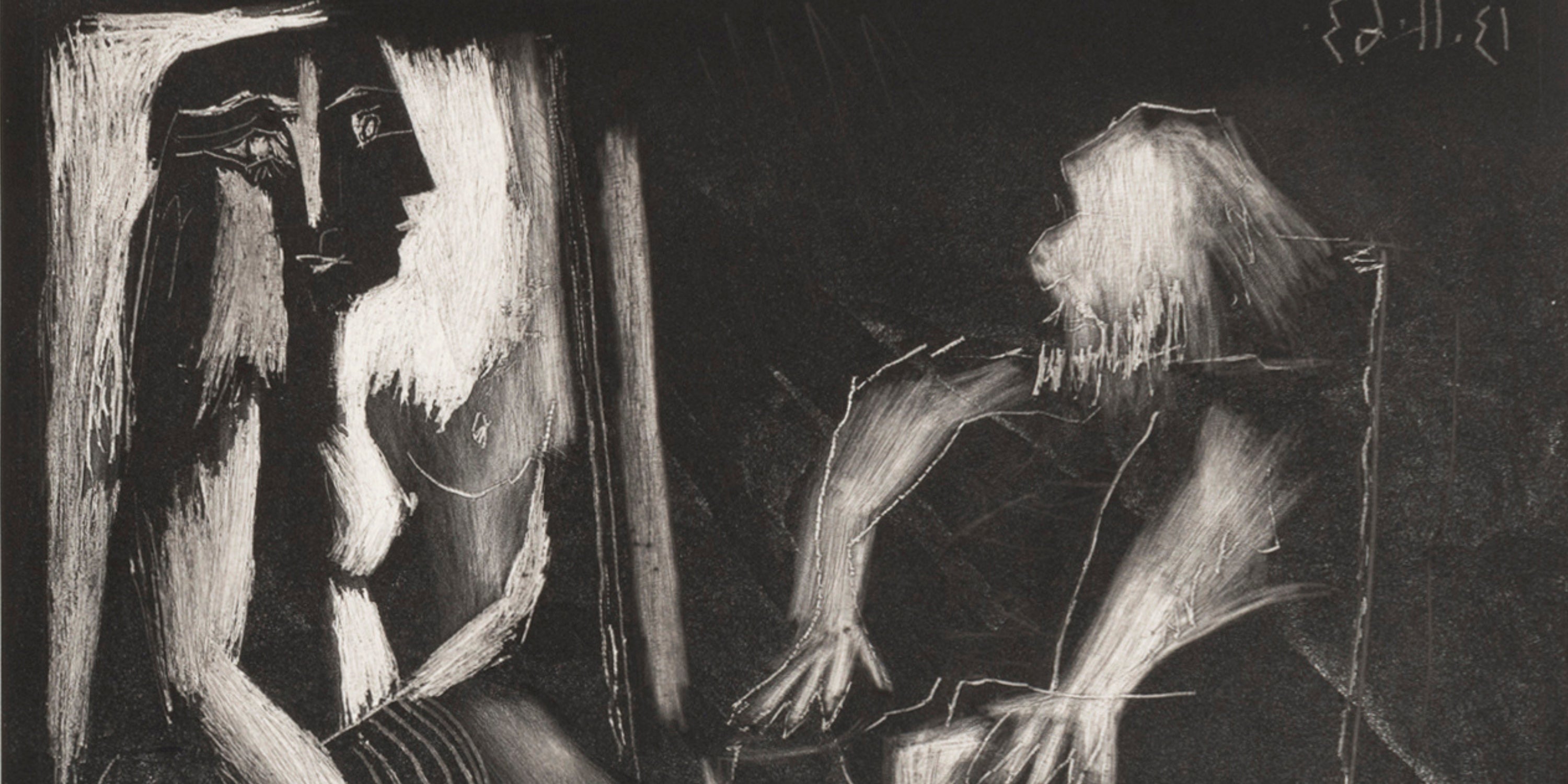
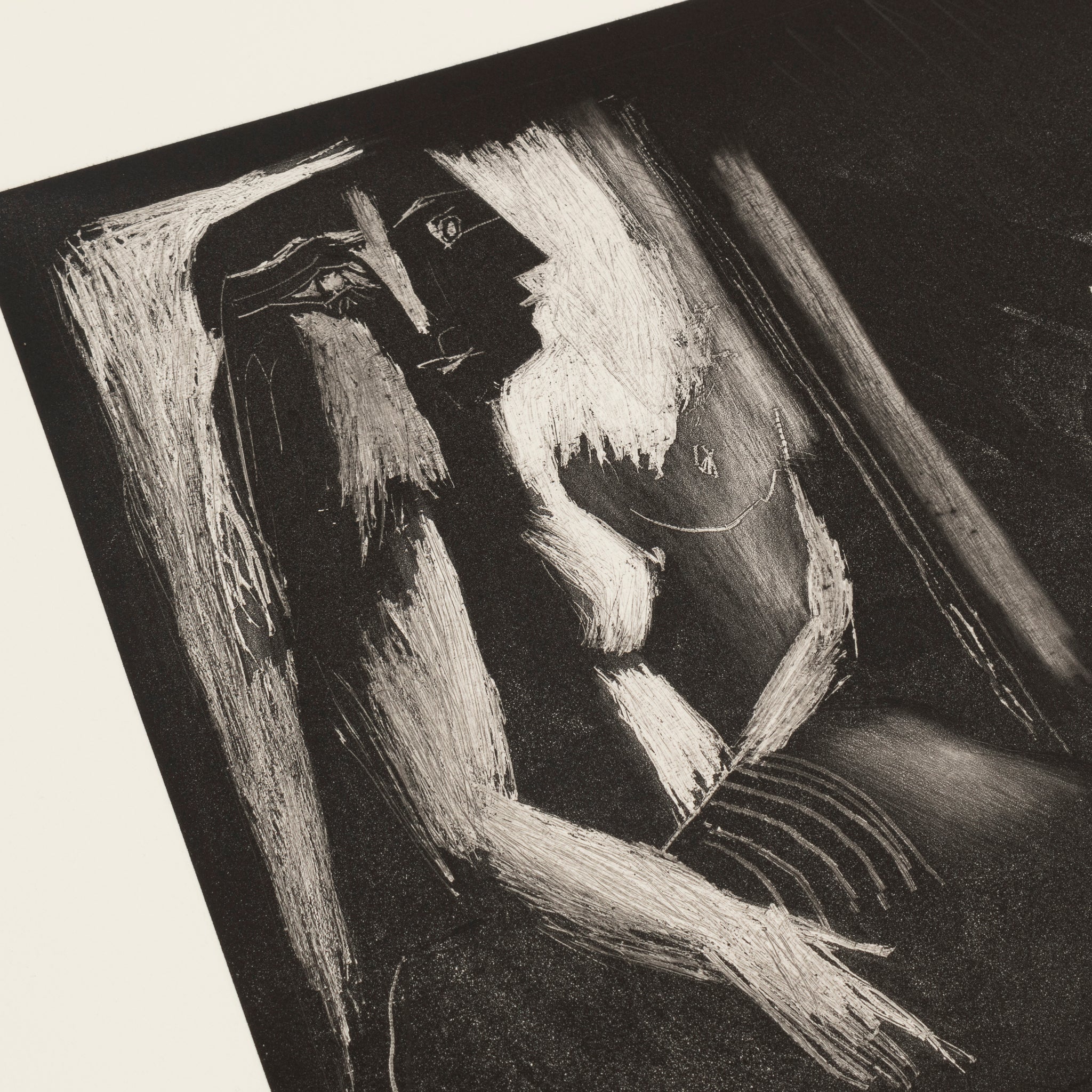
Traditionally, the model was seen as the source of the image. The artist's role was to accurately record the person sitting before them. Picasso disagreed. This etching isn't simply about the model but about Picasso's experience of seeing her, thinking about her and transforming her into art. In this image, the model exists simultaneously as a real presence and as an idea transformed through Picasso's imagination. She may be a real woman looking back at the painter, or a painted figure reflecting her maker.
Can art reveal a deeper truth than direct observation?
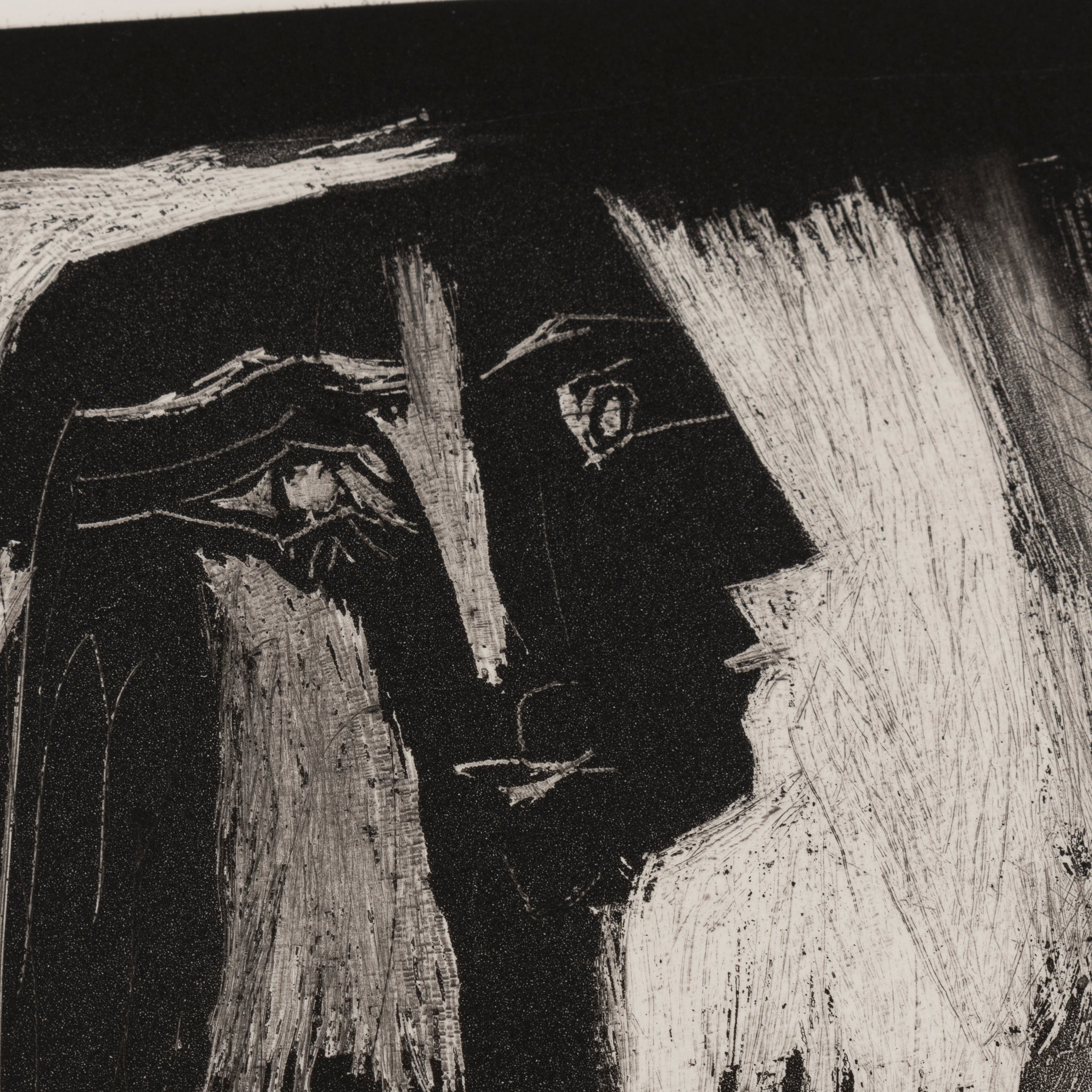
One of Picasso's greatest innovations was his willingness to alter an etching plate repeatedly and aggressively. Rather than producing a single finished image, he often reworked the same plate over many stages, adding or transforming figures, layering and scraping back. Each stage leaves a record of the artist's thought process buried within the image. This etching goes beyond mere observation and maps out Picasso's mental experience of the subject.
How are love, desire, and creativity connected?
Most of Picasso's images feature his muses and lovers. In this image, the artist is not simply observing the model. He is emotionally engaged. The act of looking becomes an act of desire, and that desire fuels the creative process.
What remains of the artist as time passes?
When he made this etching, Picasso was consciously pitting himself against the great masters Delacroix, Velázquez and Rembrandt. By revisiting the traditional studio subject, Picasso paid tribute to his heroes while also taking his place among them. In this image, the artist is a seventeenth century archetype, a meditation on the enduring role of the artist across time.
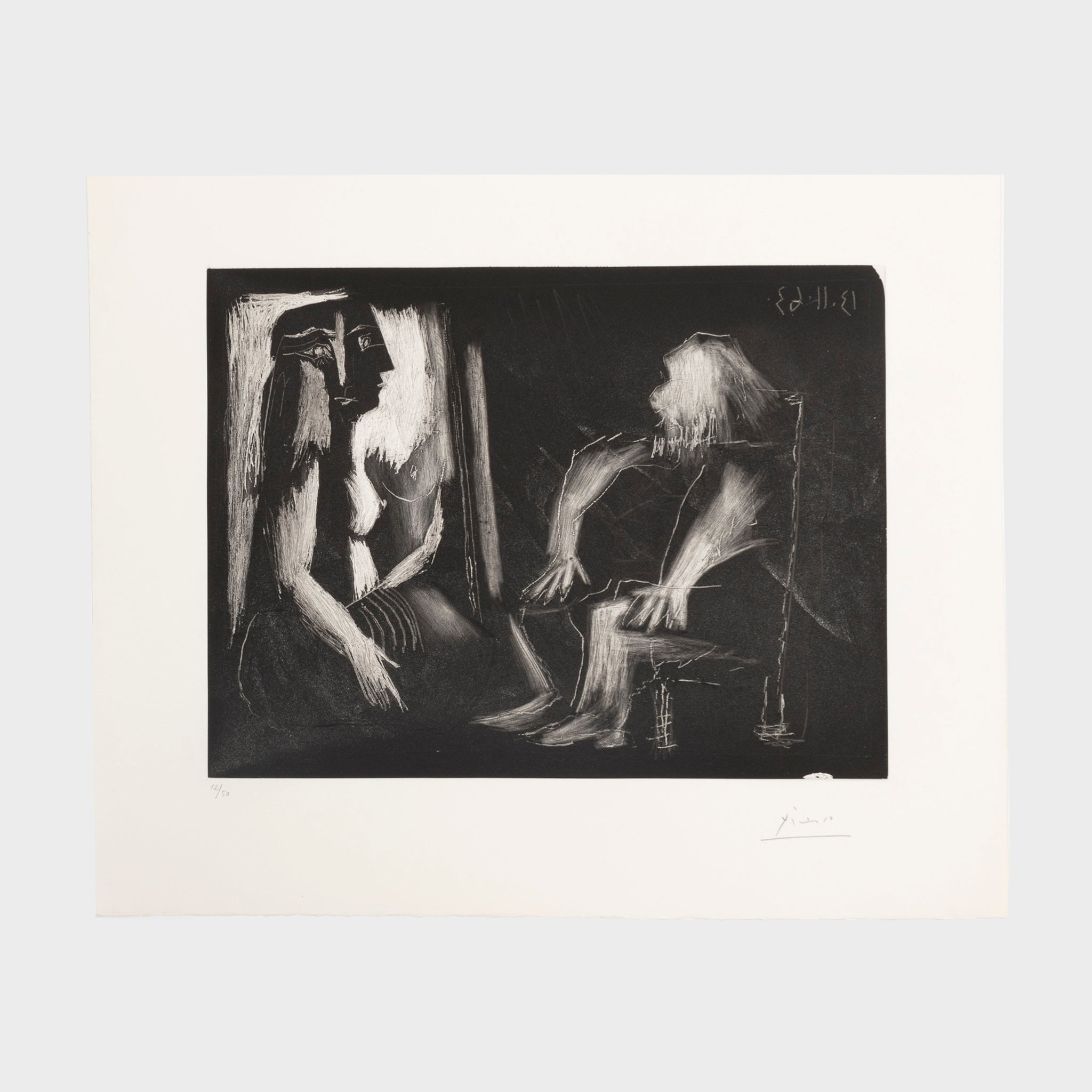
Pablo Picasso's Scène d'intérieur: l'atelier (1963)
Quite apart from its conceptual depth, this etching is a testament to the incredible technical mastery that defines Picasso’s work as a printmaker.
Taking an image beyond the purely visual is all very well, but it demands astonishing skill beyond the reach of most printers. Even the most apparently effortless line depended upon mind boggling technical discipline behind the scenes.
In the brothers Piero and Aldo Crommelynck, Picasso found kindred spirits. The sons of a Belgian playwright, they had swiftly made a name for themselves and were sought out by the greatest artists of the day. In 1963 they relocated from Paris to an old bakery within walking distance of Picasso’s home in the South of France, where they would serve as his exclusive printers until his death in 1973.
The Crommelyncks were true masters of intaglio printing, and receptive to Picasso’s drive to expand the language of printmaking. Where other printers might have advised caution, Piero and Aldo were fixers who eliminated the difficult technical problems posed by Picasso’s methods, freeing him to experiment without worrying about conventional limitations. This etching’s effortless combination of delicate linear drawing, painterly tonal passages and energetic scraping is a perfect example.
Picasso’s etchings are a dazzling aspect of his output, and an arena in which he was able to give free reign to his imagination. Scène d'intérieur: l'atelier is a splendid example of the innovation and pleasure in image-making that defines his greatest work.
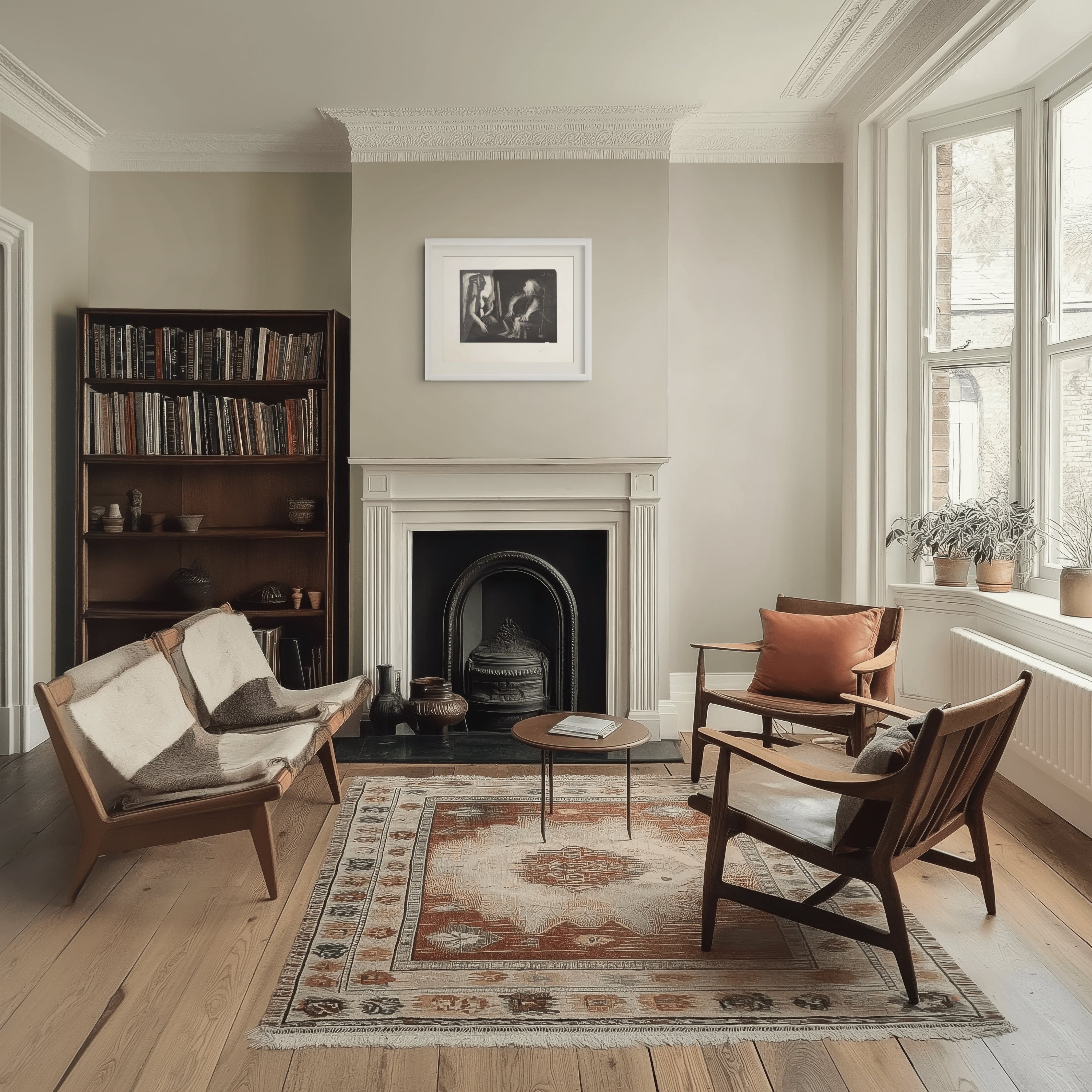
Artwork Details:
"Scène d'intérieur: l'atelier" (1963) (Bloch 1128; Baer 1125.II.B.b.1)
Pablo Picasso
1963
Aquatint on BFK Rives paper
Edition of 50
45 x 55.5 cm
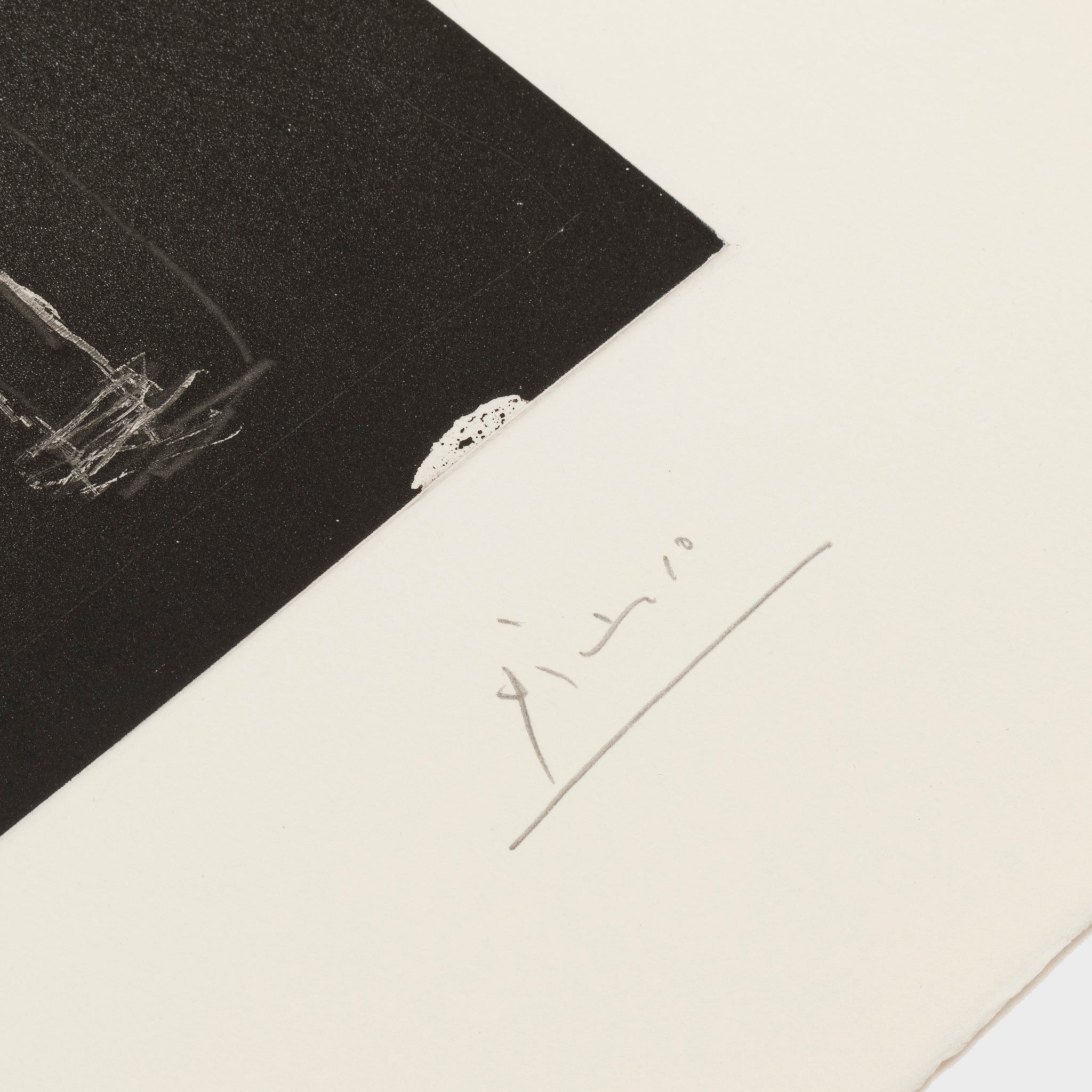
Signed and numbered on the front
Why Collect Scène d’intérieur: l’atelier (1963)?
Among Picasso’s late graphic works, Scène d’intérieur: l’atelier occupies a particularly compelling position. Created in 1963, it belongs to the celebrated Artist and Model series, a body of work that many scholars regard as one of the artist’s most personal and intellectually ambitious late achievements.
A museum-quality example from the Artist and Model series
For collectors, the print offers several qualities that are rarely found together in a single work:
• A major late Picasso subject: the relationship between the artist, the model and the act of creation itself.
• Exceptional technical sophistication: combining delicate etched line, tonal richness and energetic reworking of the plate.
• Direct collaboration with the Crommelynck brothers: Picasso’s legendary printers and essential partners during the final decade of his career.
• Clear catalogue raisonné references: Bloch 1128 and Baer 1125, providing the scholarly documentation that serious collectors expect.
• Hand-signed authenticity: an important consideration in the market for original Picasso prints.
The appeal of late Picasso prints
Unlike decorative reproductions or later restrikes, this is an original hand-signed Picasso etching, printed during the artist’s lifetime and fully documented in the standard reference works. It therefore offers the combination of historical significance, rarity and market credibility that underpins the strongest examples in the Picasso print market.
For a collector seeking a work that embodies both Picasso’s creative imagination and his mastery of printmaking, Scène d’intérieur: l’atelier is an unusually persuasive choice.
Market Context: Picasso Prints and the Artist & Model Series
Why Picasso prints remain a blue-chip collecting category
The market for Picasso prints has proved remarkably resilient over several decades and remains one of the most established sectors of the international print market. Original etchings, lithographs and linocuts by Picasso continue to attract collectors ranging from first-time buyers to major institutions.
The importance of Bloch and Baer catalogue references
A significant factor in this strength is the depth of scholarly research surrounding Picasso’s graphic work. The catalogues raisonnés compiled by Georges Bloch and Brigitte Baer document printing histories, states, editions and technical details with exceptional precision. Works that can be confidently identified by their Bloch and Baer numbers are generally viewed with greater confidence by collectors, dealers and auction houses.
The 1963–65 Artist and Model series is particularly prized because it represents Picasso in full late maturity. Rather than looking back nostalgically, he used the traditional studio theme to engage in a dialogue with Rembrandt, Velázquez and Delacroix, while simultaneously reasserting his own place within that lineage. Prints from this series are often characterised by:
• complex psychological interplay between artist and model
• bold experimentation with the etching plate
• rich tonal contrasts
• sense of spontaneity despite their technical complexity
As demand for original Picasso etchings has grown, collectors have increasingly focused on works with strong subject matter, excellent condition and impeccable documentation. Scène d’intérieur: l’atelier satisfies all three criteria, making it a strong candidate for collectors interested in acquiring a museum-quality example from Picasso’s late period.
Picasso Prints for Sale: Enquire with Lougher
Lougher specialises in sourcing and advising on original Picasso prints for sale, including hand-signed etchings, lithographs and linocuts from across the artist’s career.
If you would like to discuss Scène d’intérieur: l’atelier (1963), request condition and provenance information, or explore other available Picasso works, our specialists would be delighted to assist.
Enquire about this Picasso print
• Independent acquisition advice
• Condition and authenticity review
• Provenance and catalogue verification
• International sourcing through our collector and dealer network
Start collecting Pablo Picasso