Damien Hirst, a prominent figure among the Young British Artists emerging in late 1980s London, is renowned for pushing the boundaries of fine art and taste. His provocative sculptures include dead animals preserved in formaldehyde, mass-produced spot paintings that fetch millions, and the audacious For the Love of God (2007)—a diamond-encrusted human skull. Across installations, sculptures, drawings, and paintings, Hirst delves into themes of religion, mortality, and desire. His career took off in 1988 with "Freeze," a ground-breaking exhibition he curated at Goldsmiths College, which propelled him into major shows at prestigious venues like Tate Modern in London, the National Gallery of Art in Washington, D.C., and the Rijksmuseum in Amsterdam. In 2008, Hirst stirred controversy with "Beautiful Inside My Head Forever," an auction where he bypassed galleries and sold his works directly to the public, amassing around $200 million. His individual pieces routinely command over $10 million at auction, cementing his status as a provocative and influential artist.
Artist notes
Hirst in brief.
Damien Hirst is celebrated as the enfant terrible of contemporary art, prominently leading the Young British Artists (YBA) movement. Alongside notable YBAs like Tracey Emin, Angus Fairhurst, and Jenny Saville, Hirst gained international renown for his controversial and impactful artworks that dominated the British art scene in the 1990s.
Themes of life and death pervade Hirst's art, serving as central motifs across his diverse body of work. From his iconic spot paintings to contentious installations featuring animal carcasses, each piece by Hirst is laden with deep symbolism and meaning. A boundary-pushing trailblazer, he fearlessly showcases his distinctive vision through his art.
( 01 )
What are Damien Hirst’s influences?
Francis Bacon, the Irish-born British painter and a close supporter of Damien Hirst, has profoundly influenced the trajectory of Hirst's artistic practice. Known for his visceral and provocative figurative paintings, Bacon's exploration of the human body's grotesque aspects resonates in Hirst's own morbid fascination with gore and mortality, notably seen in his screen print series Til Death Do Us Part (2012).
Hirst's art often echoes Marcel Duchamp's concept of 'readymades,' exemplified in works like For The Love Of God, which similarly uses everyday objects in provocative ways. This approach aligns him with contemporaries such as Jeff Koons, who also manipulate familiar objects in their art. Moreover, Hirst's method of creating reproducible artworks with a team of assistants draws inspiration from the philosophy of American Pop Artist Andy Warhol.
Hirst credits British artist John Hoyland for sparking his enduring interest in colour, prominently displayed in his iconic Spot paintings.
( 02 )
Why is Damien Hirst controversial?
Damien Hirst is renowned for his provocative and controversial artworks that boldly confront societal taboos, particularly death. His creations have sparked both fascination and criticism for their challenging themes and execution, which some view as potentially cruel and hazardous.
In a notable retrospective at London’s Tate Gallery in 2012, Hirst restaged his 1991 installation In And Out Of Love (White Paintings And Live Butterflies). The exhibition, featuring live butterflies, drew criticism as over 9,000 butterflies reportedly perished during its five-month duration.
Another infamous work, Two Fucking And Two Watching, composed of decomposing cow and bull carcasses, faced controversy and was once barred from a New York exhibition due to concerns it could provoke nausea and discomfort among viewers.
( 03 )
Damien Hirst Prints and Editions
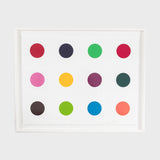
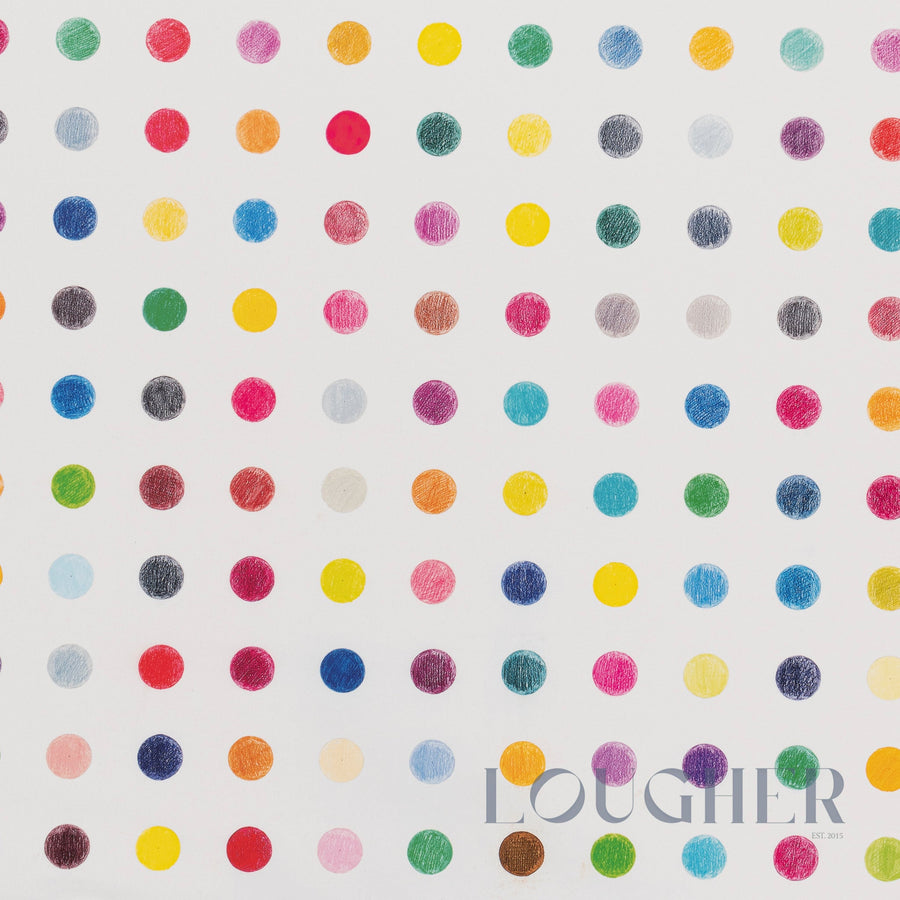
Since launching his limited-edition print series The Last Supper in 1999, Damien Hirst has made a significant impact in the art market, with many of his prints fetching six-figure sums at auctions. While his prints cover a wide range of themes and styles, it's his iconic Spot prints that continue to dominate the secondary market. Inspired by his pharmaceutical paintings, these prints are celebrated for their visual accessibility and the artist's distinctive front-facing signature, enhancing their recognisability.
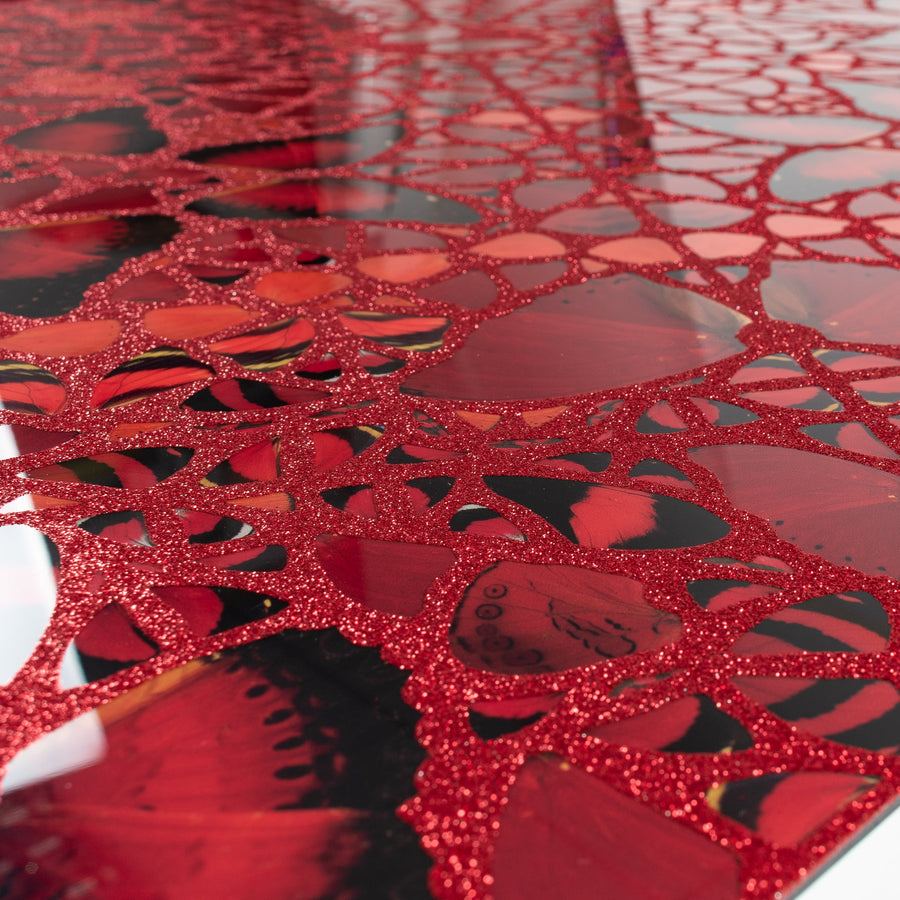
Additionally, Hirst's In a Spin series and Butterfly prints remain perennial favourites among collectors. Notably, a stained-glass Butterfly print sold for £150,000 in 2018, marking the highest auction price for Hirst's prints to date.
The success and value of Hirst's prints often correlate with edition size, typically ranging from 50 to 150 prints plus artist proofs. However, exceptions like the Butterfly Rainbow and Butterfly Heart prints, released in 2020 to support the NHS, were produced in larger editions of up to 4,150, showcasing Hirst's philanthropic and commercial influence.
( 04 )
Damien Hirst's Current Market
Since introducing his limited-edition print series The Last Supper in 1999, Damien Hirst has left an indelible mark on the art market, with many of his prints fetching six-figure sums at auctions. Among his diverse portfolio, it's his renowned Spot prints that continue to reign supreme in the secondary market. These prints, inspired by his iconic pharmaceutical paintings, are praised for their visual accessibility and feature Hirst's distinctive front-facing signature, enhancing their collectability.
Hirst's In a Spin series and Butterfly prints also enjoy enduring popularity among collectors. Notably, a stained-glass Butterfly print achieved a record auction price of £150,000 in 2018, underscoring the high demand for Hirst's printed artworks.
The value and desirability of Hirst's prints often correlate with their edition sizes, typically ranging from 50 to 150 prints plus artist proofs. Exceptions include prints like the Butterfly Rainbow and Butterfly Heart, released in 2020 with larger editions of up to 4,150, reflecting Hirst's dual impact in both philanthropic endeavours and the commercial art world.
( 05 )
Who publishes Damien Hirst prints?
Most of Damien Hirst's recent prints are published by HENI Editions, including the H-series releases such as H9 The Virtues (2021) and the Kaleidoscopes butterfly editions (2024). Earlier screenprints and portfolios were published through Paul Stolper and Other Criteria, Hirst's own publishing company.
( 06 )
How are Damien Hirst prints authenticated?
Limited edition prints are signed and numbered by Hirst and come with the publisher's certificate. For questions about a work's history, Hirst's studio, Science Ltd, is the authority. Keep the certificate, invoice and original packaging: they support the value when you sell.
( 07 )
How much do Damien Hirst prints cost?
Prices range from small editions in the hundreds of pounds to unique works in six figures. In November 2026 the Damien Hirst works for sale at Lougher Contemporary ran from £750 to £95,000, with a typical print around £7,500; 84 were limited edition prints and 17 were unique works. Read inside Damien Hirst's creative process for the background to the main series.
( 08 )
Can I sell my Damien Hirst print through Lougher Contemporary?
Yes. Send photographs, the certificate and any HENI or gallery paperwork for a free valuation, and we can sell the work on consignment to our collectors and trade buyers. See selling with Lougher Contemporary.
The H series
Collect by series.
( 01 )
H9: The Virtues
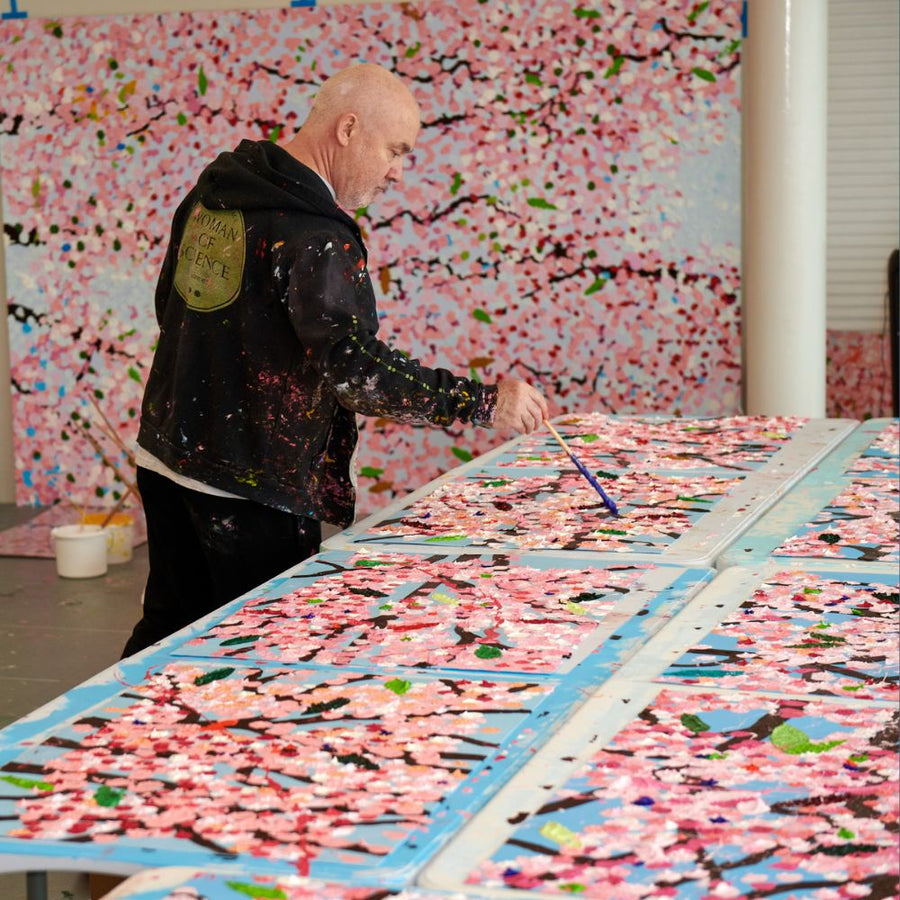
H9: The Virtues is a powerful print series by internationally celebrated British artist Damien Hirst, created in 2021 as part of his wider Cherry Blossom project.
Our art sourcing service is bespoke to you. If you find the art market daunting, complex, or simply don't have the time to navigate it, we can help. By using our sourcing service you will benefit from our knowledge of contemporary art market and our trusted network of galleries and clients.
Looking for a particular work by Damien Hirst, or have a question about one on this page? Get in touch with the team and we will do our best to support you in your collecting journey.