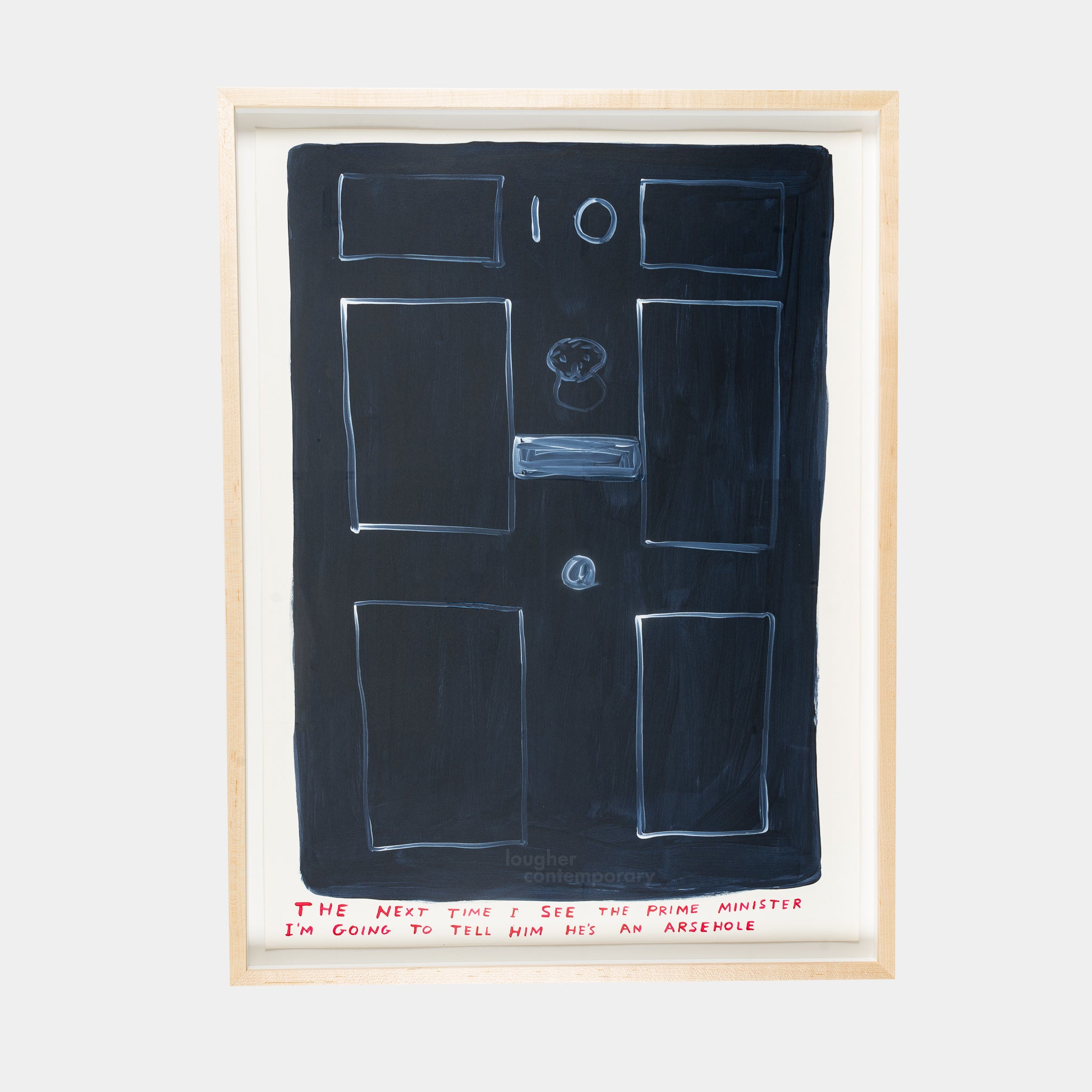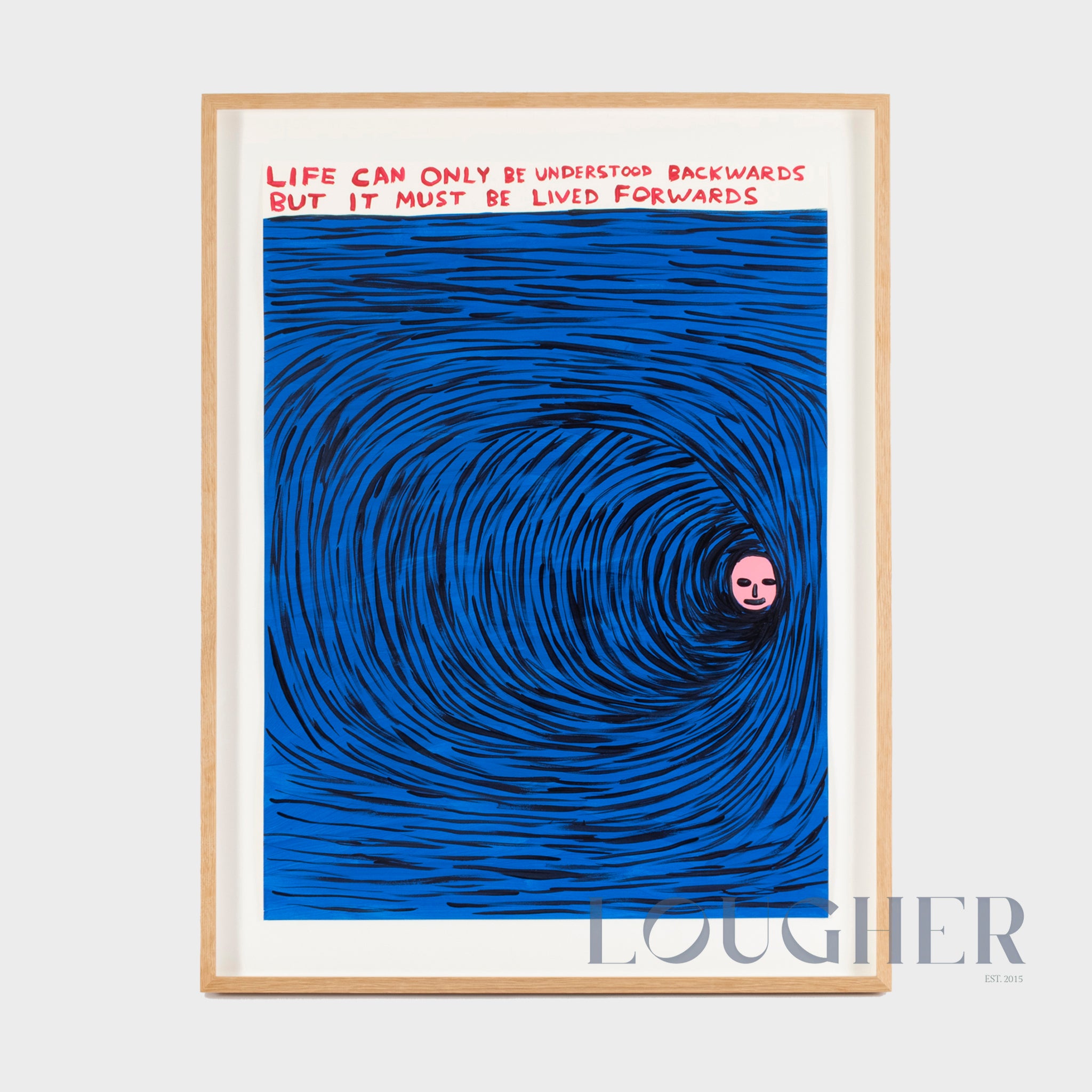


David Shrigley, The Human Body, 1999
The Human Body (1999) – David Shrigley Screenprint
About the Work
The Human Body (1999) is a monumental David Shrigley screenprint that subverts the clinical objectivity of scientific illustration through minimalist, monochrome mark-making. Executed in stark black ink with delicate hand-drawn pencil additions on heavy mould-made paper, the composition features a crudely rendered anatomical figure. The stark contrast between the raw paper background and the deliberate, naive black lines immediately commands the exhibition space.
By presenting a deeply flawed, humorous diagram as an authoritative medical reference, the work directly engages with the theme of Absurdity. Shrigley deconstructs the human form into simplified shapes and existential musings, turning a standard educational tool into a poignant critique of human limitation. This tension between empirical study and chaotic reality highlights the artist's unique talent for finding profound truth within the ridiculous.
David Shrigley
Nominated for the Turner Prize in 2013, David Shrigley has secured a singular position in contemporary British art through his instantly recognisable graphic style. His celebrated public commissions, including the Fourth Plinth sculpture in Trafalgar Square, demonstrate a profound ability to communicate complex existential themes to a global audience. Today, his works are held in prestigious public collections worldwide, including the Tate and the British Council Collection.
The artist translates the immediacy of his ink drawings into the screenprint medium with remarkable fidelity, preserving every wobble of his pen and texture of his handwriting. Each David Shrigley print serves as a direct extension of his democratic philosophy, making his sharp-witted commentary accessible whilst maintaining rigorous artistic integrity. This mastery of graphic economy allows his deceptively simple observations to resonate across diverse cultural landscapes.
Screenprint Process
Published in collaboration with Stephen Friedman Gallery, this rare early work showcases an exceptionally high level of tactile printmaking. The heavy, textured mould-made paper provides a substantial substrate that absorbs the dense black silkscreen ink, creating a velvety surface finish that contrasts with the subtle sheen of hand-applied pencil details. Unlike later digital productions, this hand-pulled edition prioritises a rich, physical connection between ink, graphite, and paper.
The printmaking process perfectly captures the spontaneous energy of the original sketch, immortalising the deliberate imperfections of the artist's hand. As an early David Shrigley limited edition print, this work reflects the collaborative spirit of his London publishing partners, who sought to preserve the raw, unpolished charm of his late-nineties output. The result is a highly tactile object that bridges the gap between mechanical reproduction and unique drawing.
Collectability
With an exceptionally small edition size of just ten examples, The Human Body represents one of the most elusive and sought-after graphics from the artist's early career. The scarcity of this 1999 release, combined with its impressive physical scale, has generated significant collector interest among serious patrons of contemporary British printmaking. Its signature aesthetic showcases the highly recognisable imagery that has come to define the artist's internationally celebrated oeuvre.
Representing a crucial example from his celebrated institutional period, this piece remains a particularly desirable example of his early graphic practice. As a highly coveted document from a formative era in his career, The Human Body continues to enjoy a strong secondary-market presence and continued appeal among global collectors. Its scarcity and historical significance make it a cornerstone acquisition for any dedicated contemporary collection.
Artwork Specifications
- Artist: David Shrigley (British, b. 1968)
- Title: The Human Body
- Medium: Screenprint on white mouldmade paper, 270gsm
- Dimensions: 127 x 82 cm
- Edition: Edition of 150
- Year: 1999
- Publisher: Book Works
Collect David Shrigley