



What the Art Basel & UBS Survey 2026 Means for Print Collectors
Two new reports from Art Basel and UBS describe a market led by trophies and lived in by everyone else. Elliot Swiers, Sales Director at Lougher Contemporary, on what that means if you own, inherit or buy prints.
By Elliot Swiers
Most of the Art Market Never Makes the
Headlines
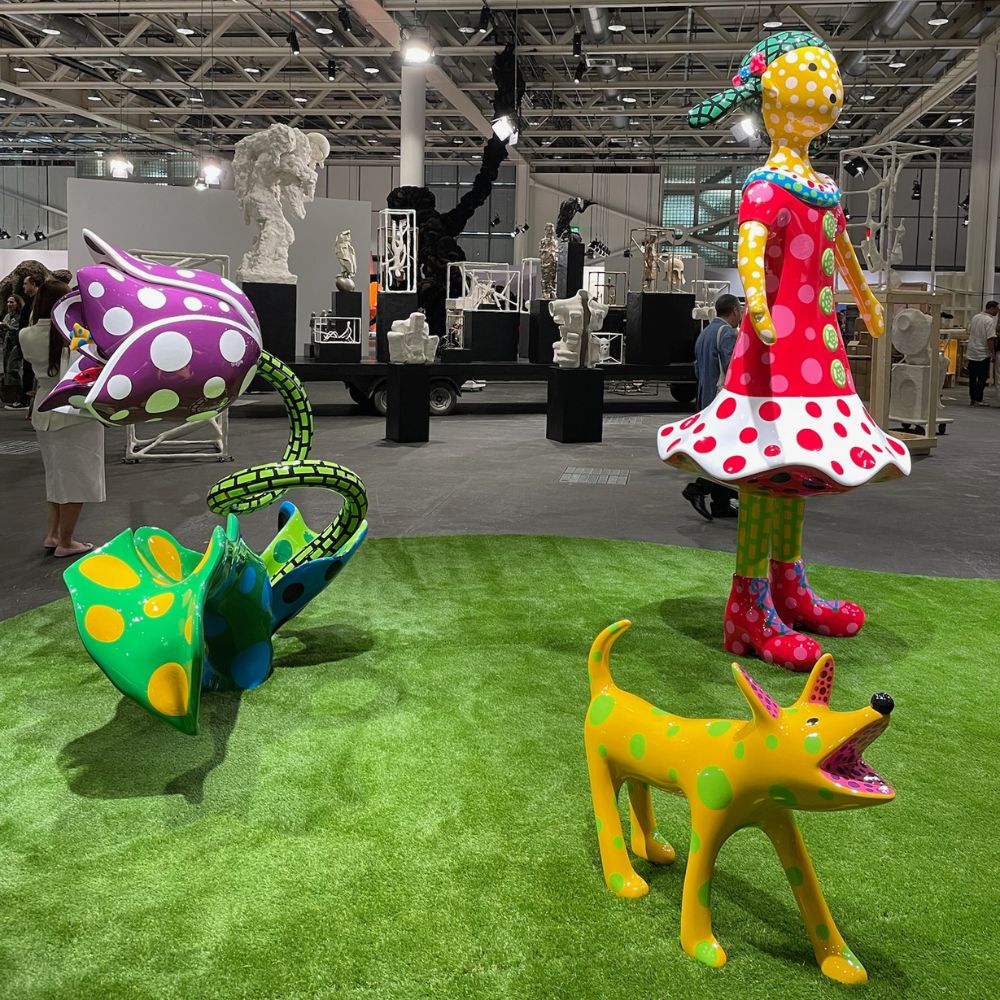
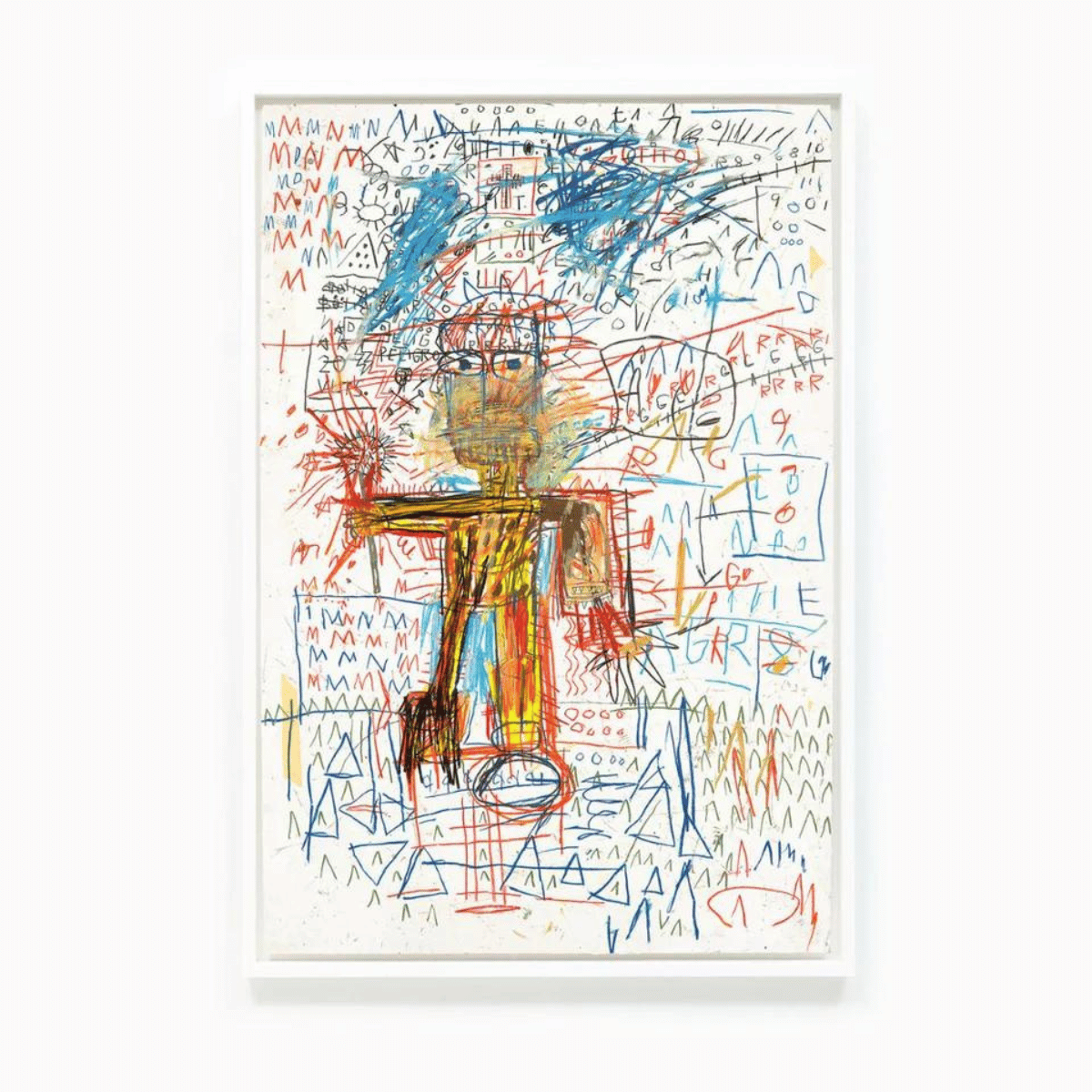
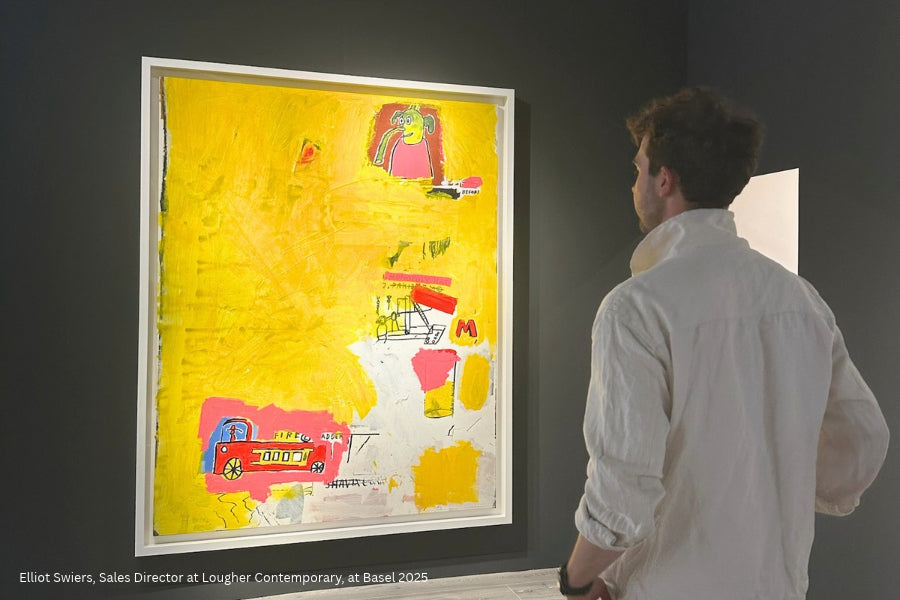
At Art Basel in 2025 I spent longer than I should have in front of a Rothko. Deep maroon, a slab of orange along the bottom, the kind of picture that makes a busy fair hall go quiet. A few booths away hung a 1939 Picasso of a child in a battered gilt frame, and a Basquiat the colour of egg yolk was drawing a small crowd of its own.
Those works are the art market as most people read about it. The Art Basel and UBS Art Market Report 2026 puts global sales at $59.6 billion for 2025, up 4% after two years of decline. Most of that recovery came from the very top: auction lots above $10 million grew 30% in value, and six of the year's ten most expensive lots were Impressionist.
Read past the opening pages, though, and the report tells a different story. It is the one our clients actually live in.
One market, two price lists
Source: Art Basel and UBS Art Market Report 2026, Arts Economics, with data from Winston Artory Group. Public fine art auctions, 2025. Middle band derived from the other two.
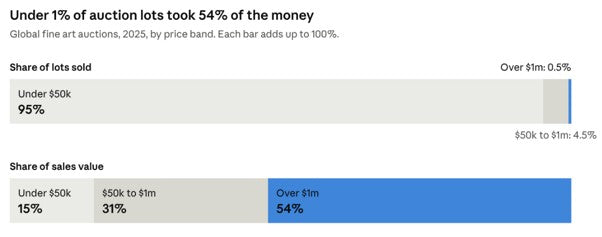
Look closer at the cheap end and it gets cheaper still: three quarters of the lots under $50,000 sold for less than $5,000. Dealers see the same shape. In 2025, 87% of their sales were below $50,000, up from 73% in 2022, and just 1% went over $1 million.
So a record price tells you almost nothing about what your Hockney or Warhol print is worth. What matters is the last handful of sales of the same edition, in similar condition, through a similar route.
Britain's collections are mostly inherited
Source: Art Basel and UBS Survey of Global Collecting 2026, Arts Economics, as reported by MyArtBroker. 3,100 respondents across ten markets; four shown.
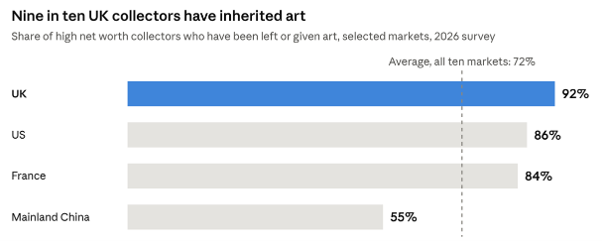
The companion Survey of Global Collecting spoke to 3,100 wealthy collectors, and no market came close to Britain. Where inherited pieces are still held, they make up about a third of a collection's value.
Heirs are not selling up. Three quarters kept at least some of what they were left, and the youngest heirs were the most likely to hang on. When sales do come, estate tax is a common trigger, which usually means a deadline.
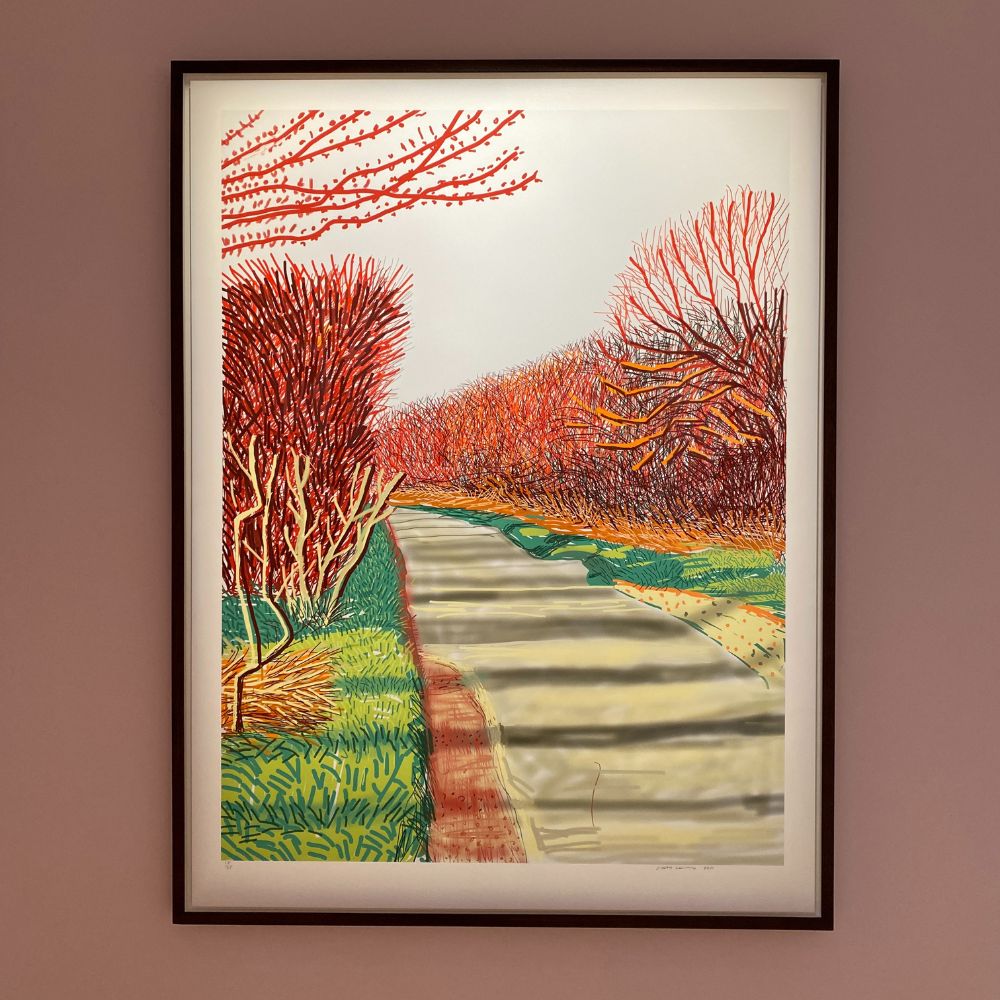
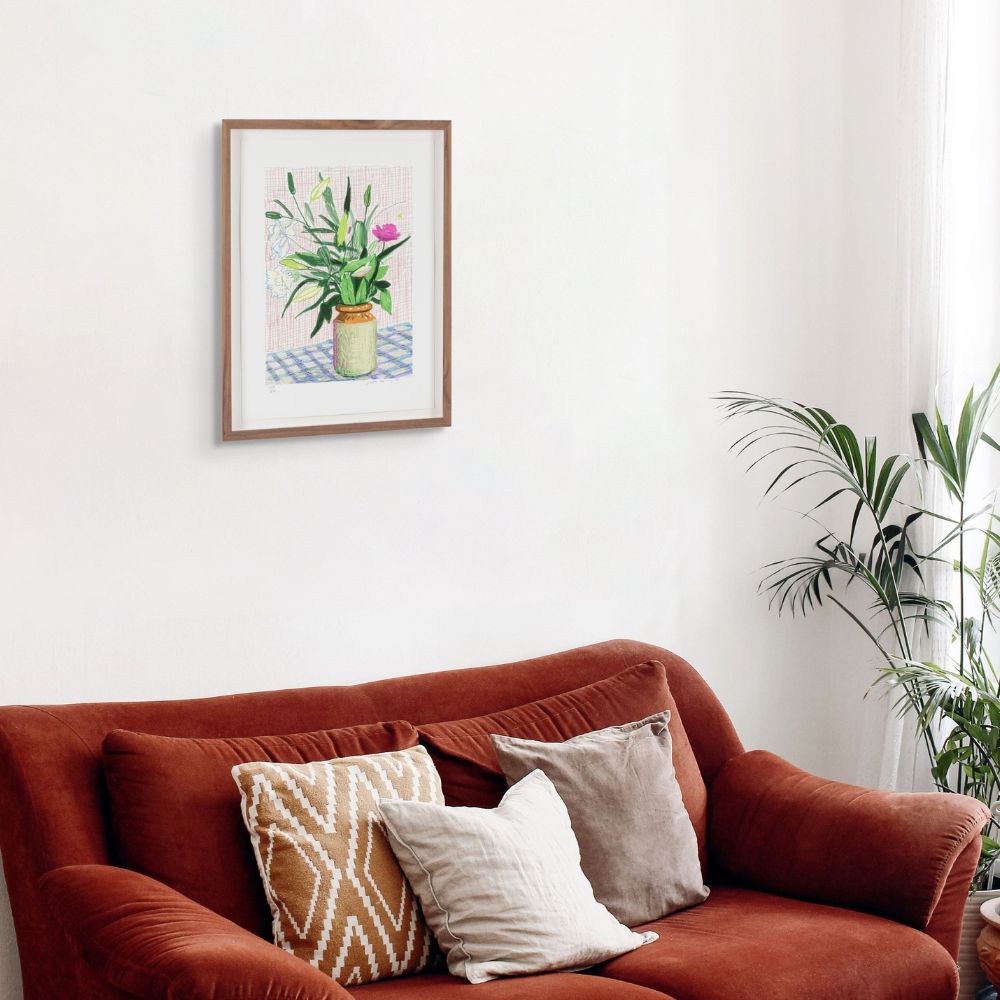
If you have inherited prints, find out exactly what you have before anyone asks you to decide anything: title, edition number, signature, condition and paperwork. The artist's name alone tells you very little, and values move. MyArtBroker's data shows the median auction price of Hockney's The Arrival of Spring prints rose 61% in the year to 8 October, enough to leave an old insurance valuation badly short.
Collectors are going back to names they know
The report describes a steady drift towards established artists and secondary market work. Contemporary dealers had a flat year, and the ultra contemporary boom that carried the market after the pandemic has stalled. In the collector survey, only 45% bought work by an artist new to them, down from 66% the year before.
Prints sit right where those trends meet. More than half the collectors surveyed own at least one print or multiple, and 47% of last year's art buyers bought one. Prints and multiples also rose to 12% of dealer sales by value.
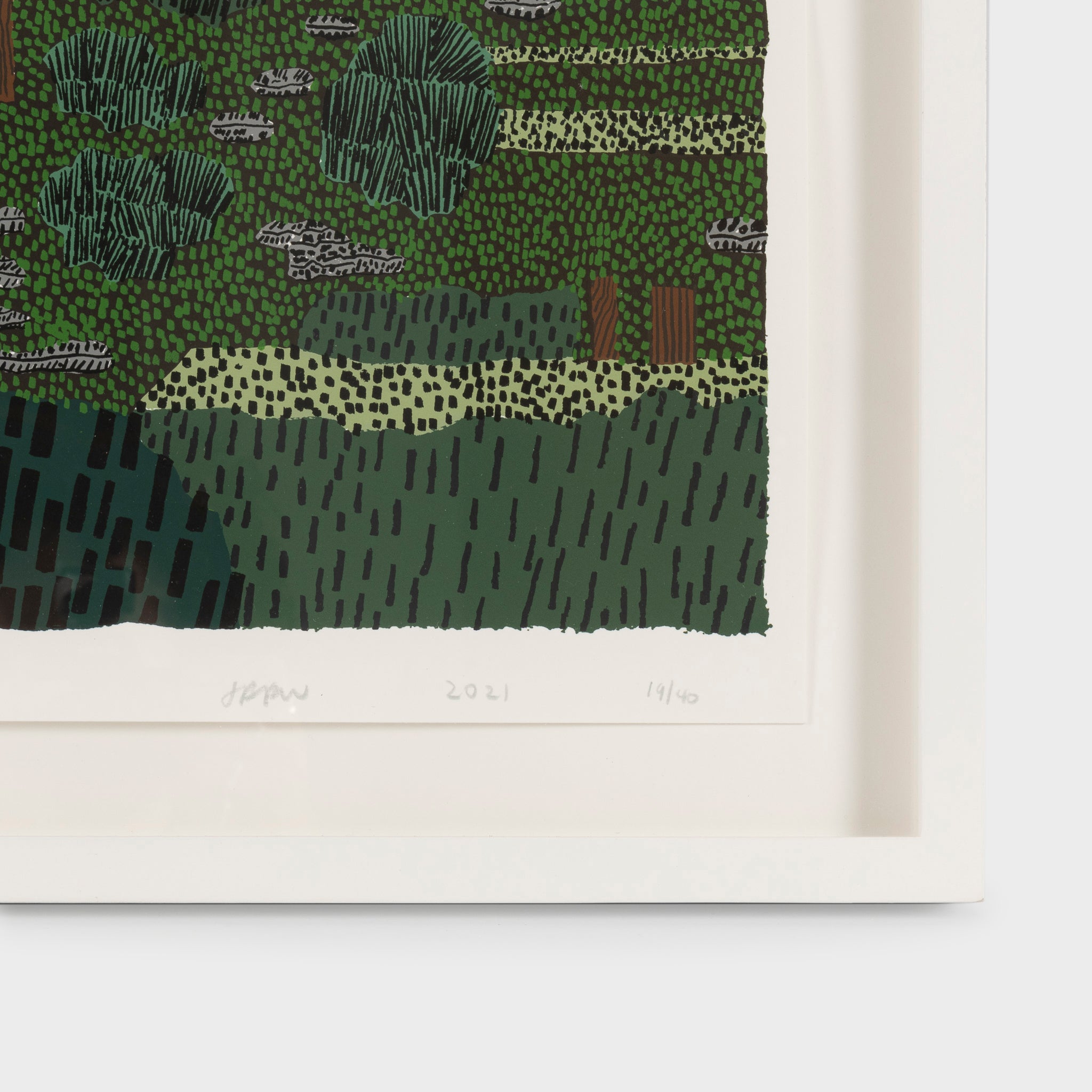
Familiar does not mean interchangeable. Two impressions of the same Warhol can sit a long way apart on price because of condition, signature, provenance or edition type. As buyers grow choosier, those details decide what sells and for how much.
More sellers, choosier buyers
UK collectors are the most likely in the survey to sell in the next twelve months: 32%, against 23% across all ten markets. Buyers still outnumber sellers everywhere, so this looks like collectors rearranging their walls rather than leaving the market. It does mean more works competing for the same attention, and a print priced on hope rather than evidence will sit.
Selling is also getting dearer. Dealers' operating costs rose about 5% last year, led by shipping and art fair costs, and online sales slipped to 16% of dealer turnover as larger purchases moved back to people meeting in person. Collectors have noticed. Transparency was their leading worry in the survey, from unclear pricing to fees that only appear at the end.
Before you sell, ask three questions:
1. Which recent sales of this edition is the estimate built on?
2. What will I actually receive once commission and costs are deducted?
3. Is auction or a private sale the better route for this particular work?
Where we come in
We have always quoted asking prices and total costs up front, and we will keep doing so. In a market where the headline figure and the money that actually changes hands can be some way apart, that matters more than it used to.
This week Huw and I are at Frieze London (14 to 18 October), then Art Basel Paris (21 to 25 October). If there is an artist or a particular work you are hunting for, tell us before we go and we will look on your behalf, so you do not have to walk the aisles yourself. If you are weighing up a sale, or simply want to know what you own, we value prints, editions and originals.
Get a valuation · Ask us to source a work · Browse latest arrivals
Elliot Swiers is Sales Director at Lougher Contemporary.