

Damien Hirst’s The Emotions: A Guide to the Print Series
Few contemporary artists have explored the relationship between beauty, colour and the fleeting nature of life as persistently as Damien Hirst. In The Emotions, the British artist turns his attention to the vibrant blossoms of the Jacaranda tree, creating a series of prints that brings together expressive colour, gestural mark-making and a renewed interest in the natural world.
Released in 2026 in collaboration with HENI, The Emotions comprises nine giclée prints based on Hirst’s original Jacaranda paintings. Building on the painterly energy of his celebrated Cherry Blossoms series, the collection offers collectors another way to engage with one of the most visually distinctive developments in his recent practice.
For those looking to collect Damien Hirst prints, or considering selling an existing work, understanding the series’ inspiration, formats and edition details is a useful starting point.
What Is Damien Hirst’s The Emotions Series?
The Emotions is a series of nine prints created by Damien Hirst in 2026. Produced as giclée direct prints on aluminium composite panels, the works translate the depth, texture and colour of Hirst’s original Jacaranda paintings into a series of large-format editions.
The collection was released through HENI Editions, with the original purchase window running from 11 to 22 June 2026. That release has now closed, meaning that collectors seeking the works are looking to the secondary market and available dealer stock.
Each print is numbered and hand-signed by the artist on its label. Eight works measure 120 × 96 cm, while the ninth and largest, Emotion, measures 198 × 132 cm.
Although they share a common subject and production format, the works have distinct titles and individual edition histories. Collectors can therefore approach the series through a single print, a complementary selection or a group of works displayed together.
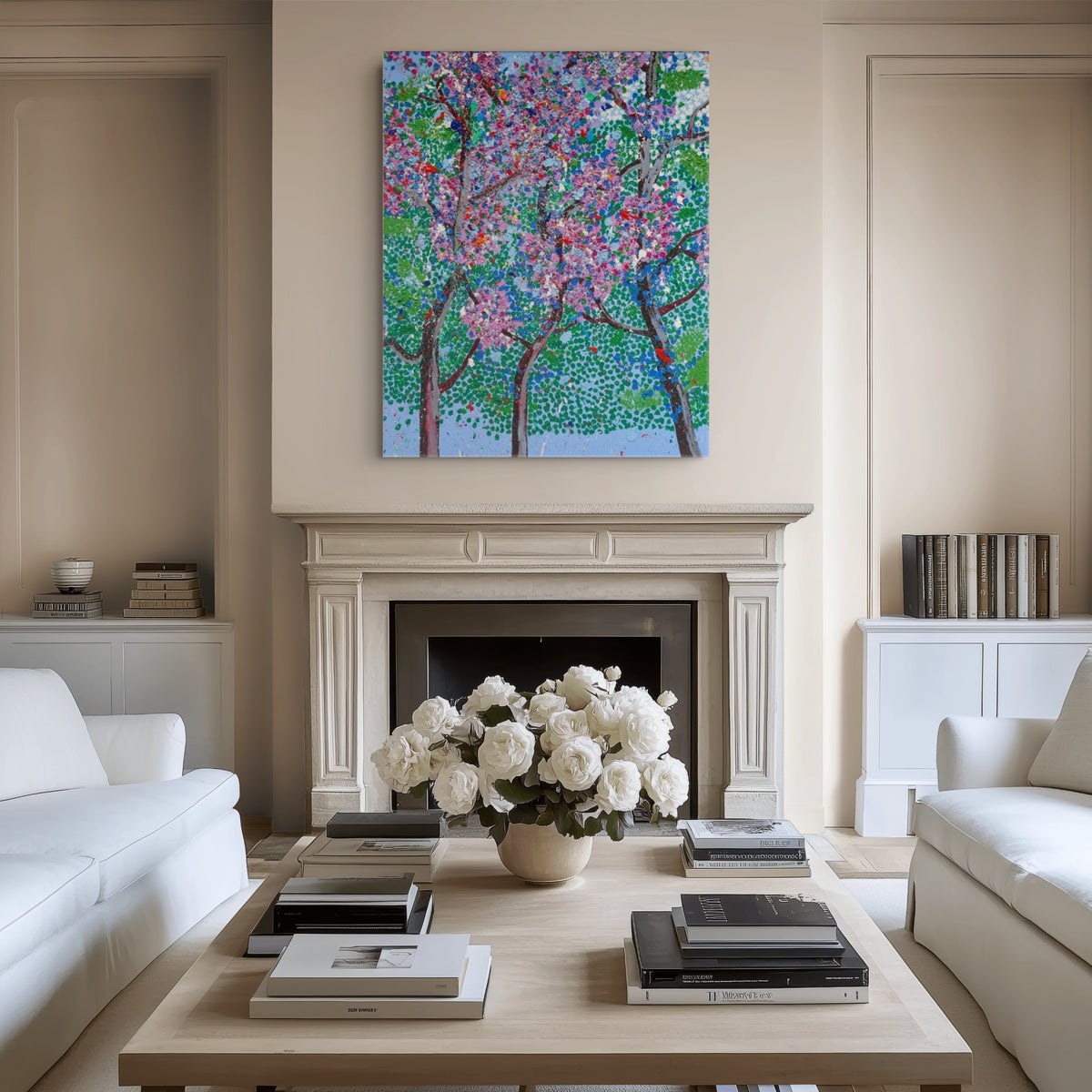
The Inspiration Behind The Emotions: Jacaranda Trees in Bloom
The story of The Emotions begins with Hirst’s earlier Cherry Blossoms paintings. In 2024, those works were exhibited at Museo Jumex in Mexico City. The gallery’s expansive, windowed walls brought the surrounding Jacaranda trees into view, creating a striking visual relationship between Hirst’s painted blossoms and the natural landscape outside.
That encounter became the starting point for the Jacaranda paintings from which The Emotions prints were developed.
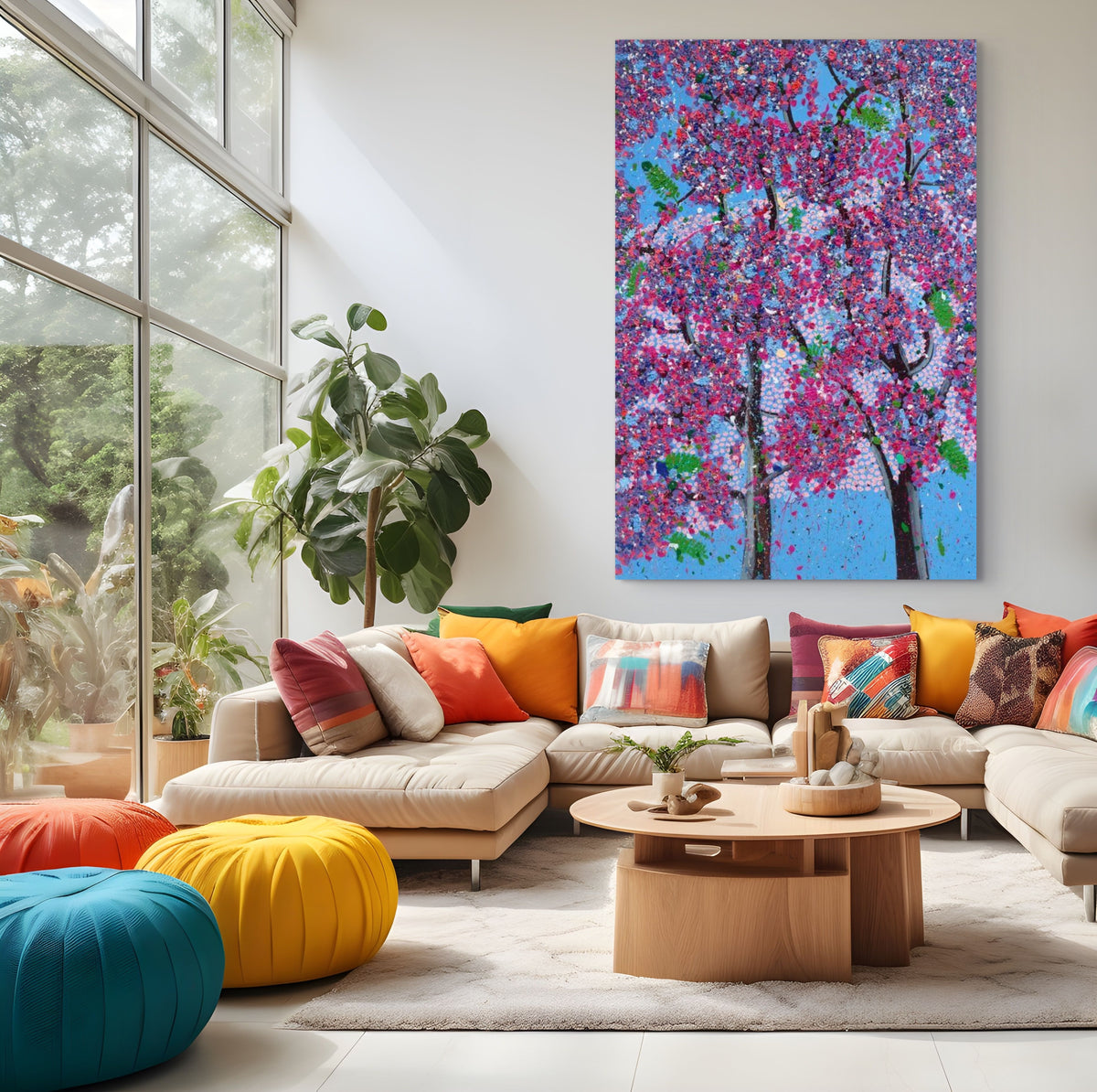
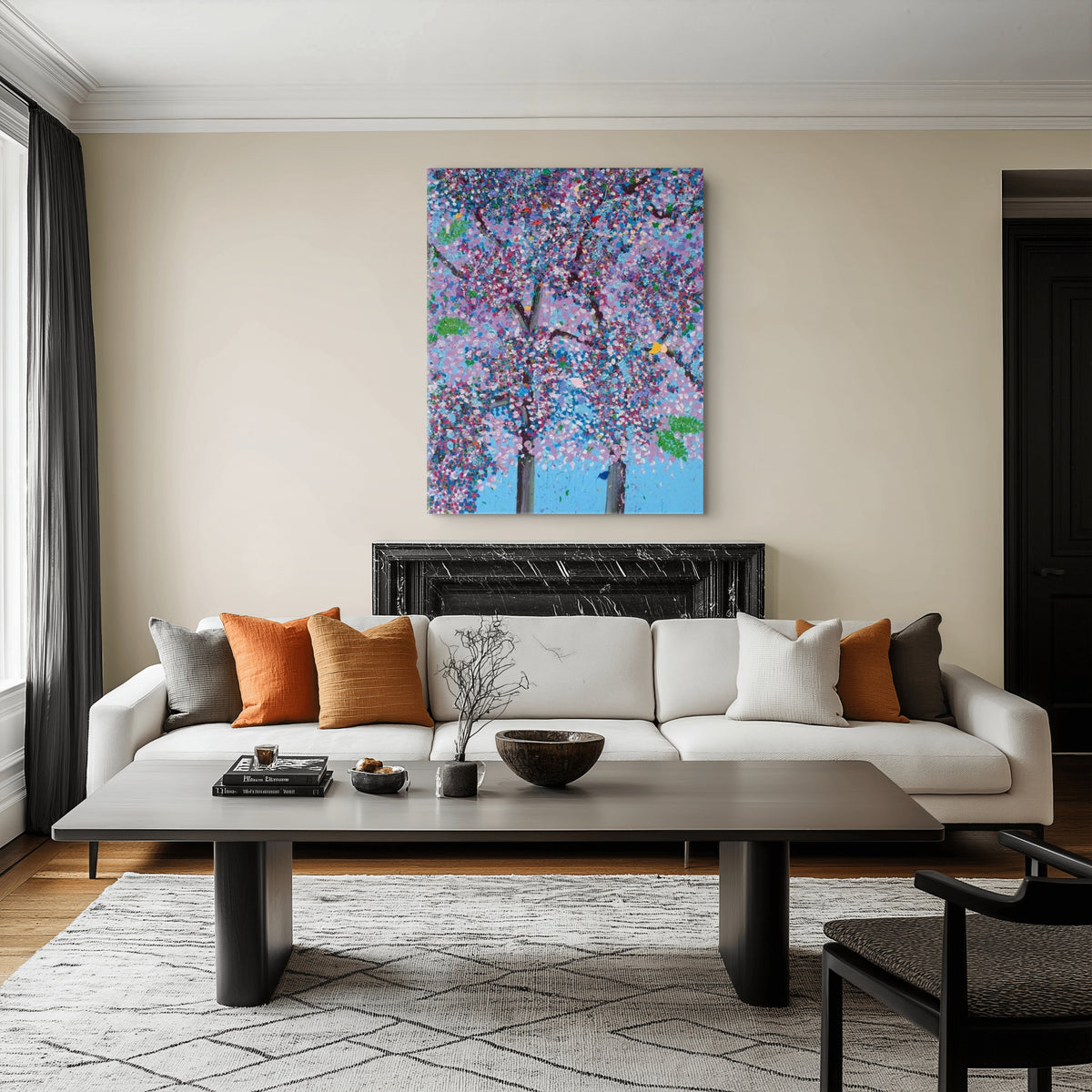
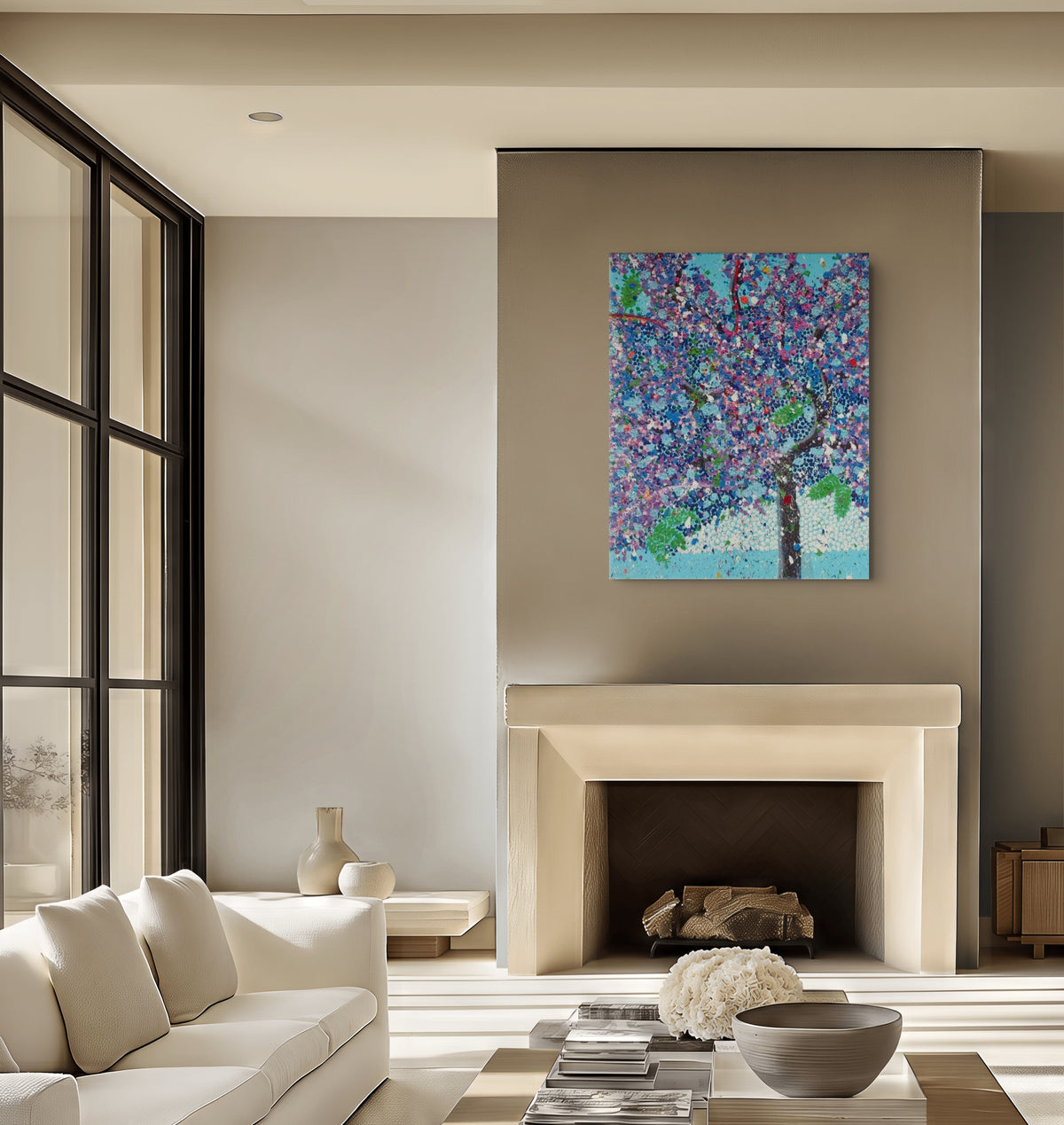
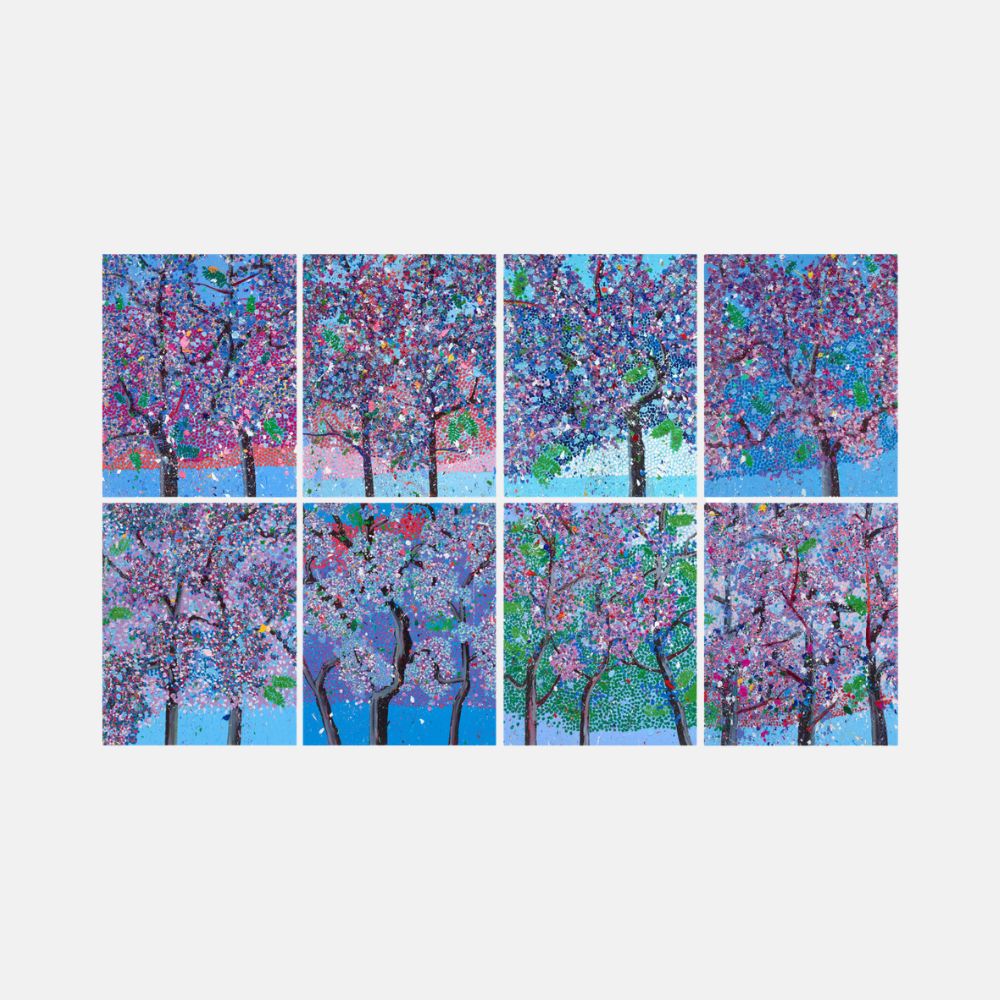
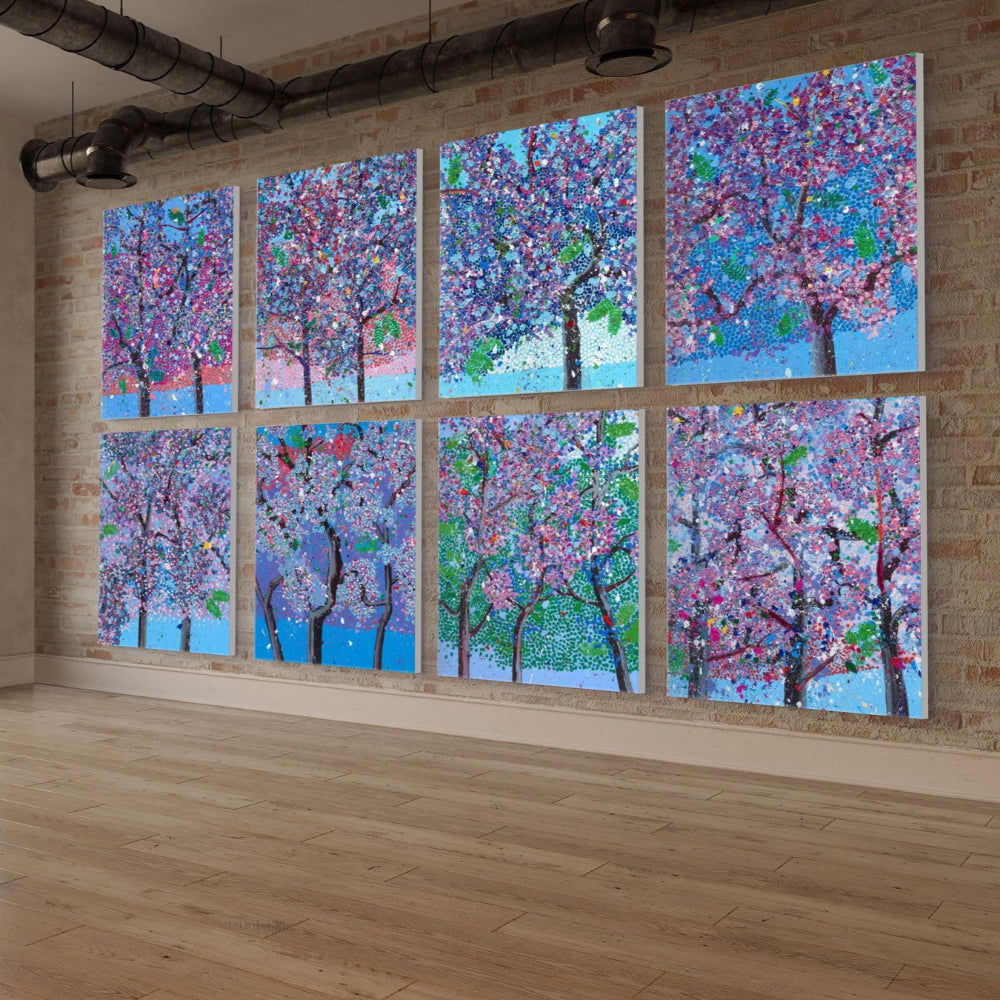
Across the series, winding branches are filled with blossoms in intense blues, purples, pinks and reds. Layers of colour and contrasting marks give the compositions a sense of movement, while pointillist gestures and leaf-shaped stamps create an interplay between controlled repetition and expressive painting.
Rather than presenting a literal botanical study, Hirst uses the Jacaranda as a vehicle for exploring the visual intensity of nature. The resulting works are immersive, with colour and texture taking precedence over conventional landscape detail.
The symbolism of the tree adds another dimension. Hirst associates Jacarandas with wisdom, hope and renewal, connecting the blossoms to ideas of transformation and new beginnings. Their fleeting flowering season also lends the work a sense of impermanence: the beauty of the blossoms is powerful partly because it does not last.
This combination of natural subject matter, emotional association and recognisable painterly technique places The Emotions within the wider evolution of Hirst’s floral work.
The Nine Prints in Damien Hirst’s The Emotions
The series comprises eight similarly sized works and one larger-format print. Each title refers to an emotion or state of mind, while the recurring Jacaranda imagery brings the individual compositions together visually.
The nine works are:
- Love (H20-1): The first work in the series, pairing the Jacaranda subject with a title associated with affection and connection.
- Joy (H20-2): A celebration of colour and the uplifting associations of the flowering tree.
- Surprise (H20-3): A title that suggests the unexpected intensity and visual complexity of the blossoms.
- Serenity (H20-4): An invitation to consider the quieter, contemplative qualities within the series.
- Trust (H20-5): A work whose title introduces an association with confidence and reassurance.
- Anticipation (H20-6): A reference to expectation, change and the promise of what is to come.
- Gratitude (H20-7): A title that connects the natural subject to appreciation and reflection.
- Inspiration (H20-8): An expression of the creative possibilities suggested by nature and colour.
- Emotion (H20-9): The largest work in the collection, measuring 198 × 132 cm, compared with 120 × 96 cm for the other eight prints.
The titles provide a framework for considering the series, but the works are not simply illustrations of individual feelings. Their shared imagery, contrasting colours and energetic surfaces create a broader visual narrative.
For collectors, the distinction between the eight-print group and the larger Emotion work is also important when comparing individual pieces with available groupings.
Materials, Editions and What Collectors Should Know
Beyond their visual appeal, the physical specifications of The Emotions are central to understanding the works.
Each print is a giclée direct print on aluminium composite panel. Unlike a conventional paper print, the work is produced directly on a rigid panel, giving it a different surface and presentation. The original HENI release was designed to be ready to hang, with a sub-frame on the reverse; additional framing is a matter of personal preference.
All nine works are numbered and hand-signed on their labels. The edition size for each title was determined by demand during the original release window, so the different works do not share one common edition number.
When considering a purchase on the secondary market, collectors should pay attention to the exact title, edition number, condition and supporting documentation. Original packaging, where retained, is also worth noting. It can help establish how a work has been stored and may assist with its subsequent handling and transport.
For higher-value contemporary prints, it is sensible to confirm precisely what is included in a sale and to review the artwork’s condition and provenance before making a decision.
These practical considerations are especially relevant when comparing a single print with a larger group from the series.
Why Collect Damien Hirst’s The Emotions Prints?
One of the attractions of The Emotions is the way it brings together several recognisable aspects of Hirst’s practice. The floral subject connects it to the Cherry Blossoms paintings, while its layered surfaces and saturated palette give the series a character of its own.
The scale of the works is another consideration. At 120 × 96 cm, each of the first eight prints can make a substantial visual statement within a room. The larger Emotion print offers an even more expansive presentation, allowing the composition to occupy a greater part of a wall.
There is also flexibility in how the series can be collected. A single work may suit a collector drawn to a particular title or colour composition, while a group can create a stronger sense of continuity across a collection or interior. The choice between an individual print and a set will depend on budget, available space and personal preference.
As with any contemporary art edition, however, collectability should not be confused with guaranteed financial performance. Future resale prices cannot be predicted simply from the artist’s reputation, the age of a release or the size of an edition. Collectors should consider their own interests alongside condition, availability, comparable market evidence and the costs associated with buying and eventually selling an artwork.
Buying Damien Hirst’s The Emotions Prints Through Lougher
For collectors seeking The Emotions today, the secondary market provides an opportunity to source works after the original release has ended.
Lougher Contemporary’s listings have included a group of eight prints from the series, as well as the larger Emotion work. Availability can change, so it is worth reviewing the current details of each listing and enquiring with the team about the specific work you are looking for.
Explore the Damien Hirst The Emotions set of eight prints or view the H20-9 Emotion print.
When comparing available works, consider whether you are looking for a particular title, a complete group of the eight standard-format prints or the larger ninth work. Ask about the edition, condition, packaging and delivery arrangements before committing to a purchase.
Lougher’s approach combines access to contemporary art editions with a personal service, helping collectors navigate the practical details of acquiring a work as well as its artistic context.
Selling Damien Hirst’s The Emotions Prints
Collectors already holding a print from The Emotions may eventually decide to sell, whether to refine a collection, make room for another work or release capital for a new purchase.
The first step is to establish the exact artwork and its current condition. The title, edition number, label, original packaging and any purchase records can all be useful when preparing a work for valuation. Clear photographs of the front, reverse, label and any condition issues will also help a specialist assess what you have.
The market for contemporary editions can vary between individual works, even within the same series. Factors such as availability, the specific edition, condition, presentation and current collector demand can influence the price a buyer may be prepared to pay. An asking price elsewhere is not necessarily evidence of a completed sale at that level.
Lougher Contemporary offers a valuation and consignment service for collectors looking to sell their art. Its team considers the artwork, its condition, location and the seller’s preferred timing when advising on an appropriate sale strategy. The company’s published consignment terms state that there are no upfront charges, with commission calculated against the agreed sale price.
If you own a work from The Emotions, you can request a valuation from Lougher Contemporary to discuss its potential placement on the secondary market. You can also read Lougher’s wider guide to selling Damien Hirst prints and editions.
Explore Damien Hirst’s The Emotions with Lougher Contemporary
With its vivid Jacaranda blossoms, expressive mark-making and themes of renewal and impermanence, The Emotions offers a distinctive continuation of Damien Hirst’s floral work.
Whether you are researching the series, looking to acquire a particular print or considering selling an existing work, understanding the individual edition and its condition is essential.
Explore available Damien Hirst artworks at Lougher Contemporary, or contact the team to discuss collecting or selling a work from The Emotions.
Frequently Asked Questions About Damien Hirst’s The Emotions
How many prints are in The Emotions series?
There are nine works in total: Love, Joy, Surprise, Serenity, Trust, Anticipation, Gratitude, Inspiration and Emotion.
What are the dimensions of The Emotions prints?
Eight prints measure 120 × 96 cm. The ninth work, Emotion (H20-9), is larger at 198 × 132 cm.
Are The Emotions prints signed?
According to HENI’s edition information, each work is numbered and hand-signed by Damien Hirst on its label. Buyers should confirm these details on the specific work they are considering.
Can you still buy Damien Hirst’s The Emotions prints?
The original HENI release window closed on 22 June 2026. Collectors can now look for available works through the secondary market. Availability and prices can change.
What affects the value of a The Emotions print?
The specific title and edition, condition, provenance, packaging, current availability and comparable market transactions can all be relevant. No single factor guarantees a particular resale price, and estimates should be based on the individual work rather than assumptions about the series as a whole.
How can I sell a Damien Hirst The Emotions print?
Start by documenting the title, edition number, condition and any accompanying paperwork or packaging. You can then contact Lougher Contemporary to discuss a valuation and whether consignment is a suitable route to sale.
Start Collecting Damien Hirst




Damien Hirst Paper Blossoms: A Contemporary Collectors’ Opportunity
When exploring contemporary art collecting, Damien Hirst’s Paper Blossoms series stands out as a powerful proposition – both for the sheer quality of the painting and for its position in Hirst’s wi...