
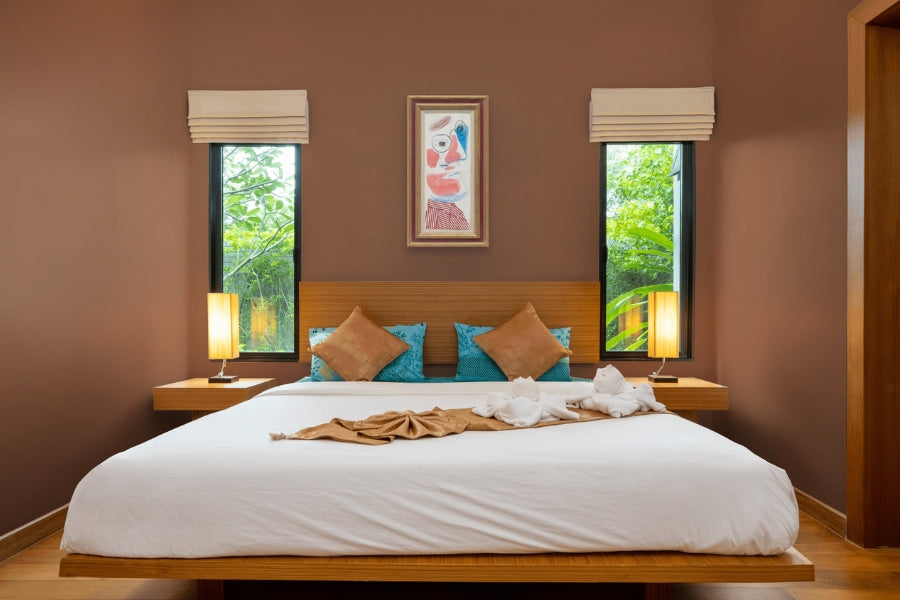
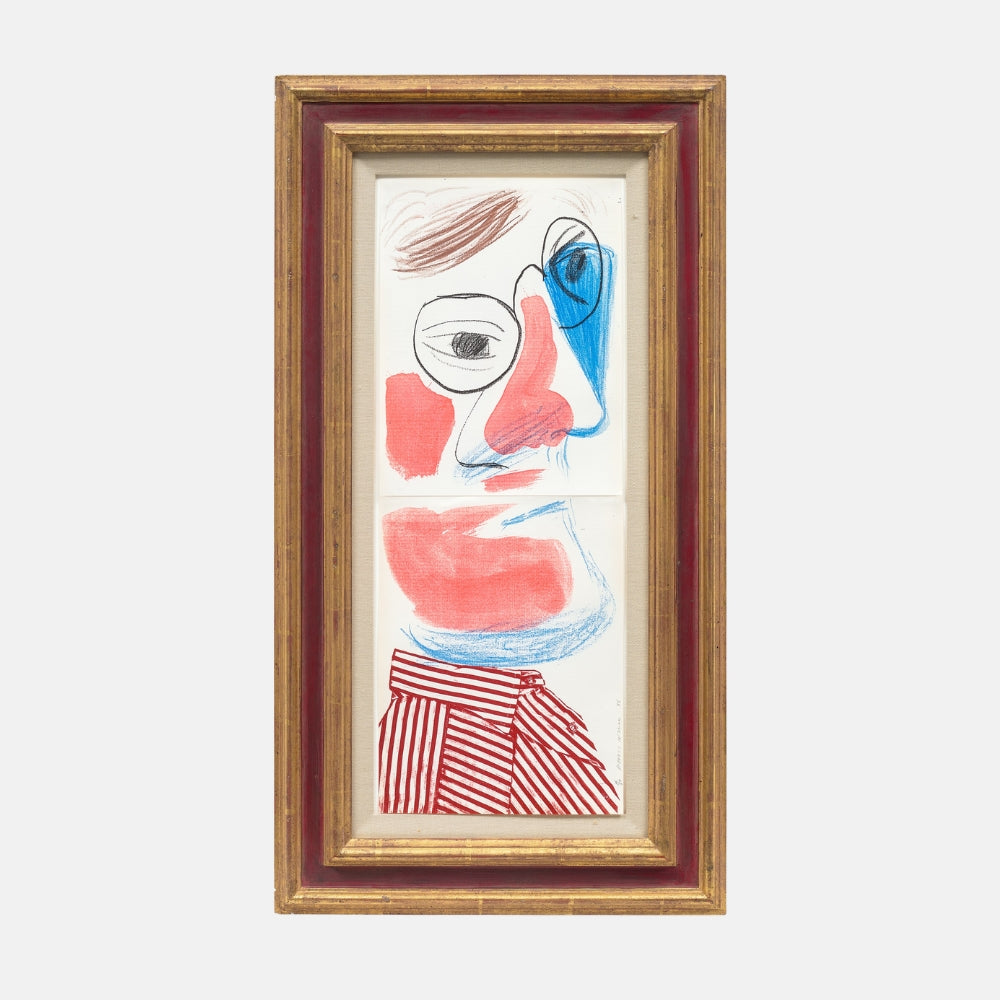
David Hockney Self-Portrait, July 1986 (1986) – Rare Home-Made Print for Sale
David Hockney's Self-Portrait, July 1986 is one of the most distinctive and sought-after works from the artist's celebrated series of Home-Made Prints. Created at a pivotal moment in Hockney's experimentation with new technology, the work transforms an ordinary office colour copy machine into an unconventional printmaking tool, producing an image that is at once intimate, technically innovative and unmistakably Hockney.
Executed in 1986, the work belongs to a small group of prints in which Hockney abandoned conventional printmaking processes in favour of a radically direct approach. Rather than working through an established print studio, Hockney used a colour photocopier as a creative instrument, building the image through successive layers of colour. Phillips describes the Home-Made Prints as the product of an artist embracing the photocopier as both camera and printing press.
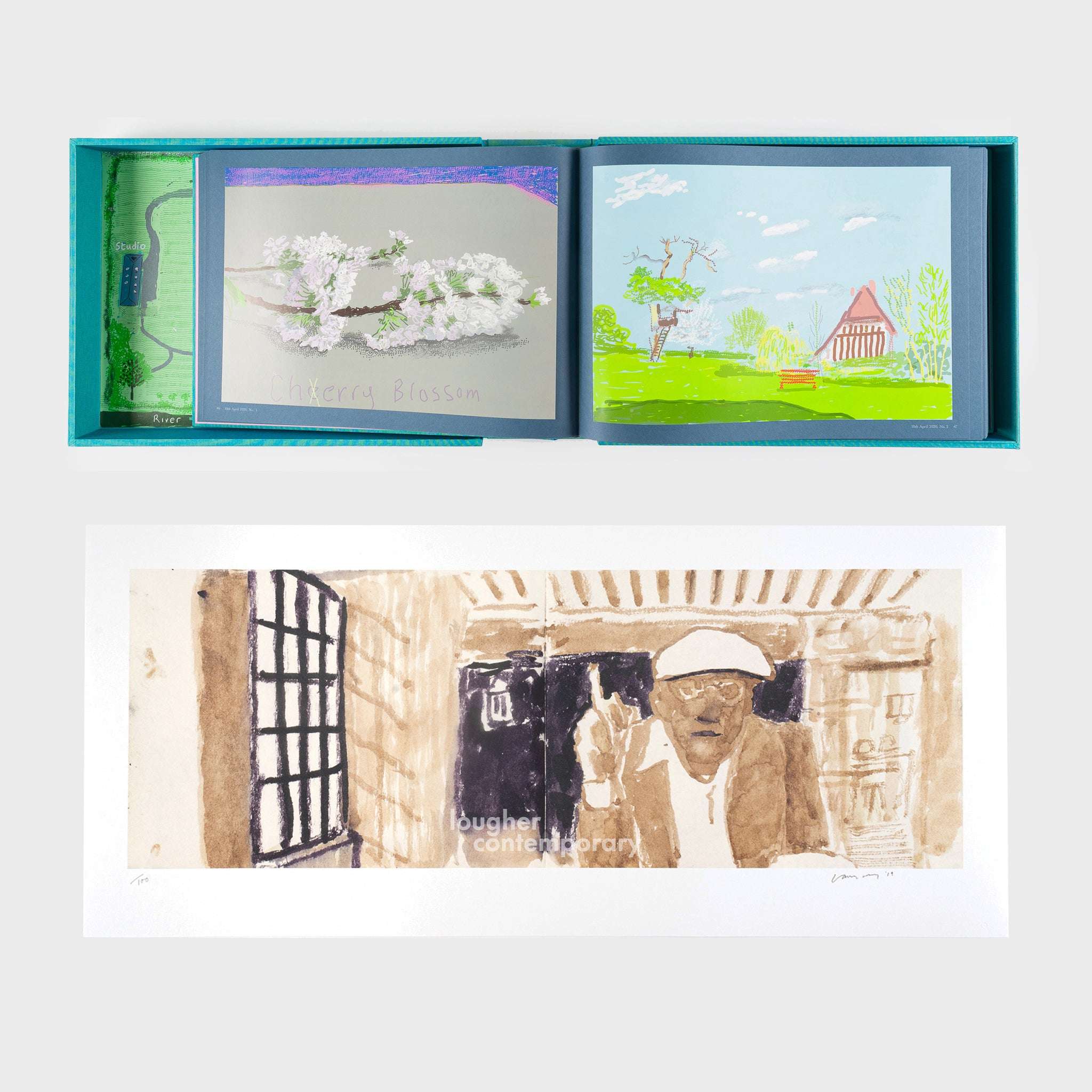
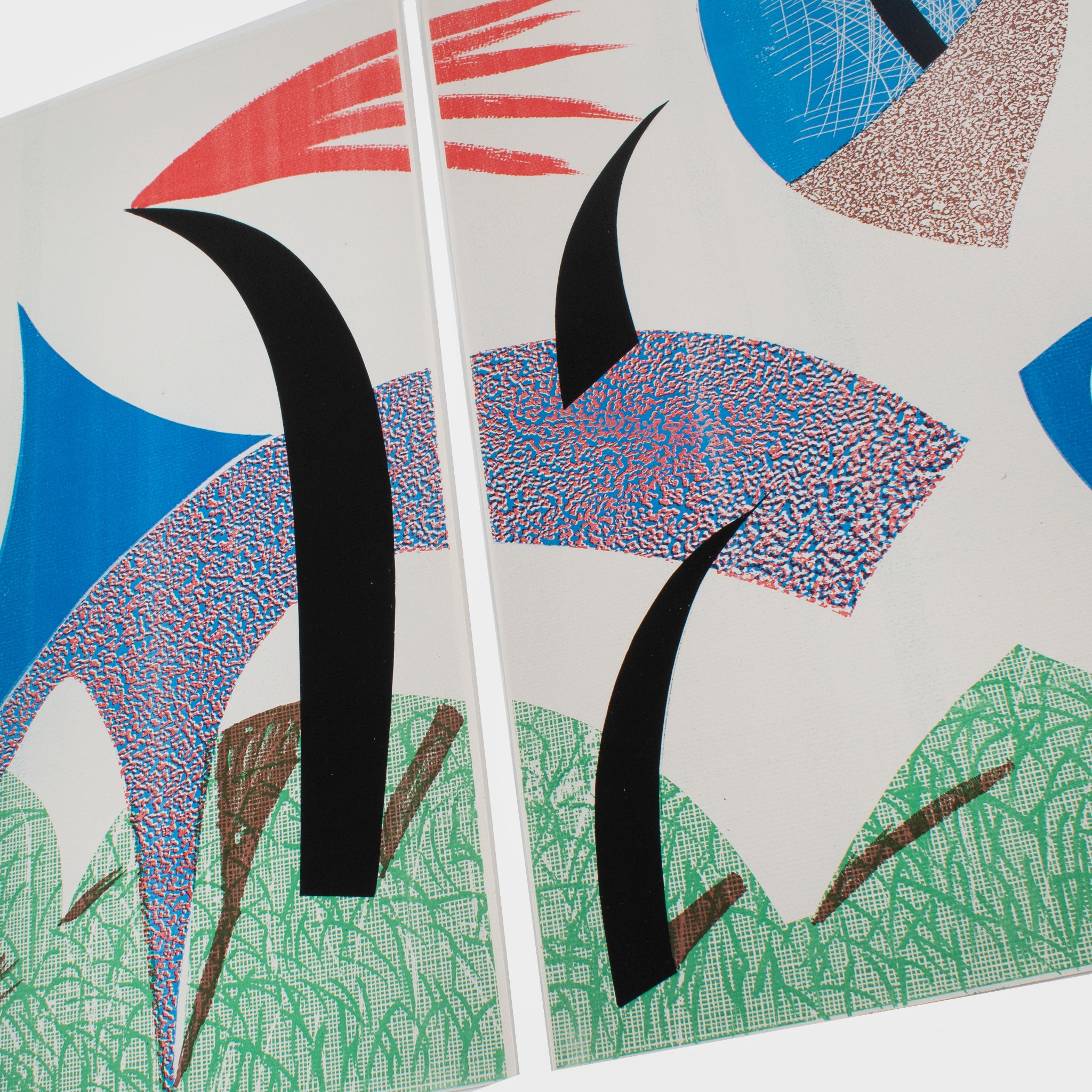
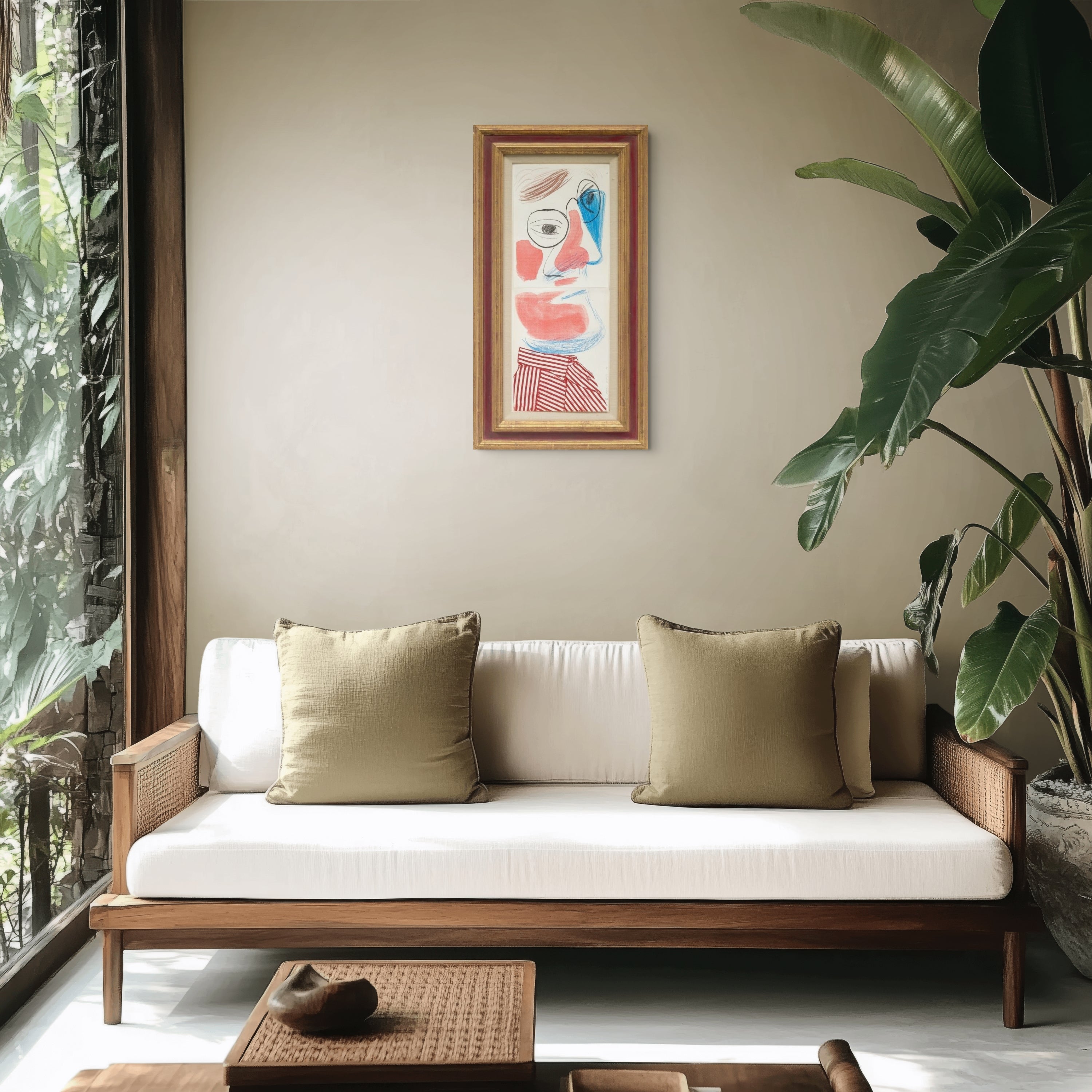
Self-Portrait, July 1986 is particularly important within the series because the technical restrictions of the photocopier became part of the artwork itself. The machine's limited paper size required Hockney to construct the self-portrait across two sheets, turning a technological limitation into a compositional device.
The resulting portrait is unusually immediate. It does not present Hockney through the polished conventions of a formal studio portrait. Instead, the work captures the artist in the process of looking, experimenting and making. That directness is central to its appeal and helps explain why this image has become one of the most desirable works from the Home-Made Prints.
An example is held by the Smithsonian Institution's National Portrait Gallery, while another is in the collection of the Los Angeles County Museum of Art (LACMA).
For collectors seeking an important David Hockney print, this work offers an unusually compelling combination of rarity, institutional provenance, technical innovation and self-portraiture.
About the Artwork
Self-Portrait, July 1986 depicts Hockney in a characteristically direct and graphic manner, using the colour photocopier to construct an image from layered passages of colour.
The work was made on two sheets of Arches Text paper, reflecting one of the central challenges of Hockney's Home-Made Print process. The photocopier imposed physical limitations on the scale of the image, but rather than treating those restrictions as obstacles, Hockney incorporated them into the construction of the work.
The two-sheet format is particularly significant. Phillips records the work as a home-made print executed on an office colour copy machine, on two sheets of Arches Text paper, with the full sheets measuring approximately 55.8 × 21.5 cm. An example sold by Phillips was signed, dated and numbered 16/60 in pencil and carried Hockney's blindstamp.
The image is built from the successive application of colour through the photocopier. This makes the printmaking process unusually visible. Rather than hiding the mechanics of reproduction, Hockney makes them part of the visual language.
The resulting surface possesses an immediacy that distinguishes the Home-Made Prints from more traditional editions. There is a sense that the image has been constructed in real time, with each colour layer responding to what came before it.
The Smithsonian describes its example of the 1986 Self-Portrait as a colour xerox on paper, while LACMA similarly identifies its example as a colour photocopy.
This terminology is important for collectors. Self-Portrait, July 1986 is not a conventional lithograph or screenprint. Its significance lies precisely in Hockney's use of an office colour-copying machine as a new form of printmaking.
The Home-Made Prints
The Home-Made Prints occupy a fascinating position within David Hockney's career because they demonstrate his willingness to reconsider the fundamental mechanics of image-making.
In early 1986, Hockney began experimenting with a colour photocopier. According to Phillips, he quickly recognised that the machine could function simultaneously as a camera and a printing press.
This discovery allowed Hockney to work with extraordinary immediacy.
Traditional printmaking frequently involves a complex sequence of stages, specialised equipment and collaboration with printers. The photocopier offered Hockney something fundamentally different: independence.
He could place an object, drawing or image onto the glass, make a copy, alter the composition and immediately make another. The process enabled him to experiment with colour and composition with a speed much closer to drawing or painting.
Phillips notes that Hockney purchased three photocopiers in quick succession, effectively establishing his own small print studio.
The artist's approach was not simply a technological novelty. It formed part of a much broader interest in new ways of making images.
Throughout his career, Hockney repeatedly embraced emerging technologies, from photography and fax machines to photocopying and eventually digital drawing. The Home-Made Prints therefore anticipate an important aspect of his later practice: the idea that new technology can expand rather than diminish artistic expression.
In these works, the machine becomes an extension of the artist's hand.
About David Hockney
David Hockney occupies a central position in the history of post-war British art.
Born in Bradford in 1937, Hockney emerged during the 1960s as one of the leading figures associated with British Pop Art, developing a visual language characterised by bold colour, graphic clarity and an acute interest in contemporary life.
His practice has always resisted easy categorisation. Painting, drawing, printmaking, photography, collage, stage design and digital technology have all played significant roles in his career.
That openness to experimentation is particularly relevant to Self-Portrait, July 1986. By the mid-1980s, Hockney was already an established international artist, yet he continued to question the conventions of representation and reproduction.
The Home-Made Prints demonstrate this restless curiosity.
Rather than relying on traditional printmaking infrastructure, Hockney used readily available office technology to create a sophisticated editioned artwork. The resulting works are both technologically experimental and deeply personal.
This combination is characteristic of Hockney's wider practice: highly accessible imagery combined with sophisticated investigations into perception, technology and representation.
Hockney's institutional significance is substantial. His work has been exhibited by major museums and is held in important international collections. Phillips notes exhibitions at the Museum of Modern Art in New York, the Royal Academy of Arts in London and the Van Gogh Museum in Amsterdam.
The Smithsonian's National Portrait Gallery also holds Self-Portrait, July 1986, confirming the work's importance within the artist's portrait and printmaking practice.
Why Collect This Work
• A key Home-Made Print: Self-Portrait, July 1986 is among the most important examples from Hockney's experimental 1986 photocopier series.
• Highly sought-after image: The self-portrait is one of the most recognisable and compelling works from the Home-Made Prints.
• Important self-portrait: It places Hockney himself at the centre of an important technological experiment within his career.
• Edition of only 60: The complete edition is exceptionally small by contemporary print-market standards.
• Museum collections: Examples are held by the Smithsonian's National Portrait Gallery and LACMA.
• Innovative medium: Hockney transformed an office colour copy machine into a sophisticated artistic tool.
• Strong auction history: Phillips records an example from the edition selling for £57,150, substantially above its £20,000–30,000 estimate.
• Important period: The work dates from a particularly inventive period in Hockney's exploration of technology and printmaking.
• Collector crossover: The work appeals to collectors of Modern British art, Pop Art, self-portraiture and experimental printmaking.
• Exceptional visual character: The combination of self-portraiture, saturated colour and unconventional printing gives the work a distinctive presence.
The Market for David Hockney's Self-Portrait, July 1986
David Hockney has one of the strongest and most internationally established markets of any British artist of his generation. His paintings command major auction prices, while his prints have become increasingly important to collectors seeking accessible works with direct connections to key periods in his career.
Within the print market, Hockney's Home-Made Prints occupy a particularly interesting position.
These works were produced during a concentrated period of technological experimentation in 1986 and demonstrate an aspect of Hockney's practice that later became central to his embrace of digital technology.
Phillips records that Hockney attempted editions of 60 for the Home-Made Prints, with Self-Portrait, July 1986 completing the full run of 60.
The scarcity is therefore structural rather than artificial: the works were produced in genuinely small editions during an experimental period.
The market evidence is also notable.
A Phillips example of Self-Portrait, July 1986, numbered 16/60, sold for £57,150, against an estimate of £20,000–30,000.
This result is significant because it demonstrates the level of collector demand that can attach to an exceptional example of the Home-Made Prints.
Institutional holdings further strengthen the work's significance. Examples of the 1986 self-portrait are held at the Smithsonian's National Portrait Gallery and LACMA, placing the image within important public collections.
For collectors, this combination of small edition size, museum representation, innovative technique, important date and strong auction history makes Self-Portrait, July 1986 particularly compelling.
It is not simply a David Hockney print; it is an example of Hockney actively redefining what a print could be.
Collecting David Hockney Home-Made Prints
The Home-Made Prints deserve particular consideration when collecting David Hockney.
Their importance lies partly in the fact that they sit at the intersection of several major themes within his career: self-portraiture, technology, colour, experimentation and the democratisation of image-making.
Hockney's photocopier experiments also anticipated his later fascination with digital technology. Phillips describes the Home-Made Prints as foreshadowing his subsequent engagement with digital tools, while emphasising Hockney's desire to humanise new technologies through artistic use.
This makes the series especially relevant to contemporary collectors.
The technology used to make these works was commonplace and commercial, yet Hockney transformed it into a vehicle for highly individual artistic expression. The tension between mass-produced technology and handmade decision-making is central to the works' enduring appeal.
For collectors considering a David Hockney print to collect, the Home-Made Prints can therefore be viewed not merely as editions but as important documents of Hockney's approach to technological innovation.
Among them, Self-Portrait, July 1986 is particularly desirable because it combines the historical importance of the series with Hockney's own image.
Artwork Details
Artist: David Hockney
Title: Self-Portrait, July 1986
Year: 1986
Catalogue Reference: LC-A3053 / M.C.A.T. 295
Medium: Home-made print executed on an office colour copy machine
Paper: Two sheets of Arches Text paper
Dimensions: 55.8 × 21.5 cm (21⅞ × 8½ inches), overall
Edition: 60
Signature: Signed and dated in pencil
Publisher: Published by the artist
Blindstamp: Artist's blindstamp
Category: Modern British Art | Contemporary Print | Home-Made Print | Self-Portrait
Institutional Examples: Smithsonian National Portrait Gallery; Los Angeles County Museum of Art
Availability at Lougher Contemporary
Among the Home-Made Prints, this self-portrait stands out for its combination of rarity, technological innovation, museum representation and exceptional collector demand.
The work offers an unusually direct encounter with Hockney at a pivotal moment in his career: an established artist using an ordinary office machine to rethink the possibilities of printmaking.
For collectors seeking significant David Hockney prints, rare works on paper or important examples of British post-war art, Self-Portrait, July 1986 represents an exceptional acquisition.
Start Collecting David Hockney