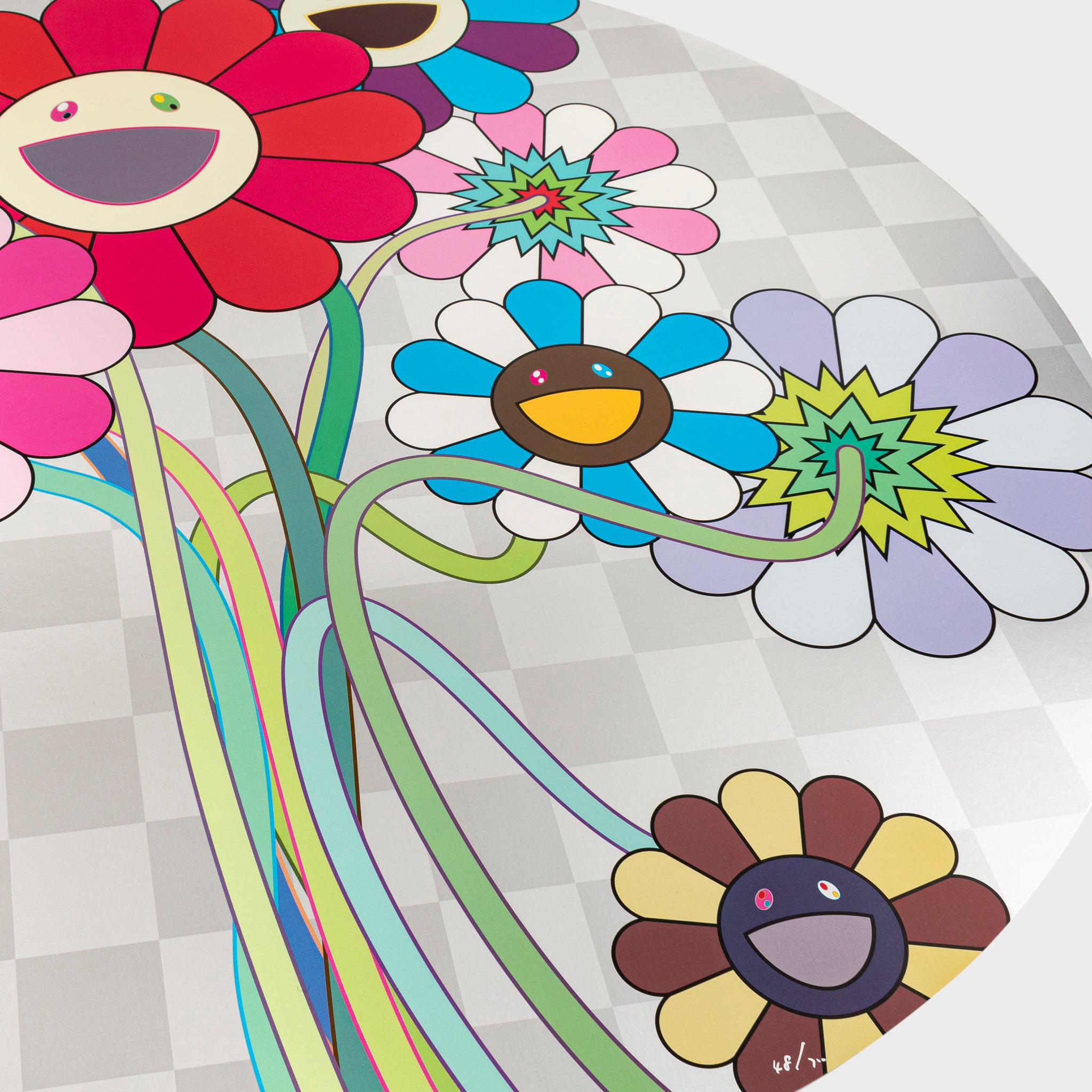

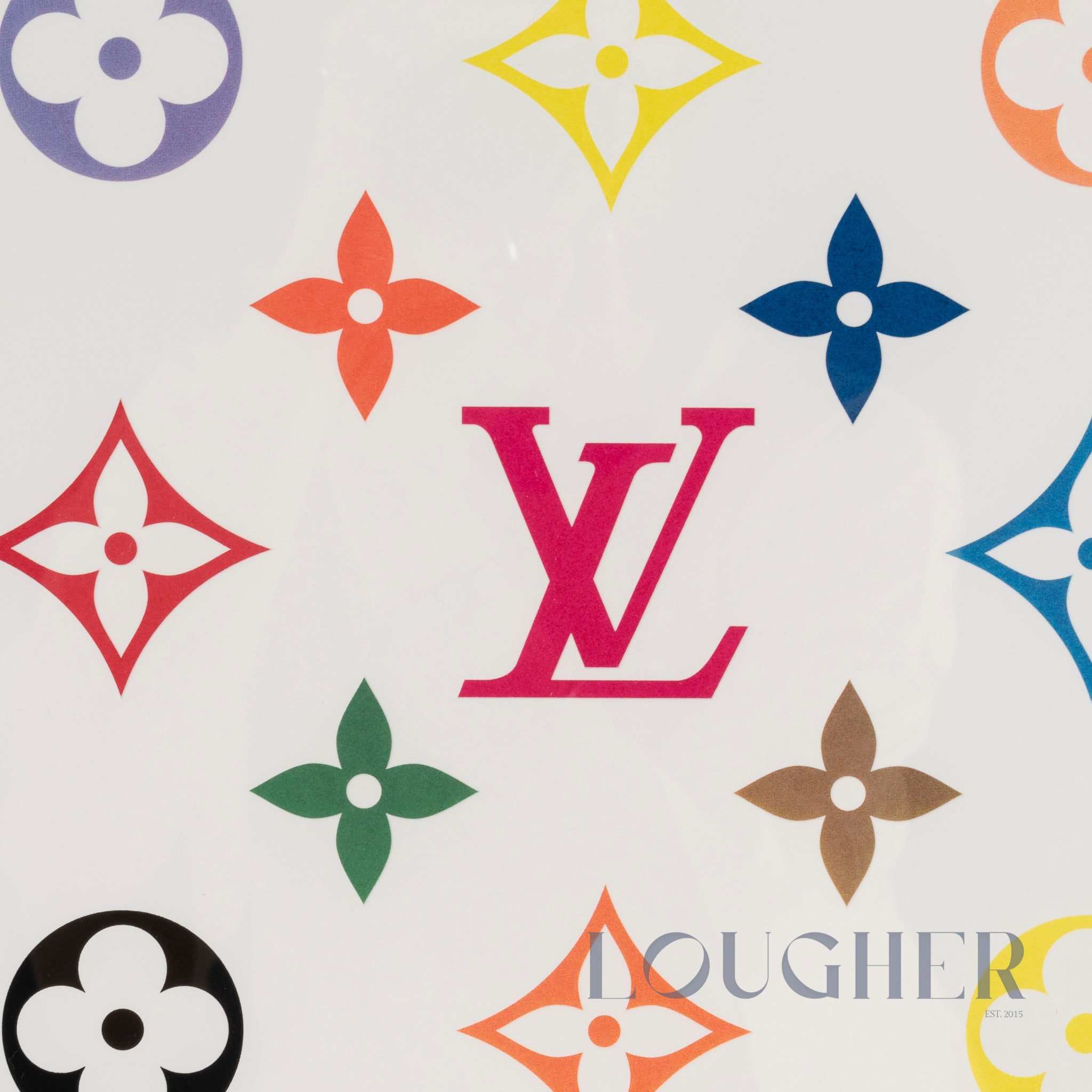
Takashi Murakami Louis Vuitton Prints
Takashi Murakami’s collaboration with Louis Vuitton is one of the most celebrated intersections of contemporary art, fashion and popular culture. Beginning in 2002 under the direction of Marc Jacobs, the collaboration transformed the instantly recognisable Louis Vuitton Monogram through Murakami’s playful, colourful aesthetic, introducing his signature multicoloured flowers, characters and repeated motifs to a global audience.
The resulting works became emblematic of a new relationship between fine art and luxury fashion, challenging traditional boundaries around where art could be experienced and collected. Murakami’s approach brought the visual language of contemporary art into everyday culture while giving the historic Louis Vuitton identity a distinctly contemporary interpretation.
Today, prints and editions connected to the Louis Vuitton collaboration remain particularly sought after by collectors, offering an opportunity to own works associated with a defining moment in both Murakami’s career and the history of artist collaborations. Explore Lougher’s selection of Takashi Murakami Louis Vuitton prints and discover these influential works for your collection.
Filters
4 products
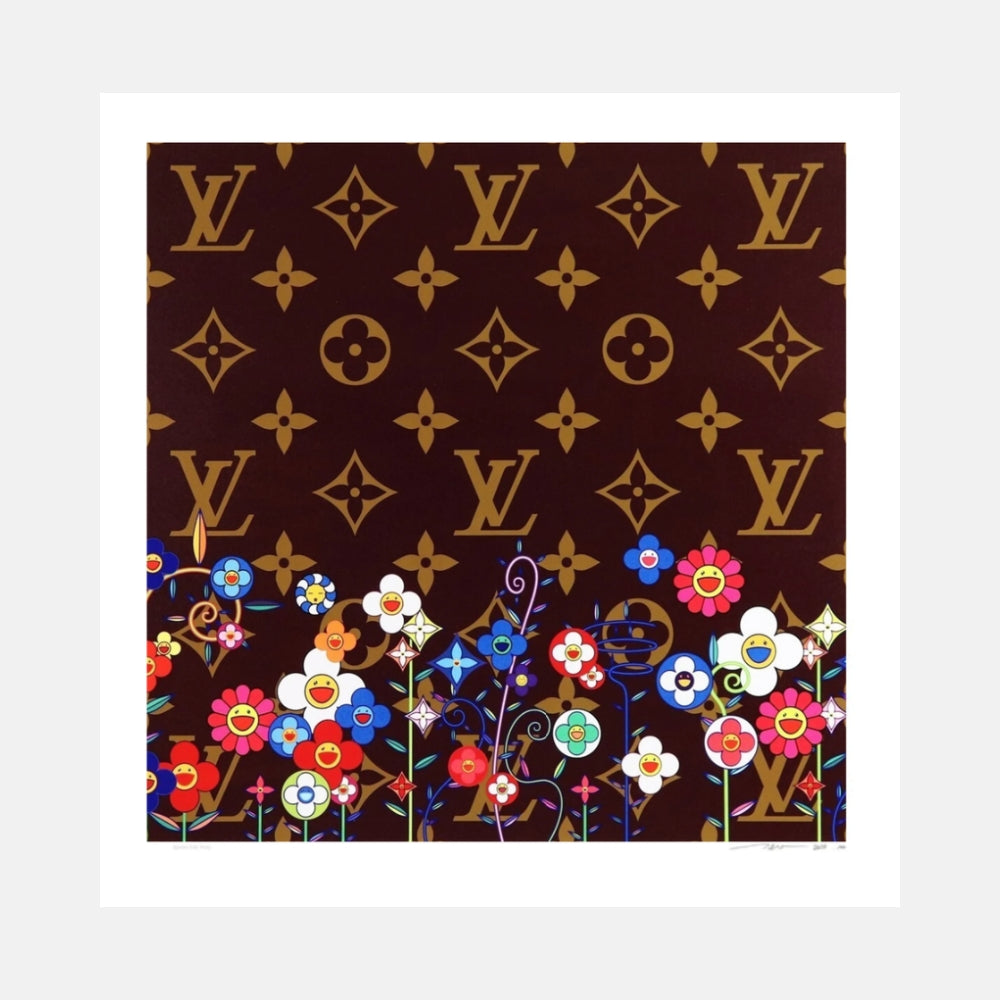
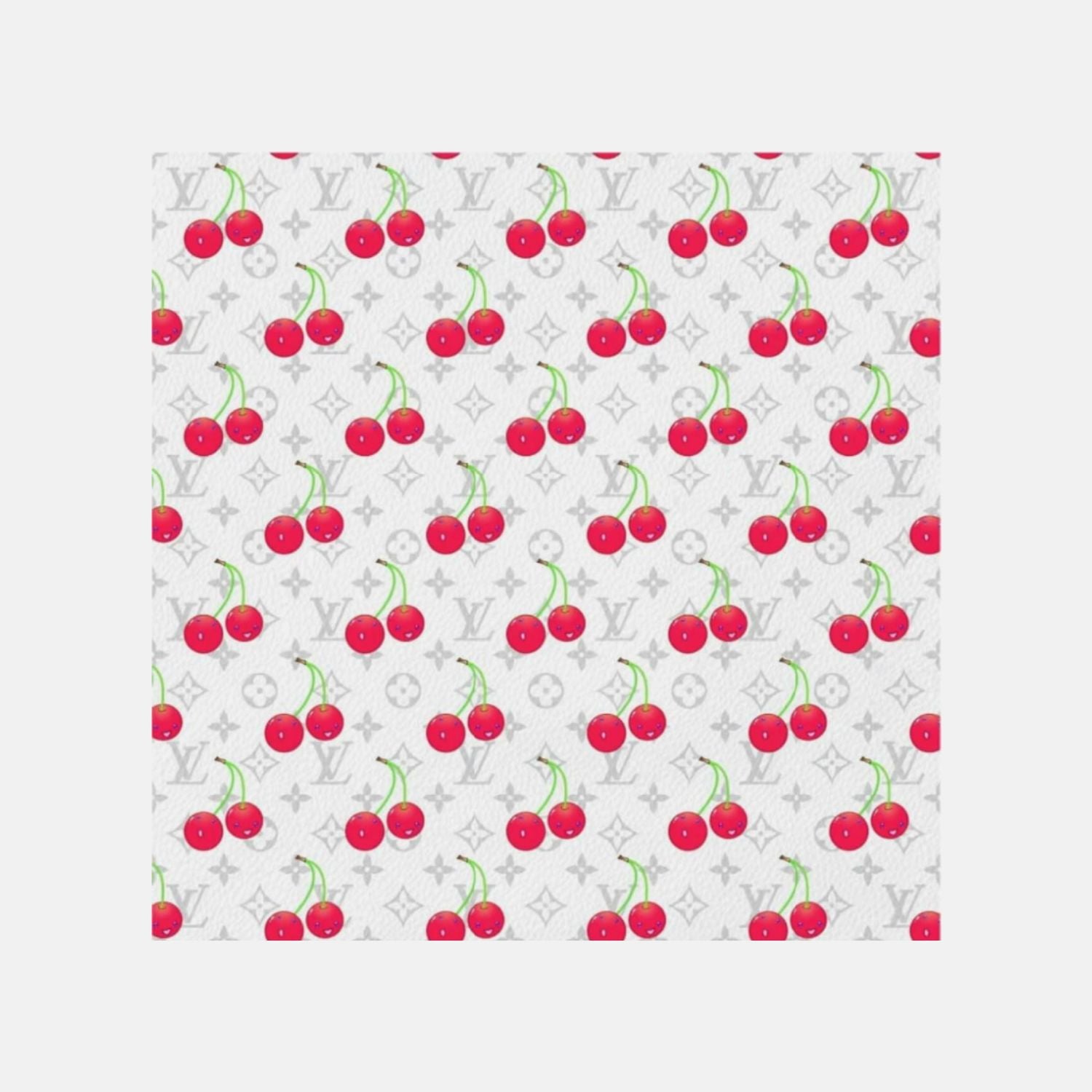

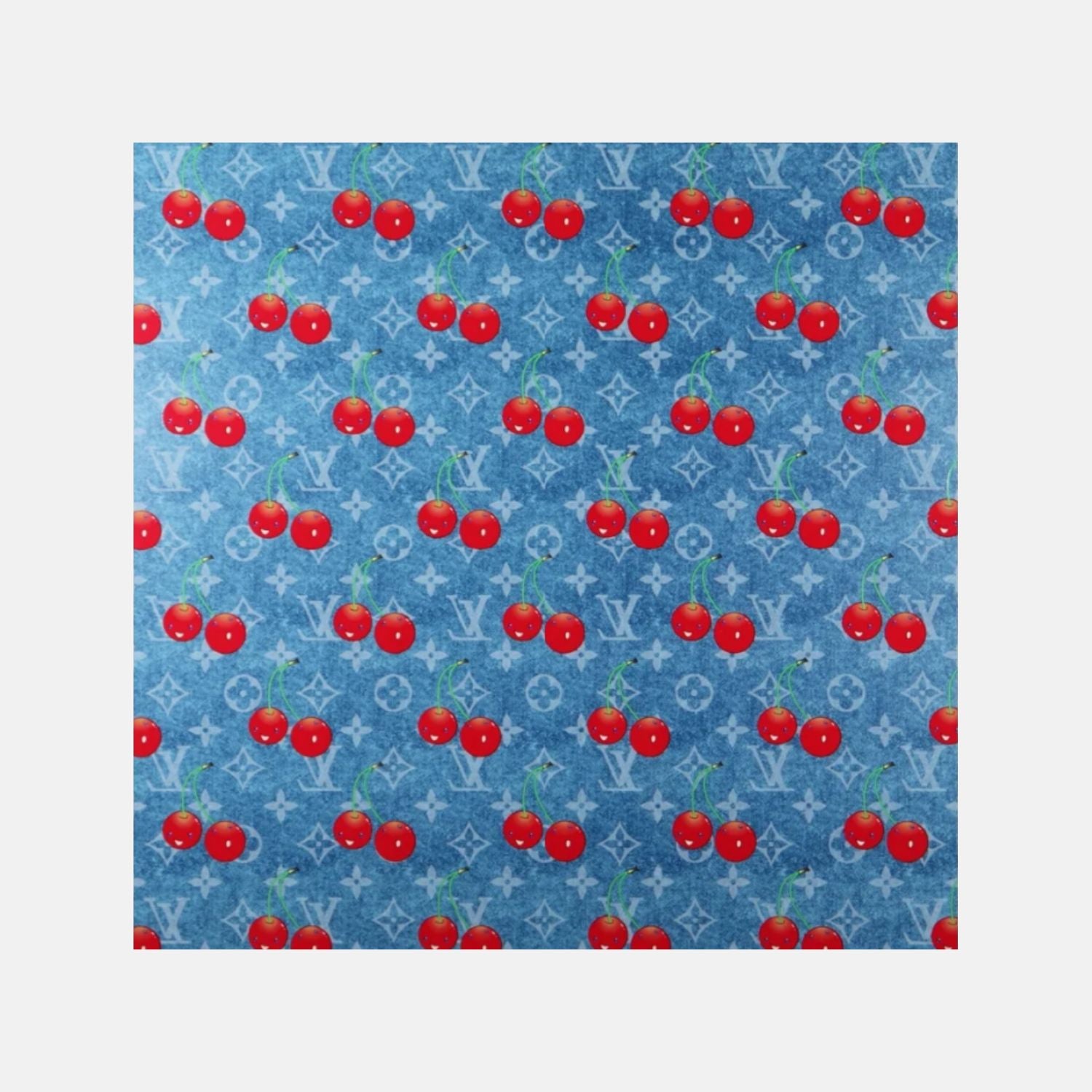

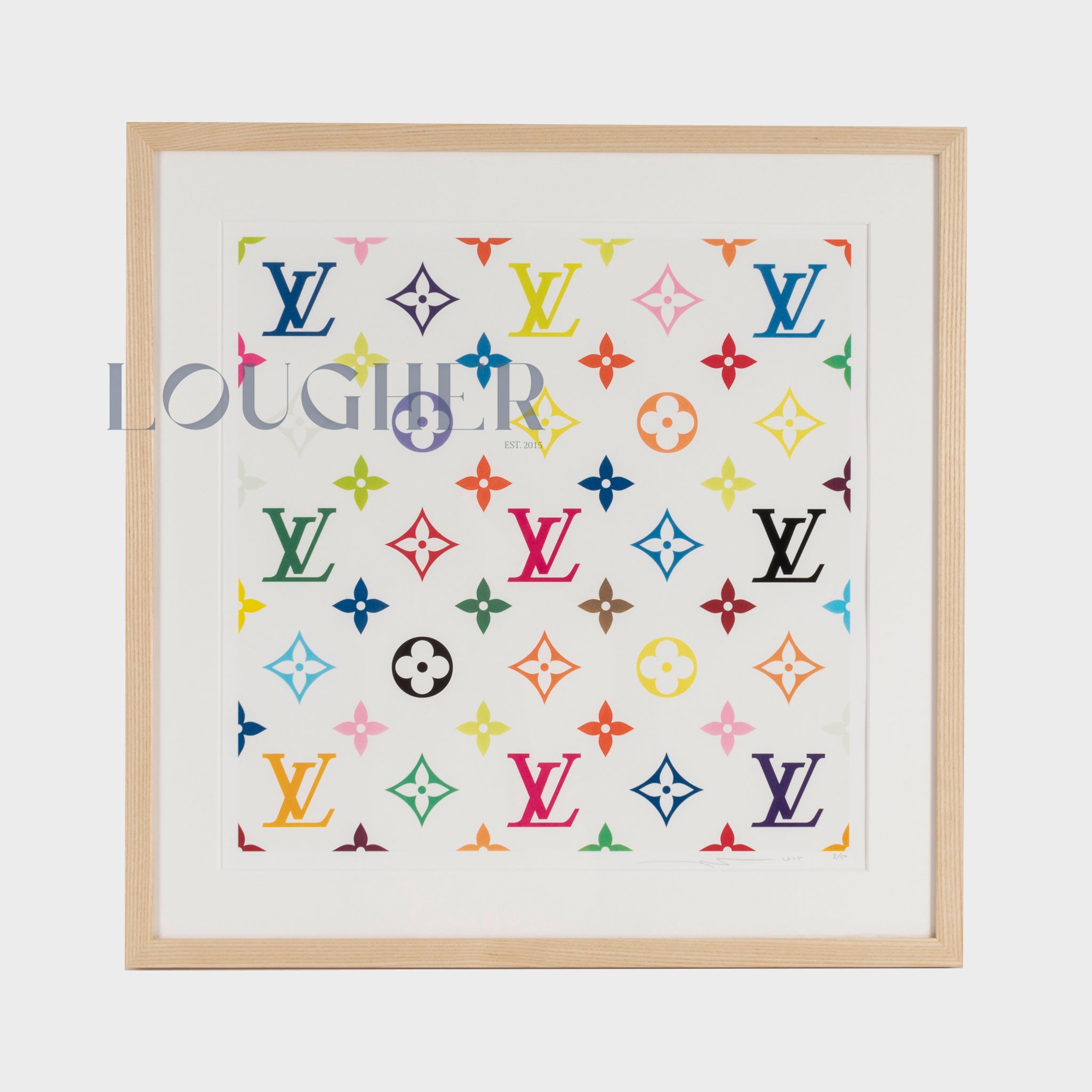
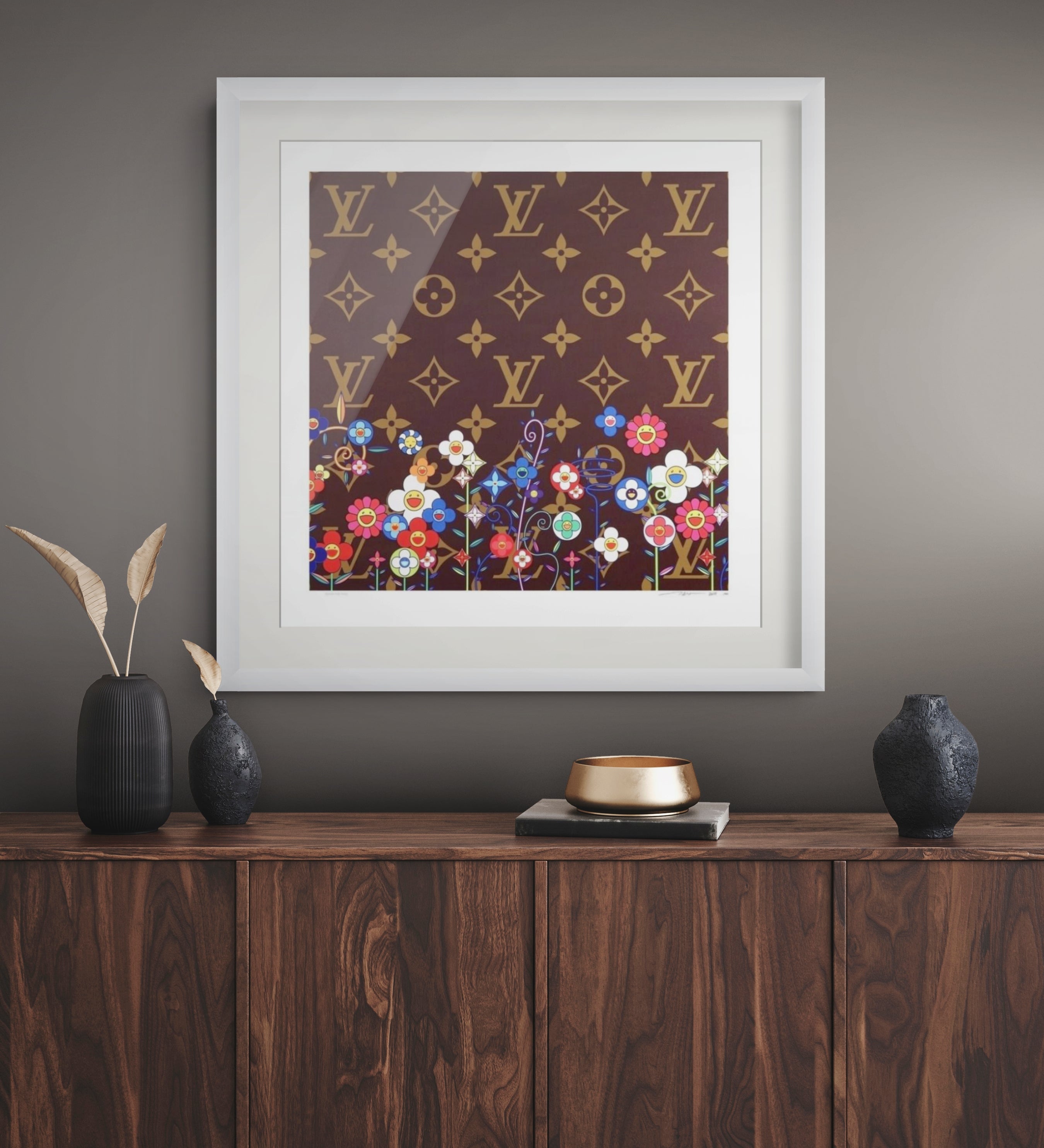
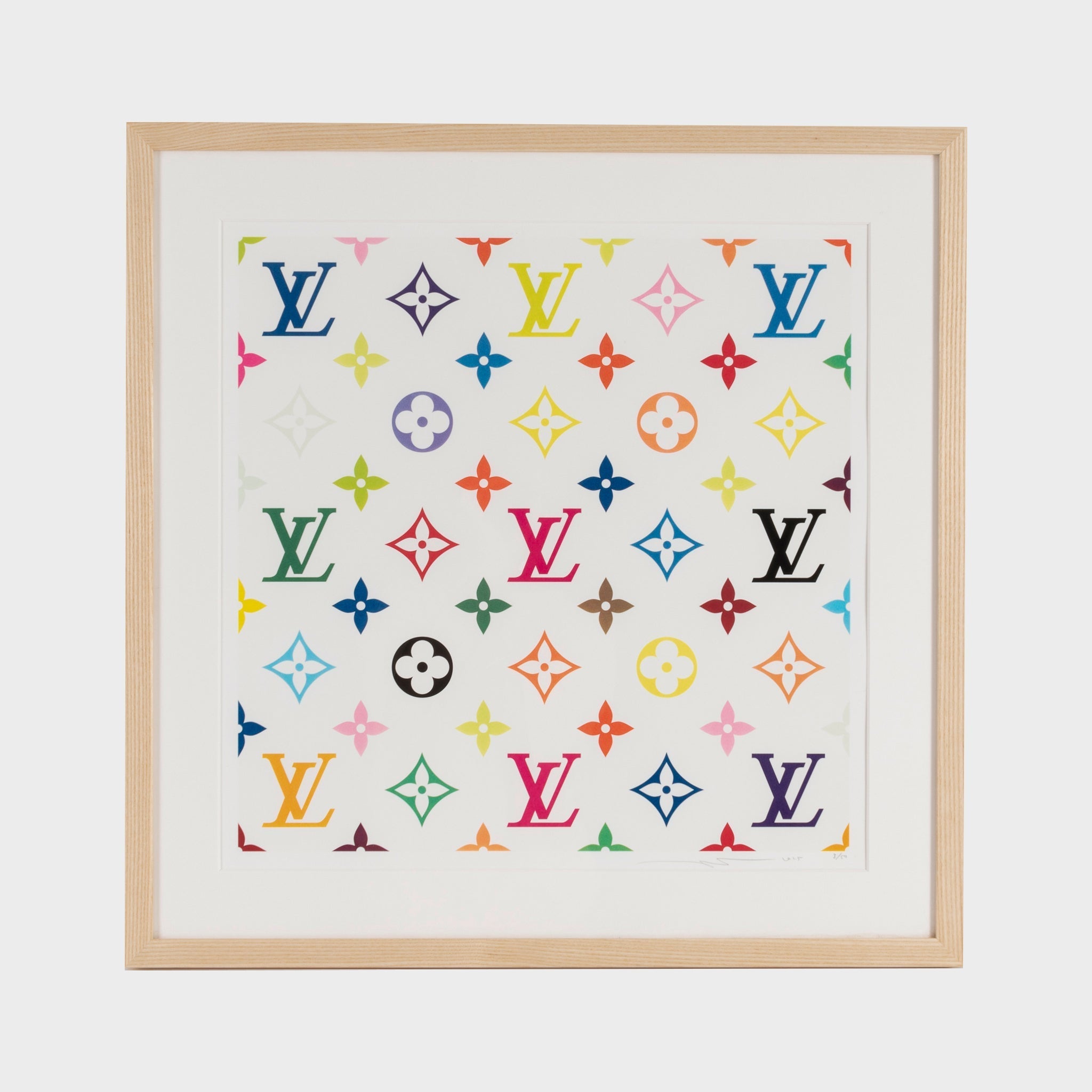
Takashi Murakami LV White Multicolour Monogram (2025) | Louis Vuitton Print for Sale
Explore Takashi Murakami's LV White Murakami Multicolour Monogram (2025), a rare edition of 50 inspired by the legendary Louis Vuitton Monogram collaboration. A museum-quality contemporary print fo...
Biography
Dubbed the "Andy Warhol of Japan," Neo-Pop Art luminary Takashi Murakami creates unique, kitschy characters and works by drawing from traditional Japanese painting. He blurs the lines between high and commercial art, East and West, past and present, through his work in traditional media like painting and sculpture, as well as commercial media, including fashion and animation.
Who is Takashi Murakami?
Murakami's biography reflects his traditional Japanese upbringing, shaping the distinctively Japanese nature of his art. From a young age, he aspired to become an animator, and his passion for manga, anime, international animated film, and otaku culture became central to his work. This led him to develop his "superflat" aesthetic. Coined by Murakami, the term superflat refers to the flattened quality of Japanese visual culture embraced by his works. It also describes his effort to blur the boundaries between popular art and high art.
Takashi Murakami Flowers and Characters
Since his beginnings in Japan, Takashi Murakami's charming characters have captivated the global art market. Among his trademark creations are Mr. DOB and his iconic smiling flowers. Created within the vibrant and colorful consumerist aesthetic, Mr. DOB serves as the artists alter ego and stands as an iconic example of his playful artistry. Over the years, Mr. DOB has evolved into various forms but is primarily recognized as a cute ‘kawaii’ character. Alongside Mr. DOB, his fondness for cartoons is evident in his recurring flower motif. Reimagined as emoji-like characters with smiling faces, Murakami’s Flowers first appeared in 1995 and have since become a staple in his colourful universe.
Celebrating the commercial nature of his art, Murakami's works fetch high prices in the market. For example, in 2018, his six-foot "Dragon in Clouds - Red Mutation," created as part of a challenge by his professor, Nobuo Tsuji, sold for over ¥55.8 million (£6.4 million) at a Council auction in Shanghai.
Murakami’s success has led to numerous international exhibitions and high-profile collaborations. His work has caught the attention of collectors like Kanye West and resulted in partnerships with Pharrell Williams, Virgil Abloh, and Louis Vuitton. While his art seamlessly integrates with the worlds of celebrity and branding, it also holds significant appeal in traditional and critical art contexts, with pieces displayed at esteemed venues like Perrotin, Gagosian, and Versailles.
Takashi Murakami and Louis Vuitton
Takashi Murakami, the renowned Japanese contemporary artist, has established numerous collaborations with leading brands, notably his ground-breaking partnership with Louis Vuitton. Initiated in 2002, this collaboration saw Murakami commissioned by the luxury fashion house to reimagine their iconic monogram. The outcome was a lively and whimsical collection featuring handbags, accessories, and apparel that seamlessly integrated his distinctive characters and motifs with Louis Vuitton's timeless designs. This pioneering venture not only brought contemporary art into the sphere of high fashion but also catapulted Murakami's artistry to a global audience.
Subsequently, Murakami has continued to engage in diverse brand collaborations, bridging the gap between art and commerce with his unmistakable aesthetic. His ability to merge artistic innovation with commercial appeal has solidified his influence in both the art world and popular culture.
Takashi Murakami draws inspiration from a diverse array of influences that have shaped his distinctive artistic vision. His encounter with Bob Flanagan's provocative work at the New Museum in 1994, which explored themes of medical injections and fetishism, broadened his understanding of art beyond conventional notions of beauty. Influential figures like Katsuhiro Otomo, known for his manga series "Domu: A Child's Dream" (1980-1981), animator Yoshinori Kanada, animation director Hayao Miyazaki, and filmmaker George Lucas have all left a mark on his bold and cartoonish style.
Additionally, Murakami finds inspiration in the detailed drawings of Horst Janssen, Buddhist iconography, Zen painting traditions, and the composition techniques of 18th-century Edo Japan. His early visits to exhibitions in SoHo, New York, were pivotal, exposing him to cutting-edge art that contrasted with his previous experiences in Japan and influencing his evolving artistic path. These diverse influences have contributed to his ability to blend traditional Japanese aesthetics with contemporary global trends in his celebrated artworks.
Takashi Murakami's path to artistic success was marked by perseverance and self-determination. Growing up, he never received validation of his artistic talent, so he developed his skills through self-teaching. In 1989, driven by his belief that New York City was a global artistic hub, Murakami moved there, renting a modest apartment in Brooklyn. He faced financial challenges initially but secured a transformative residency at the PS1 International Studio Program, a turning point in his career. Since then, Murakami has expanded his artistic vision into a multi-faceted brand spanning fashion, technology, and entertainment. Today, he oversees a studio outside Tokyo resembling a factory, where skilled technicians assist him in crafting his intricate artworks to perfection. His journey underscores the transformative power of dedication and resilience in achieving artistic and commercial success on a global scale.
Takashi Murakami Artworks For Sale
Takashi Murakami's journey to artistic acclaim is a testament to perseverance and self-reliance. Growing up without recognition of his artistic talent, he honed his skills through self-teaching. In 1989, driven by his belief that New York City was a pivotal centre for art, he moved there, settling in a modest Brooklyn apartment. Initially grappling with financial challenges, he later secured a pivotal residency at the PS1 International Studio Program, marking a significant turning point in his career. Since then, Murakami has evolved his artistic vision into a diverse brand encompassing fashion, technology, and entertainment. Today, he oversees a studio near Tokyo that functions like a factory, collaborating with skilled technicians to meticulously craft his intricate artworks. His journey exemplifies the transformative impact of dedication and resilience in achieving both artistic innovation and global commercial success.
Iconic Motifs
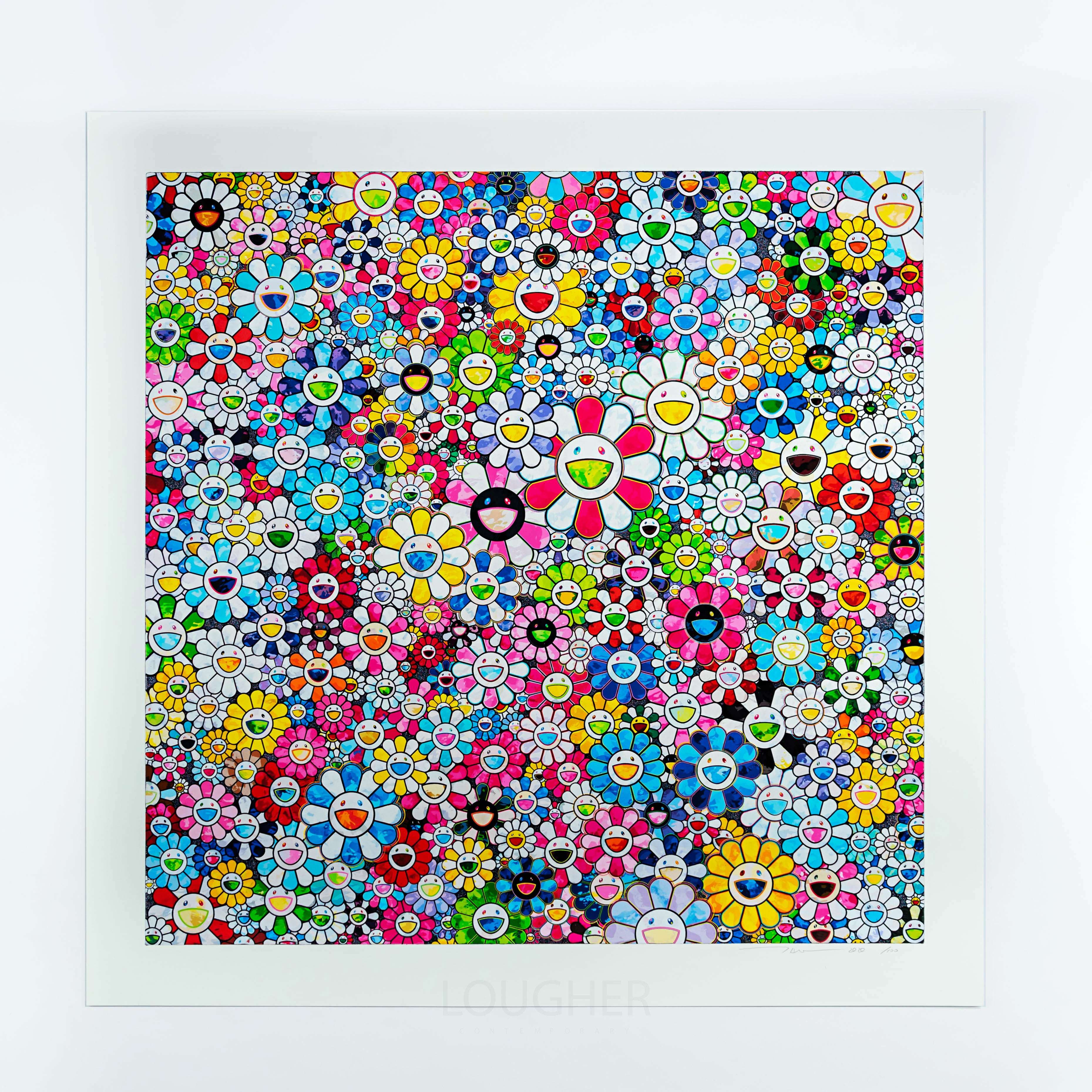
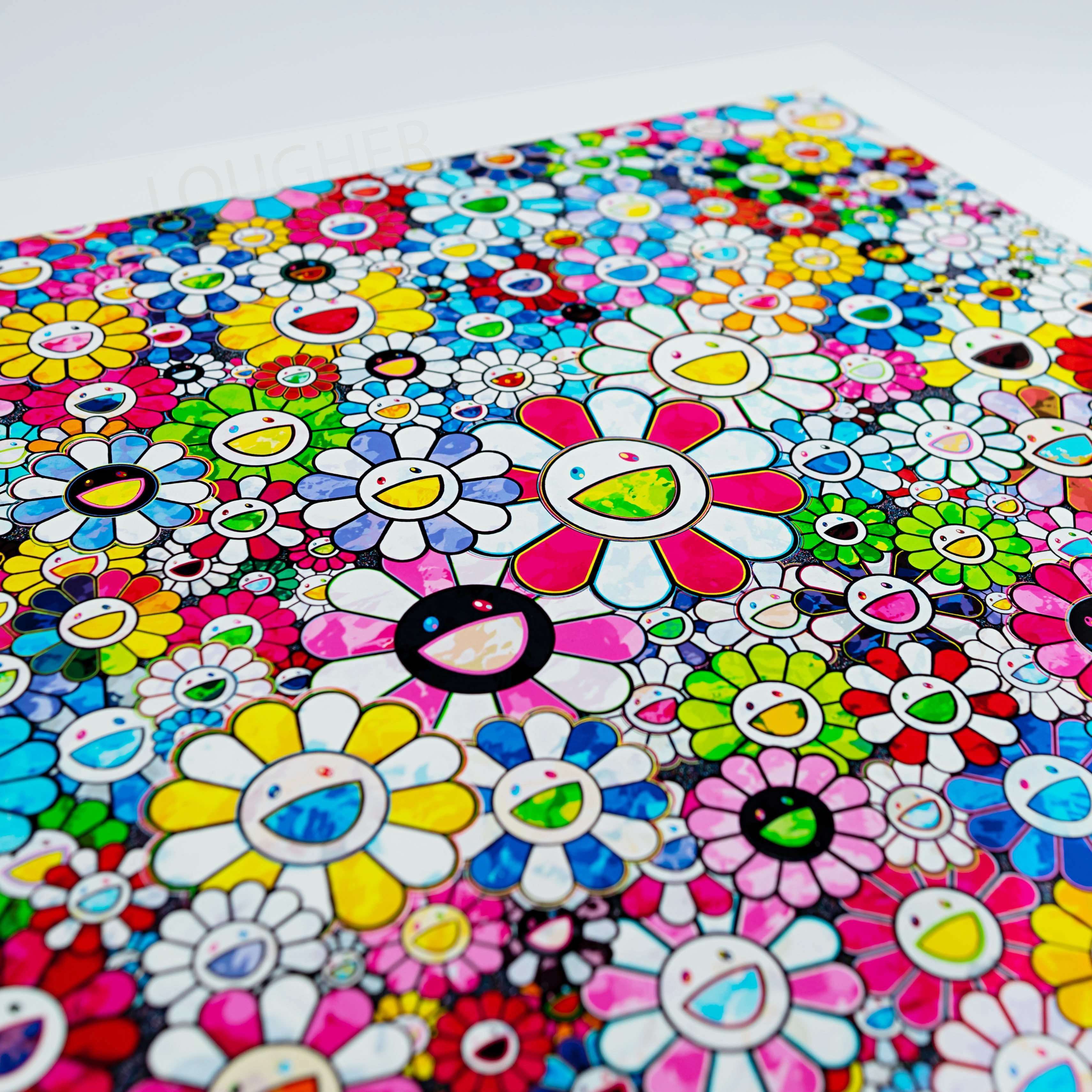
Flowers: Takashi Murakami’s signature flowers, particularly the smiling daisies, are among his most iconic motifs. These cheerful yet slightly unsettling blooms appear in a wide range of his works, from large canvases to sculptures and commercial products. They symbolise both the joy and sadness inherent in life, embodying the artists unique blend of traditional Japanese aesthetics with contemporary pop culture.
Doraemon: Murakami often references popular Japanese characters in his art, including Doraemon, a beloved robotic cat from a classic manga and anime series. By incorporating Doraemon into his works, Murakami bridges the gap between traditional Japanese culture and modern media, infusing his art with a sense of nostalgia and cultural commentary.
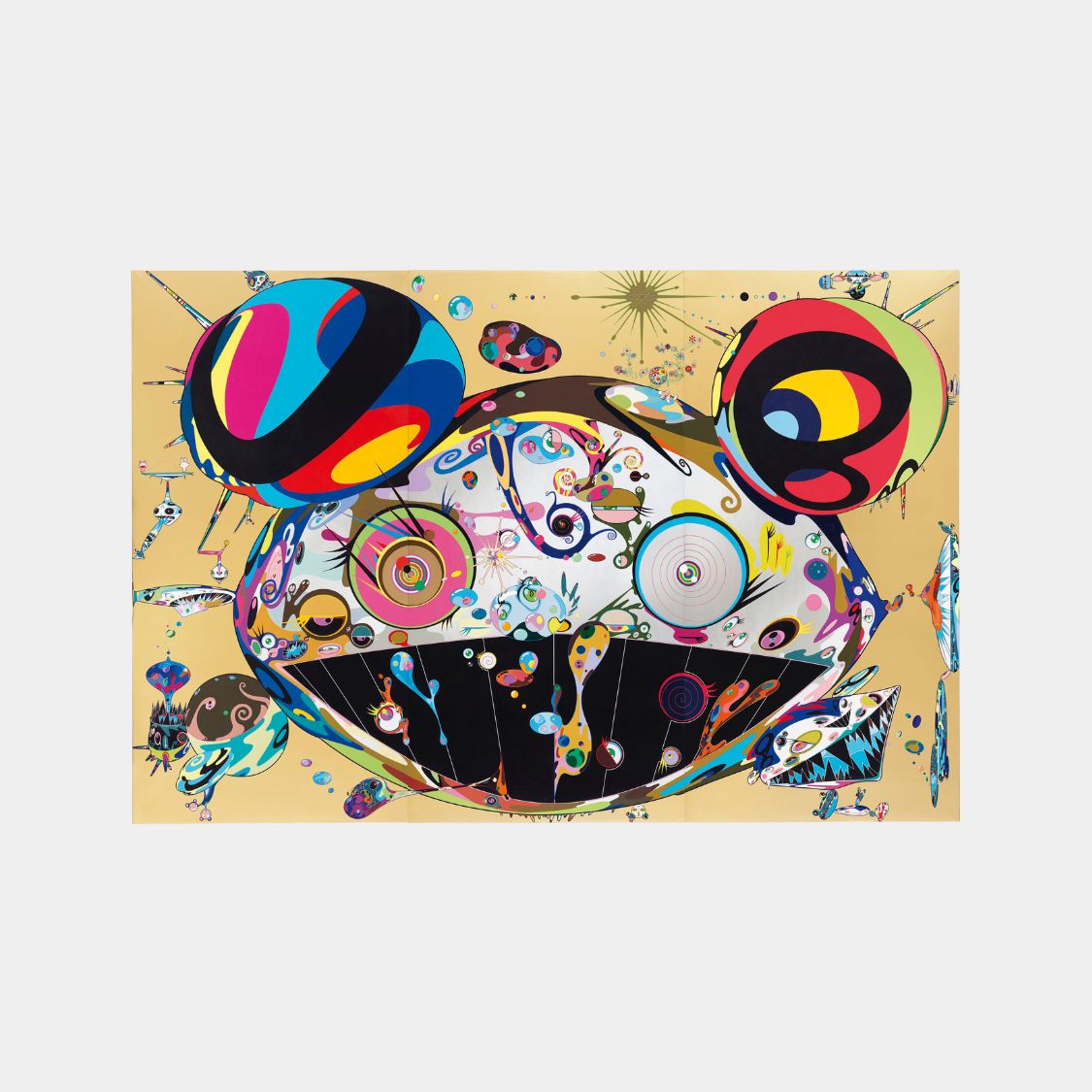
Mr. DOB: Mr. DOB is one of Murakami’s most recognisable creations, often regarded as his alter ego. With Mickey Mouse-like ears and a round, cartoonish face, Mr. DOB shifts between cute and menacing, reflecting his exploration of the dualities within consumer culture. The character is a critique of capitalist consumerism, parodying the ubiquitous mascots of modern life.
100 Views of Edo: Inspired by Utagawa Hiroshige’s 19th-century series 100 Famous Views of Edo, Murakami has created modern interpretations that engage with the historical and cultural significance of Edo (now Tokyo). His works in this series juxtapose the traditional ukiyo-e style with contemporary elements, highlighting the ongoing influence of Japanese art history on his practice.
Hiropon Factory & Kaikai Kiki
In the mid-1990s, Takashi Murakami established the Hiropon Factory in Tokyo, a studio modelled after Andy Warhol’s Factory. This space allowed Murakami to produce his large-scale works with the help of assistants and also provided a platform for emerging artists. The Hiropon Factory later evolved into Kaikai Kiki Co., Ltd., expanding Murakami’s influence in the global art scene. Kaikai Kiki now operates in Tokyo, New York, and Los Angeles, serving as a production hub and artist management company. The collective plays a crucial role in promoting the superflat style—a movement Murakami spearheaded, which flattens distinctions between high and low culture.
Japanese Influences
Takashi Murakami’s work is deeply rooted in Japanese culture, drawing inspiration from traditional Japanese painting, or nihonga, which he studied extensively at the Tokyo University of the Arts. His art often references historical Japanese artists like Kanō Eitoku, whose powerful and sensitive qualities Murakami seeks to emulate. Murakami's superflat aesthetic also reflects the influence of Japanese art and culture, merging ancient techniques with contemporary pop culture elements such as anime, manga, and otaku subculture. This synthesis of old and new creates a dialogue between Japan’s artistic heritage and modern-day visual culture.
Collaborations
Takashi Murakami x Louis Vuitton: In the early 2000s, Murakami collaborated with Marc Jacobs, then creative director of Louis Vuitton, to reimagine the brand’s classic monogram. This ground-breaking collaboration not only revitalised the Louis Vuitton brand but also brought Murakami international acclaim, solidifying his status as a cultural icon.
Takashi Murakami x T-Shirts: Murakami’s designs have also made their way into the world of fashion through collaborations on T-shirt collections. Notably, his partnership with Billie Eilish for a Uniqlo UT collection merged the worlds of music, art, and fashion. The collection featured Murakami’s distinctive style alongside Eilish’s imagery, making contemporary art accessible to a wider audience and furthering his reach into popular culture. The collaboration between Takashi Murakami and Billie Eilish extended beyond fashion into music and visual arts. The artist directed the animated music video for Eilish’s song You Should See Me In A Crown, which showcased his signature style alongside Eilish’s creative vision.
Explore Takashi Murakami Prints