

In the realm of contemporary art, few figures have captured the public's imagination quite like Damien Hirst. Renowned for his bold, often controversial creations, Hirst has consistently pushed the boundaries of what constitutes art. One recurring motif that has emerged throughout his career is the skull—a symbol rich in cultural and metaphysical connotations. From his early works to his more recent endeavours, Hirst's use of skulls has sparked both fascination and debate within the art world and beyond.
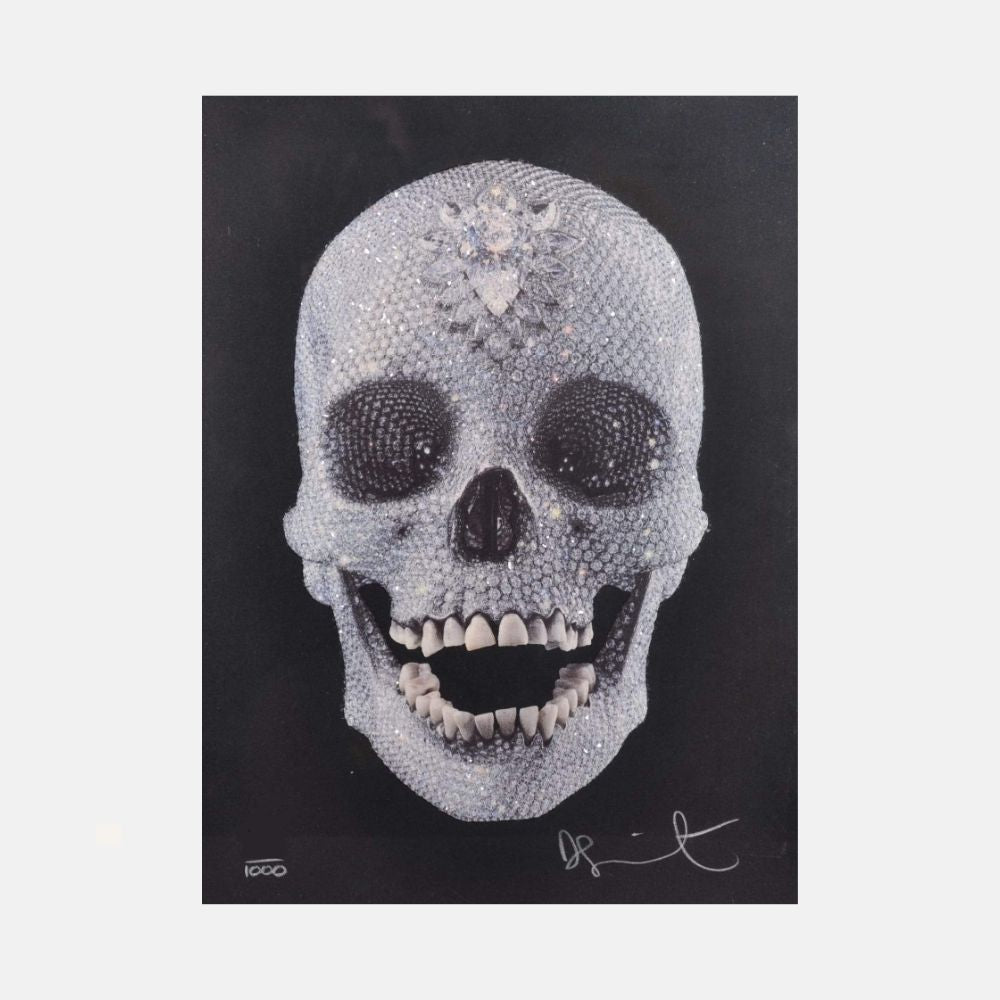
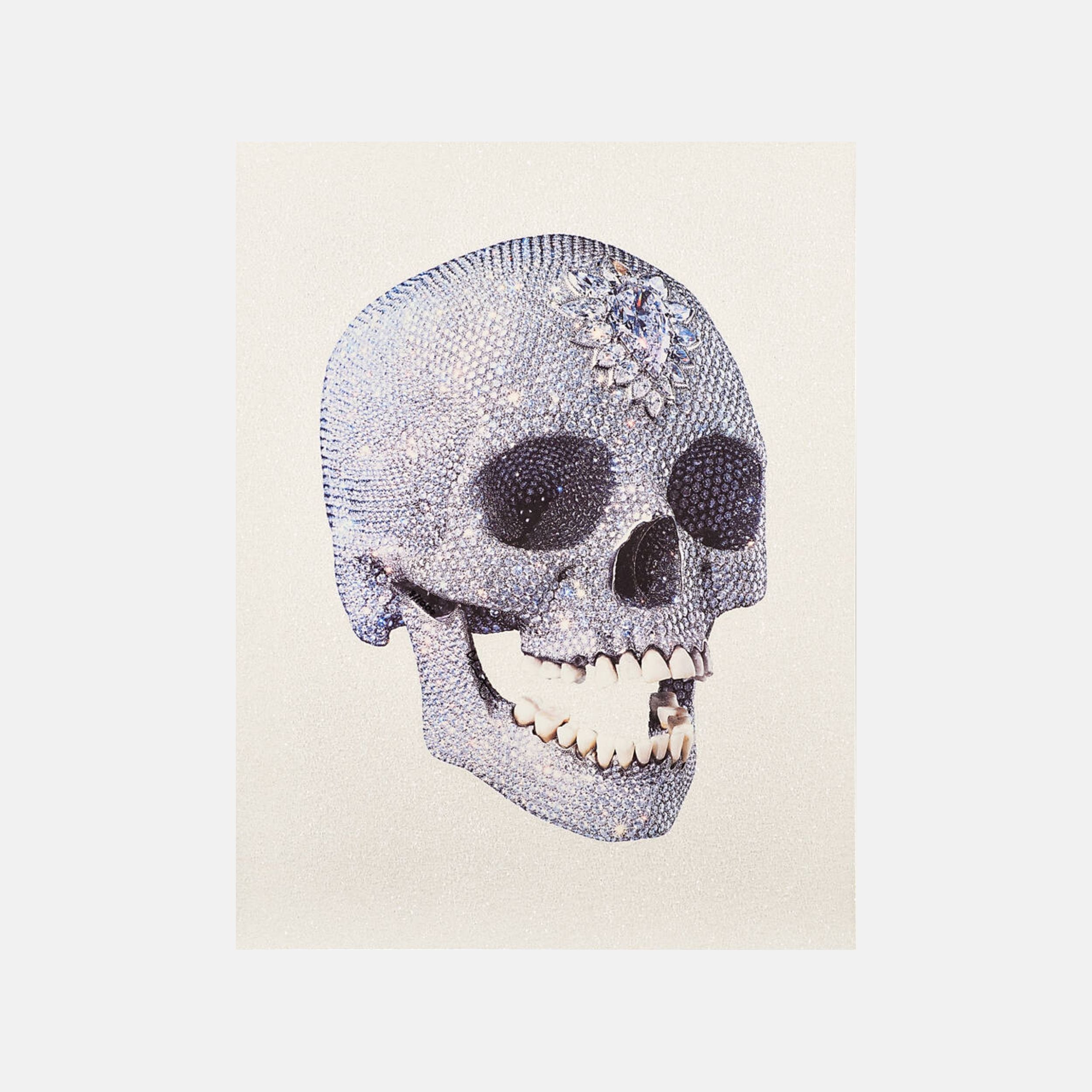
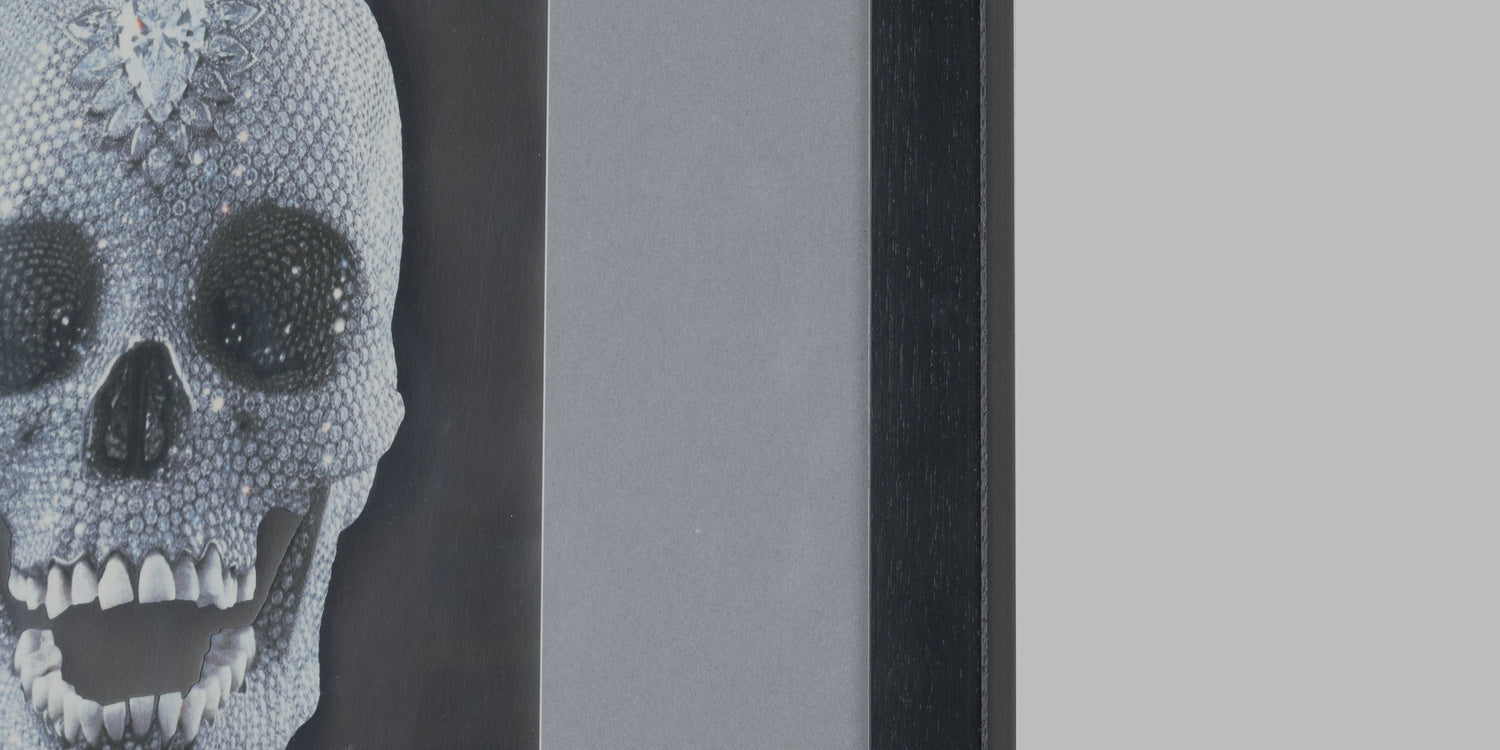
Damien Hirst diamond skull 'For the Love of God'
Perhaps the most iconic manifestation of Hirst's fascination with skulls is his artwork "For the Love of God," unveiled in 2007. At its core lies a platinum cast of a human skull, encrusted with over 8,000 diamonds, including a large pink diamond set in the forehead. The work was bejewelled by Bentley and Skinner, royally appointed Piccadilly jewellers on Bond Street in London. But beyond its monetary value, "For the Love of God" serves as a potent symbol, confronting viewers with themes of mortality, wealth, and the pursuit of immortality.
How much did Damien Hirsts diamond Skull sell for?
Damien Hirst claimed that the sculpture cost £15 million to produce. In 2007, the work sold for £50 million to an anonymous group of investors, making it one of the most expensive artworks ever created. However, in 2022 it was revealed that the artworks is still with White Cube and is still in large part owned by Damien Hirst, raising suspicions over the legitimacy of the initial sale.
Hirst's Inspiration
Damien Hirst's "For the Love of God" sculpture was inspired by the concept of memento mori, a Latin phrase meaning "remember that you must die." This theme has been explored throughout art history, particularly in the medieval and Renaissance periods, where artists depicted symbols of mortality to remind viewers of the impermanence of life and the inevitability of death.
Hirst's sculpture, consisting of a platinum cast of a human skull adorned with over 8,000 diamonds, including a large pink diamond on the forehead, embodies this concept in a contemporary context. It confronts viewers with the idea of mortality while also engaging with themes of wealth, consumerism, and the pursuit of immortality through material possessions.
Hirst took inspiration from the past to create the iconic sculpture, looking at Aztec skulls in the British Museum's collection which are intricately decorated with turquoise and coral tiles. The Aztecs, an ancient Mesoamerican civilization that thrived in what is now Mexico, had a rich and complex relationship with death and the afterlife. Aztec art often depicted skulls and skeletons as symbols of mortality and the cyclical nature of existence. Skulls were commonly used in rituals and ceremonies, adorned with intricate designs and often displayed as offerings to the gods. These skulls, known as "tzompantli," were arranged in rows on wooden racks, serving as a tangible reminder of the impermanence of life and the importance of honouring the dead.
Critics and scholars have offered diverse interpretations of Hirst's use of skulls. Some view it as a commentary on the transient nature of life and the inevitability of death—a memento mori for the modern age. Others see it as a critique of consumer culture, with "For the Love of God" serving as a stark embodiment of excess and materialism. Regardless of interpretation, it is undeniable that Hirst's skulls provoke a visceral response, challenging viewers to confront their own mortality and the fleeting nature of existence.
Art and Wealth
The nature of this work, and the details of its alleged sale back in 2007, implore us to think about contemporary art and its inextricable tie to wealth.
By utilising diamonds—a symbol of luxury and affluence—Hirst challenges traditional notions of value and worth within the art world. The exorbitant cost of the materials used in the sculpture, along with its rumored price tag of around £50 million, positions it as one of the most expensive artworks ever created. This juxtaposition of priceless materials with a symbol of mortality underscores the paradoxical nature of wealth and its relationship to the inevitability of death.