


Yayoi Kusama: Her Most Iconic Works and the Art of Infinity
Remembering Yayoi Kusama through her most iconic works
Following the sad news of Yayoi Kusama's death at the age of 97, we look back at the works and recurring motifs that established her as one of the most recognisable and influential artists of the post-war era.
Kusama died in Tokyo on 14 August 2026, leaving behind an extraordinary artistic legacy spanning more than seven decades. Her practice crossed painting, sculpture, installation, performance, printmaking, literature and fashion, while her visual language remained remarkably distinctive.
For audiences around the world, certain images have become synonymous with Kusama: the Pumpkin, the polka dot, the Infinity Net and the mirrored room. Yet each of these motifs represents much more than an instantly recognisable aesthetic. Together, they reveal an artist fascinated by repetition, infinity, perception, identity and the relationship between the individual and the universe.
Kusama's ability to transform these ideas into compelling visual forms is central to her enduring appeal.
As we remember her life and work, we explore some of the most famous Yayoi Kusama artworks, including the Pumpkin sculptures and prints that have become particularly important to collectors.
Yayoi Kusama's Pumpkin sculptures
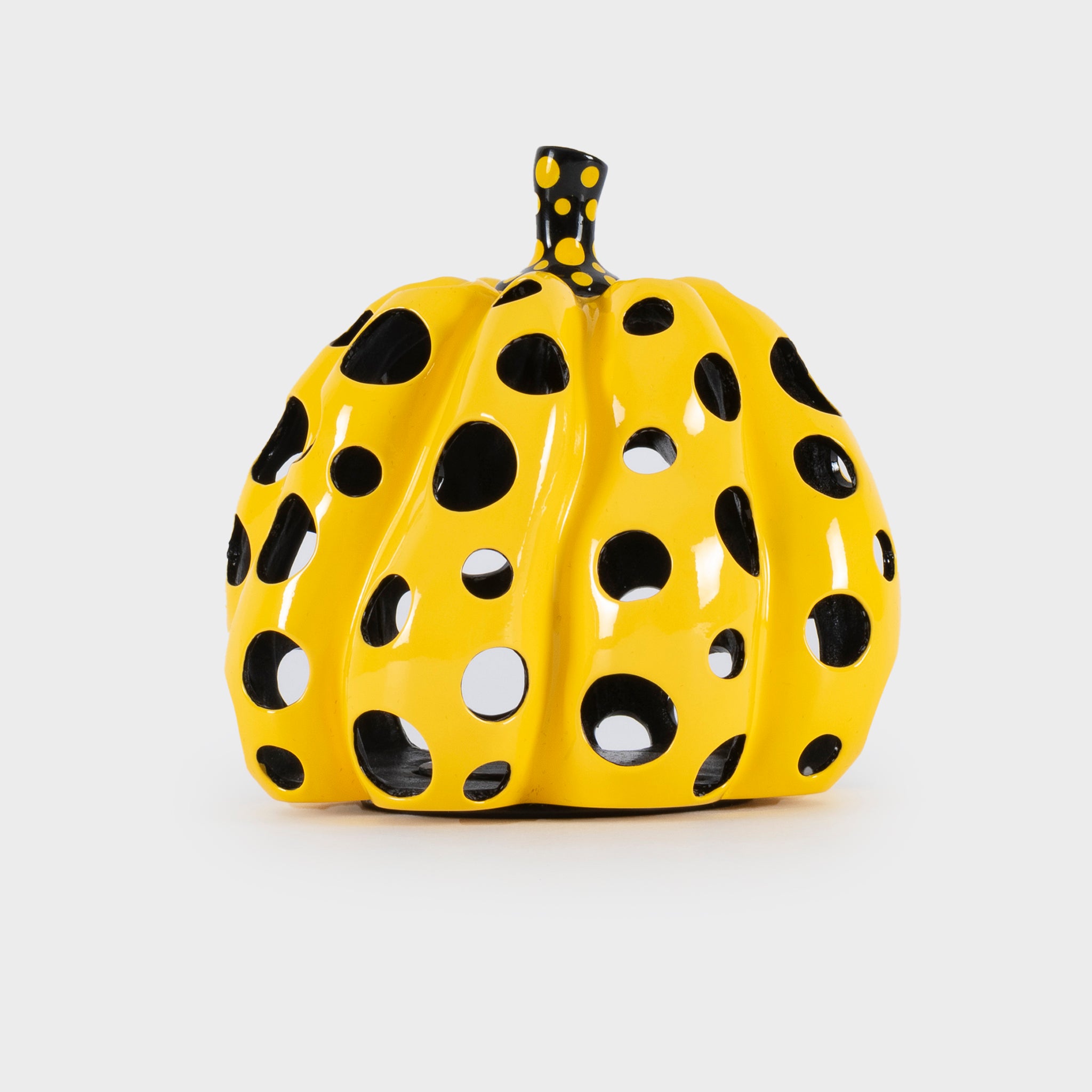
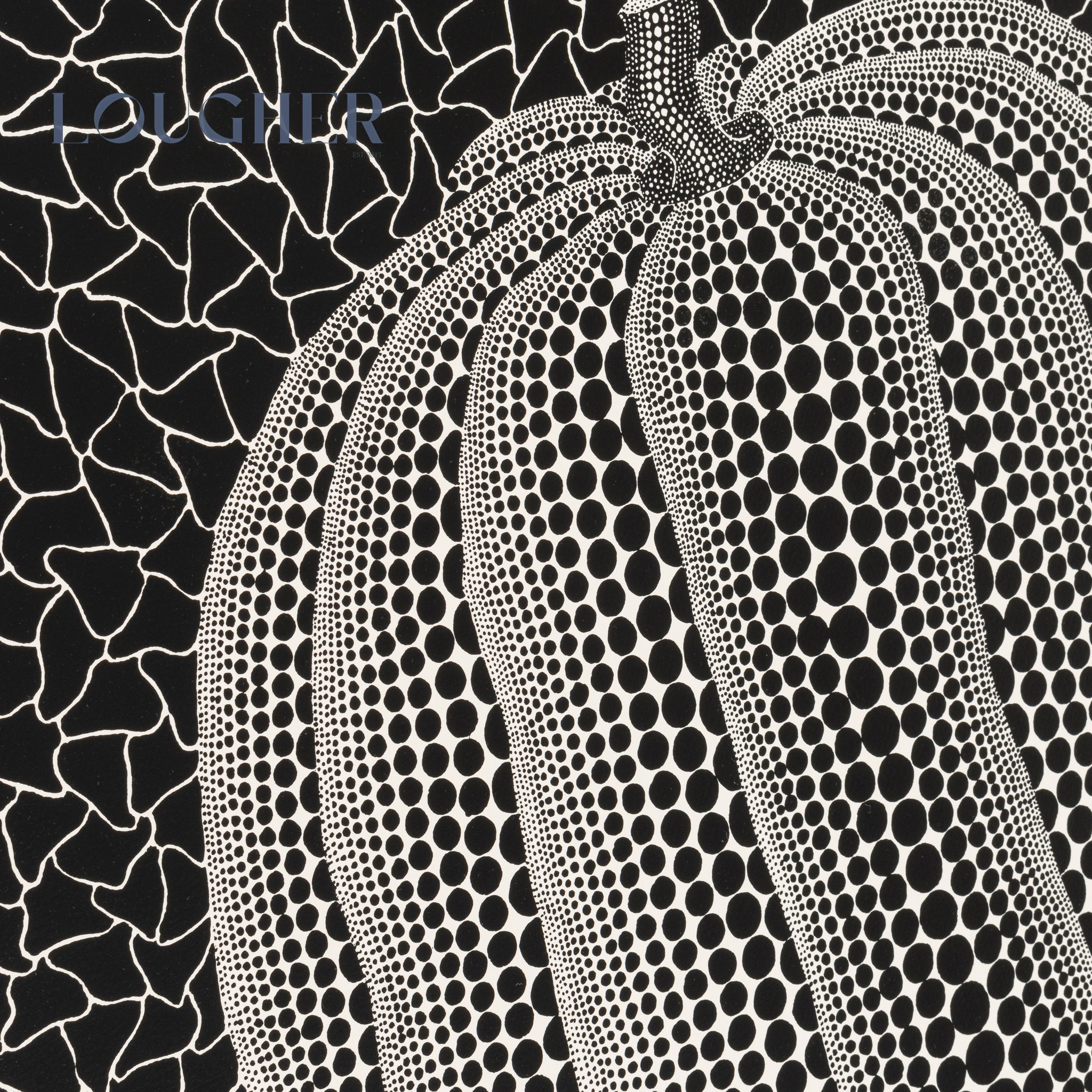
Few works are more closely associated with Yayoi Kusama than her Pumpkin sculptures.
The pumpkin first appeared in Kusama's work in the 1940s, inspired in part by the vegetables she encountered growing near her childhood home in Matsumoto. Over the decades, the motif evolved into one of the defining forms of her career.
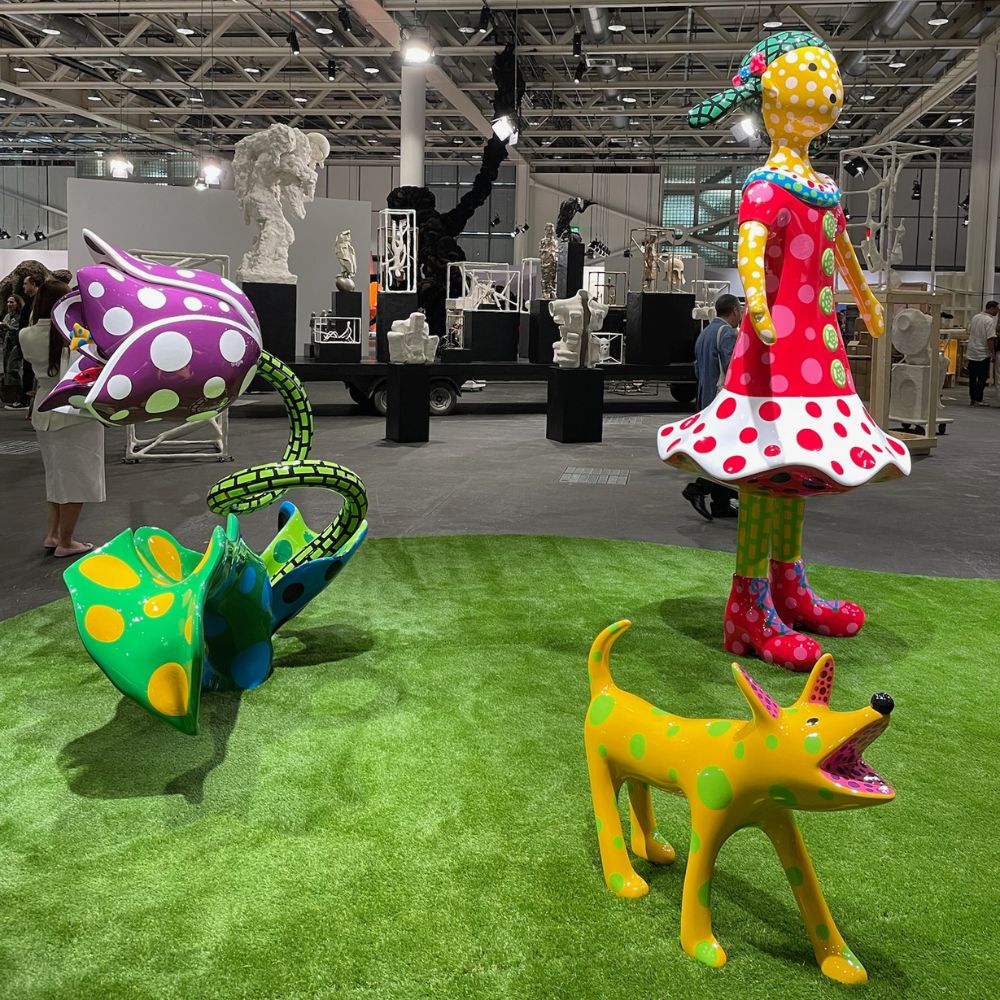
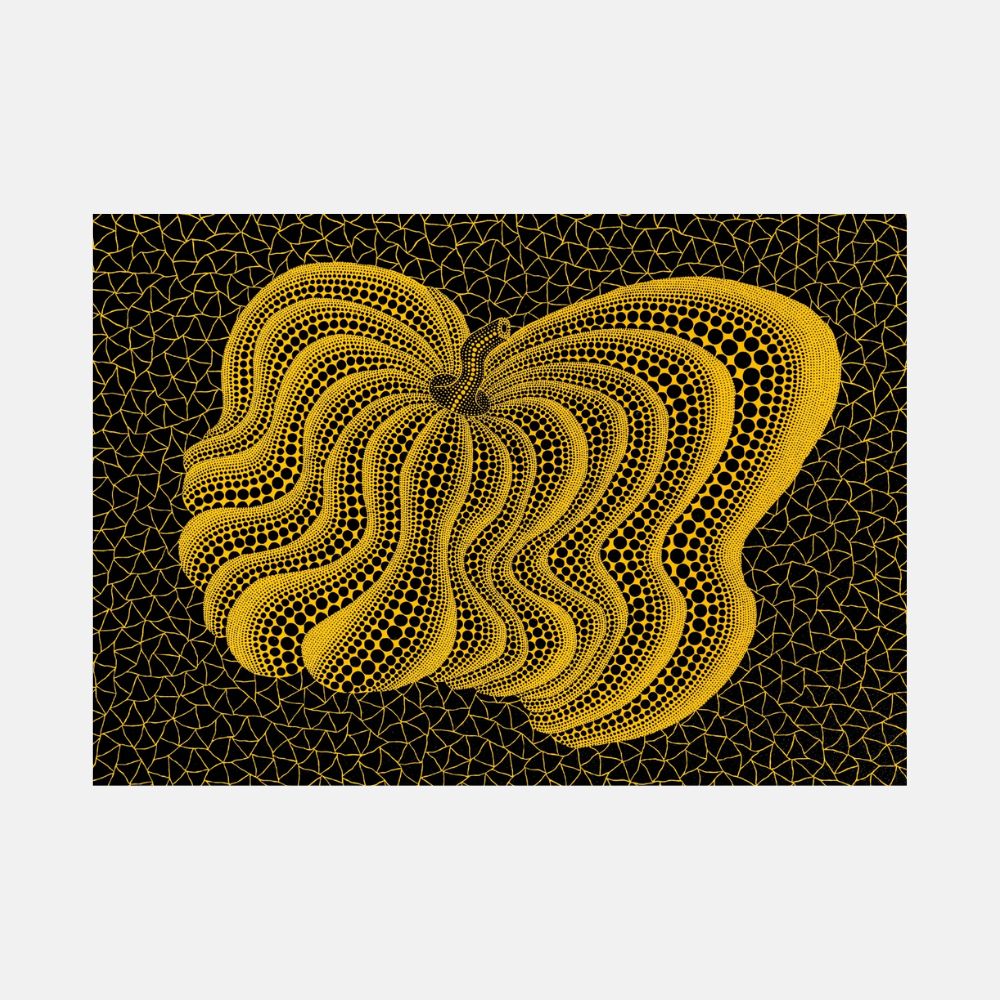
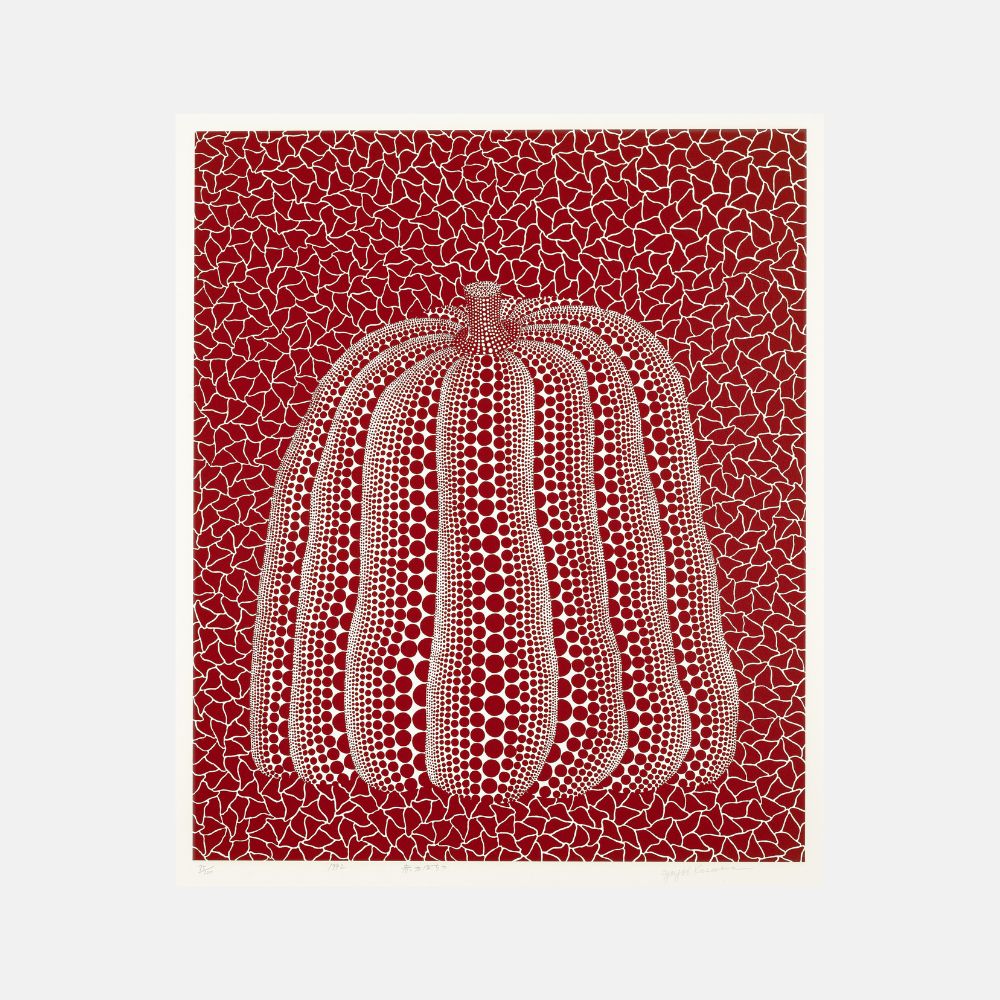
Rendered in vivid yellow, red, green and other colours and covered with her characteristic black or contrasting polka dots, Kusama's pumpkins combine familiarity with something wonderfully otherworldly.
The pumpkin is recognisable immediately, but Kusama transforms it through scale, repetition and pattern.
This is part of what makes the motif so successful. It feels playful and accessible, while also belonging unmistakably to Kusama's wider exploration of infinity and proliferation.
Her pumpkins have appeared as sculptures in galleries, museums and outdoor settings around the world. Museum Ludwig, which presented a major retrospective of Kusama in 2026, describes her polka dots, Pumpkin sculptures and Infinity Mirror Rooms as among the visual trademarks for which she has become globally known.
For collectors, the Pumpkin has also become one of the most sought-after and recognisable expressions of Kusama's artistic language.
Collecting Yayoi Kusama Pumpkin sculptures
Kusama's Pumpkin exists in numerous forms and editions, from monumental sculptures to smaller works intended for private collections.
The appeal of a Pumpkin as a collectible lies partly in its immediacy. It is unmistakably Kusama, yet it also functions as a sculptural object in its own right.
For those looking to collect Yayoi Kusama, Pumpkin sculptures offer one of the clearest connections to the artist's most enduring visual language.
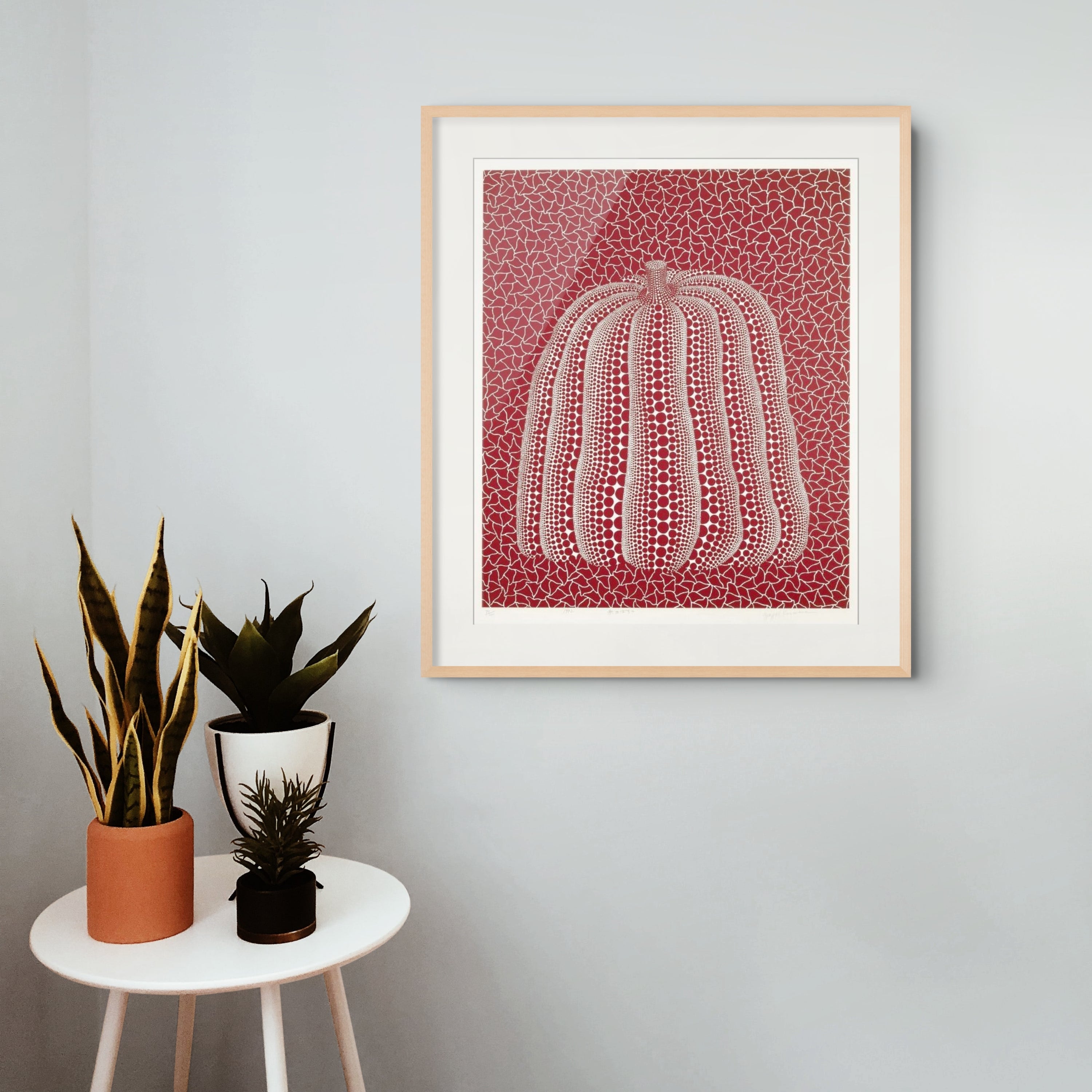
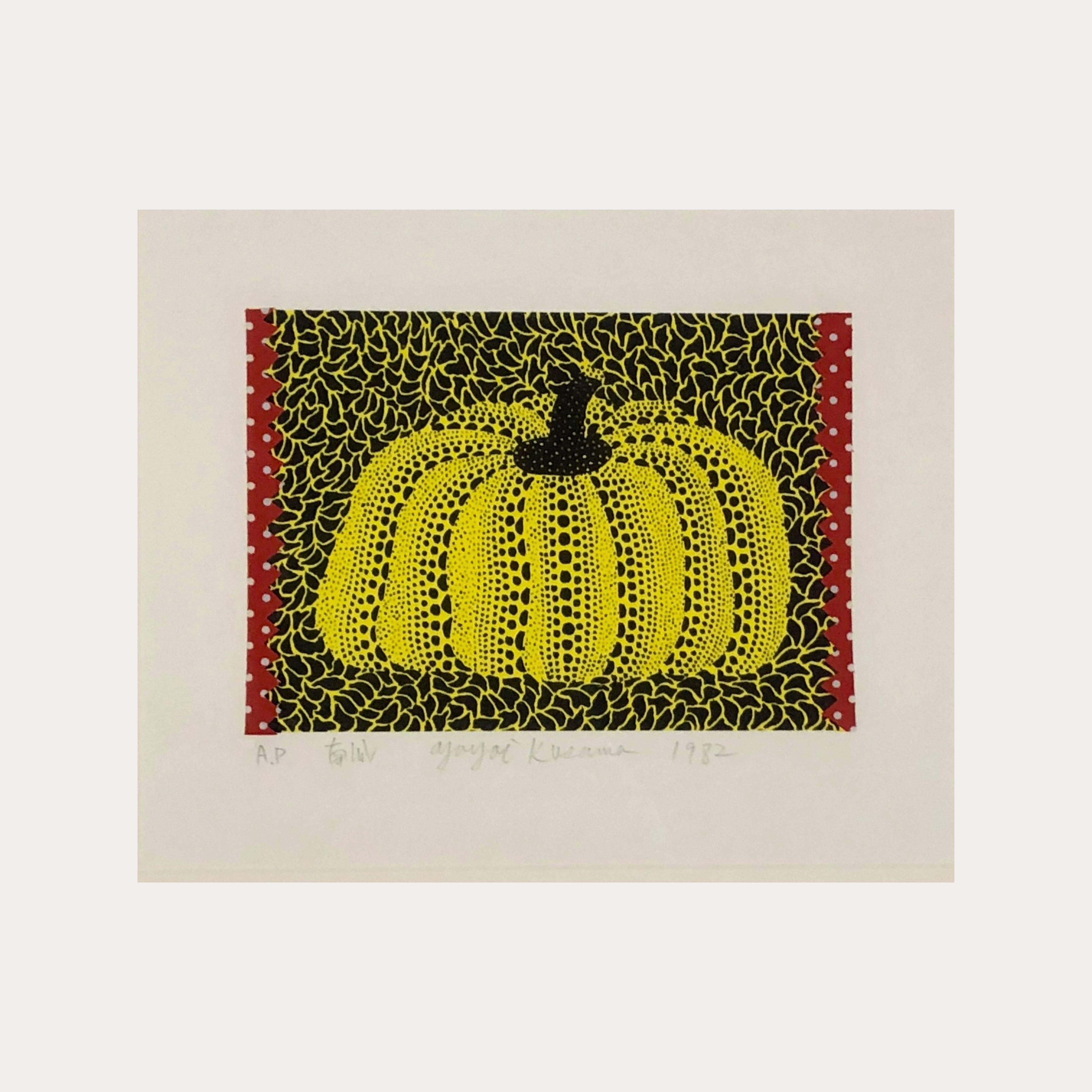
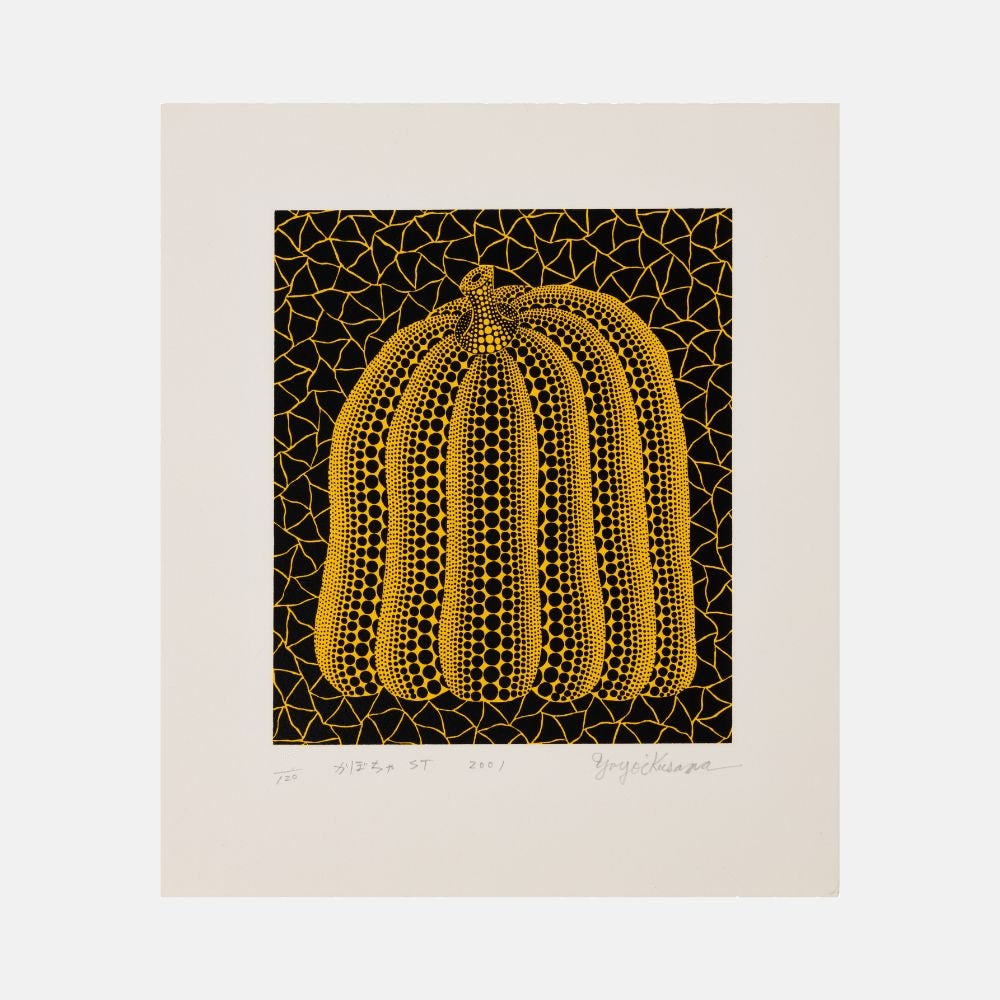
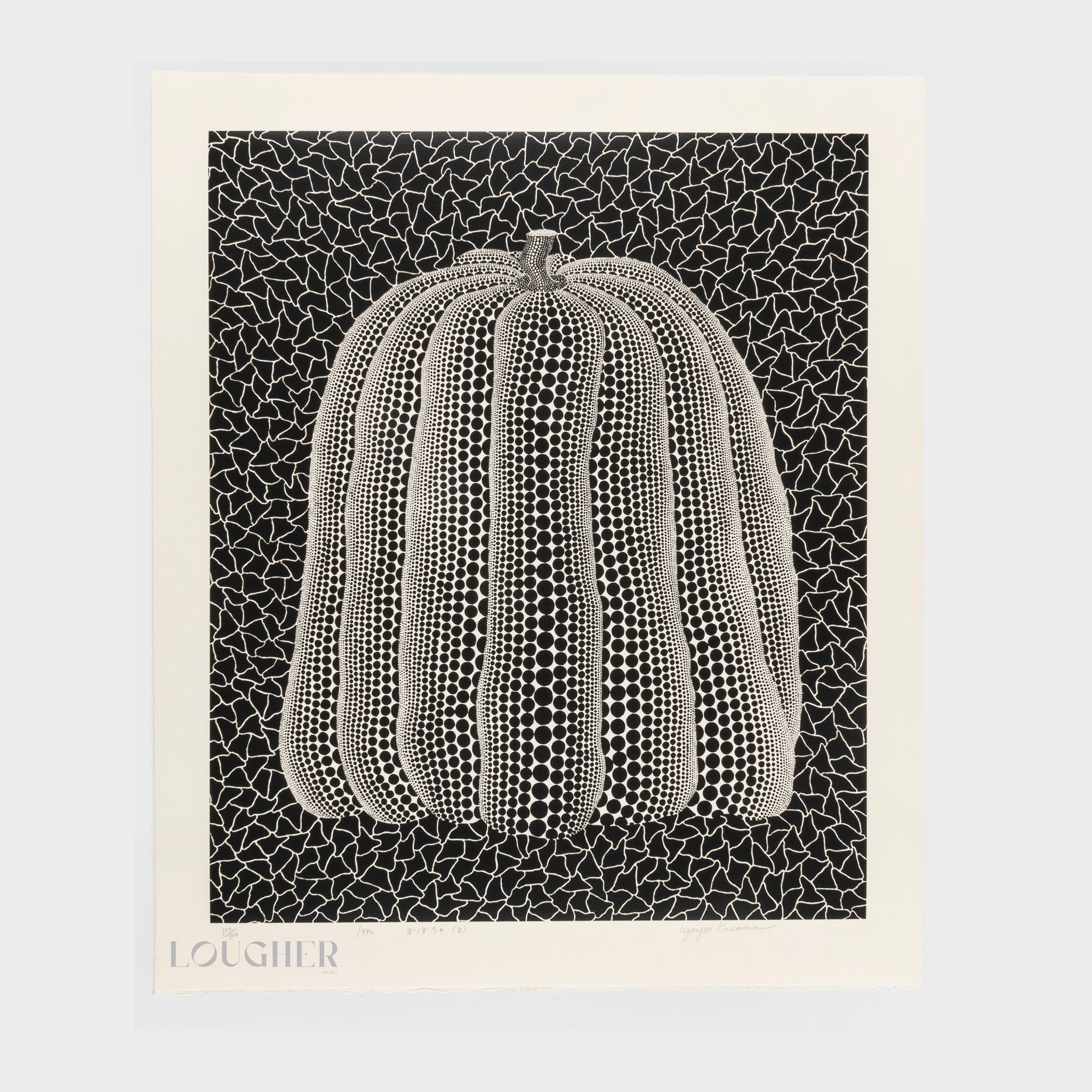
Yayoi Kusama Pumpkin prints
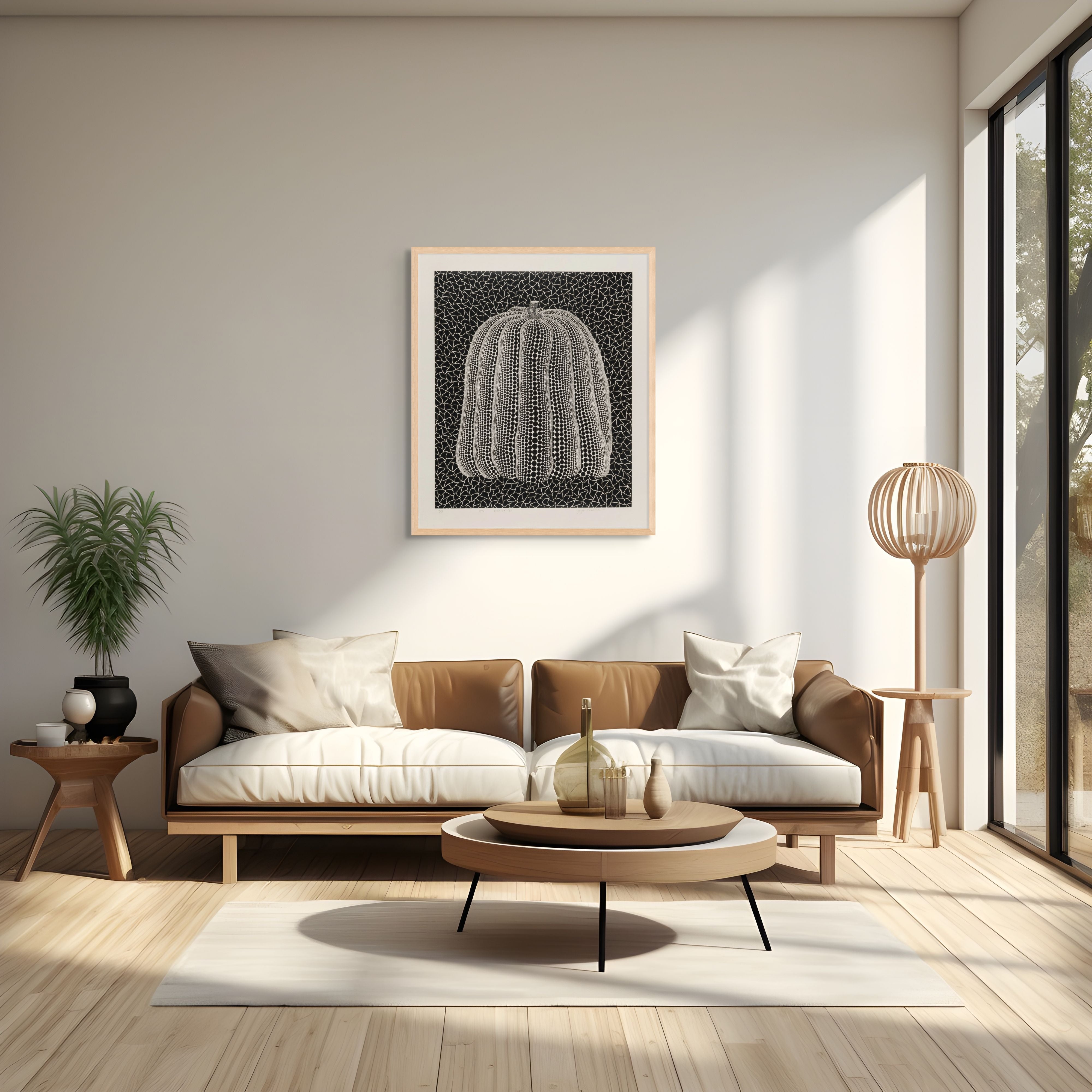
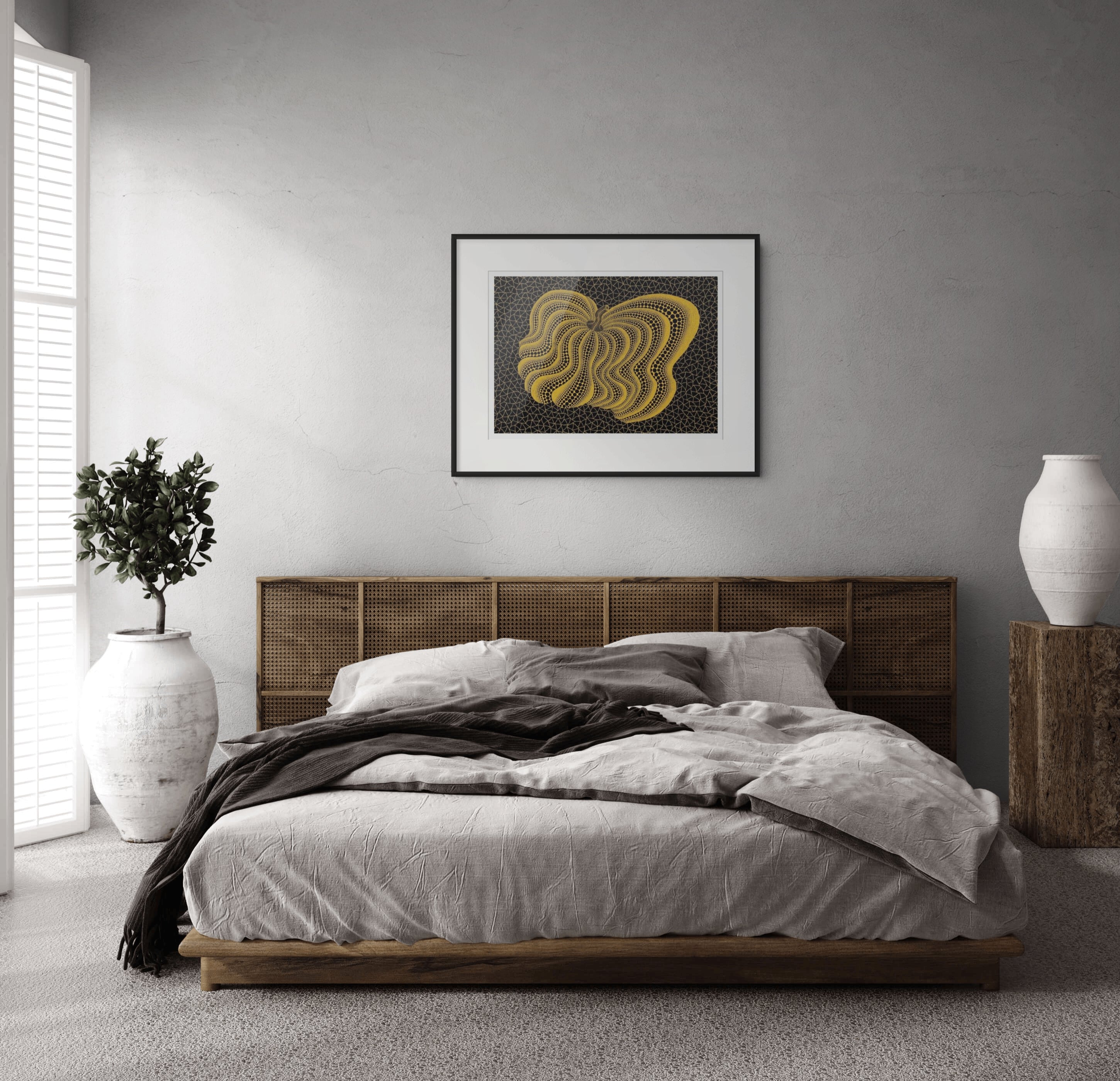
The Pumpkin motif also occupies an important place within Kusama's printmaking practice.
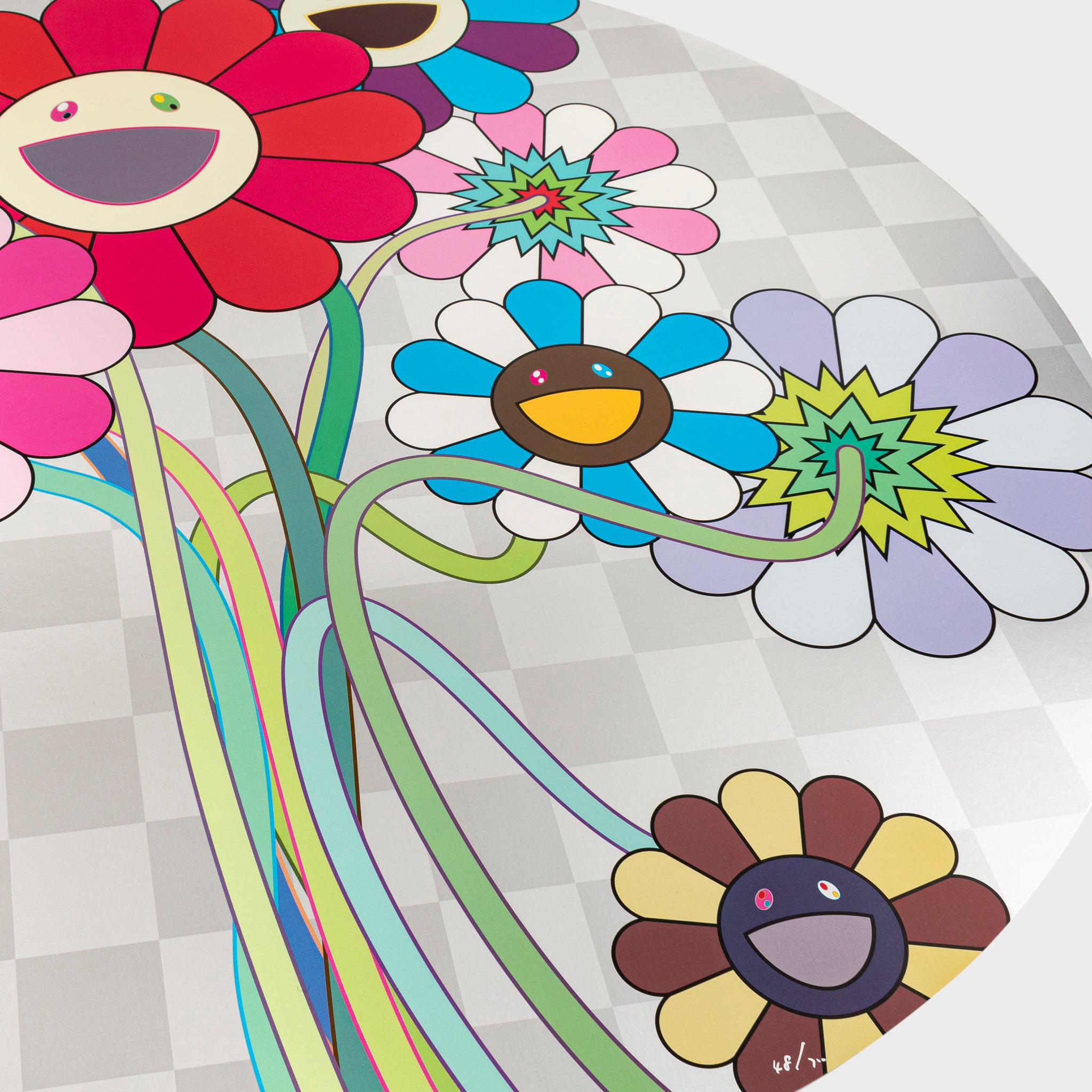
Printmaking gave Kusama a way to explore her imagery through colour, repetition and reproduction. Her prints frequently bring together the motifs for which she is best known, including pumpkins, flowers, nets, dots and other forms of proliferation.
A major 2025 exhibition devoted specifically to Kusama's printmaking at the Kyoto City KYOCERA Museum of Art highlighted the importance of prints within her career, noting that her print works became particularly distinguished by vivid colours and recurring motifs including pumpkins, dresses, grapes, flowers and butterflies.
For collectors, these works offer a particularly engaging way to experience Kusama's imagery.
A print can retain the intensity and recognisability of her visual language while offering a more accessible route into collecting her work.
Kusama's Pumpkin prints are therefore not simply reproductions of a famous motif. They are part of a significant and distinctive area of her wider practice.
Infinity Nets: where it began
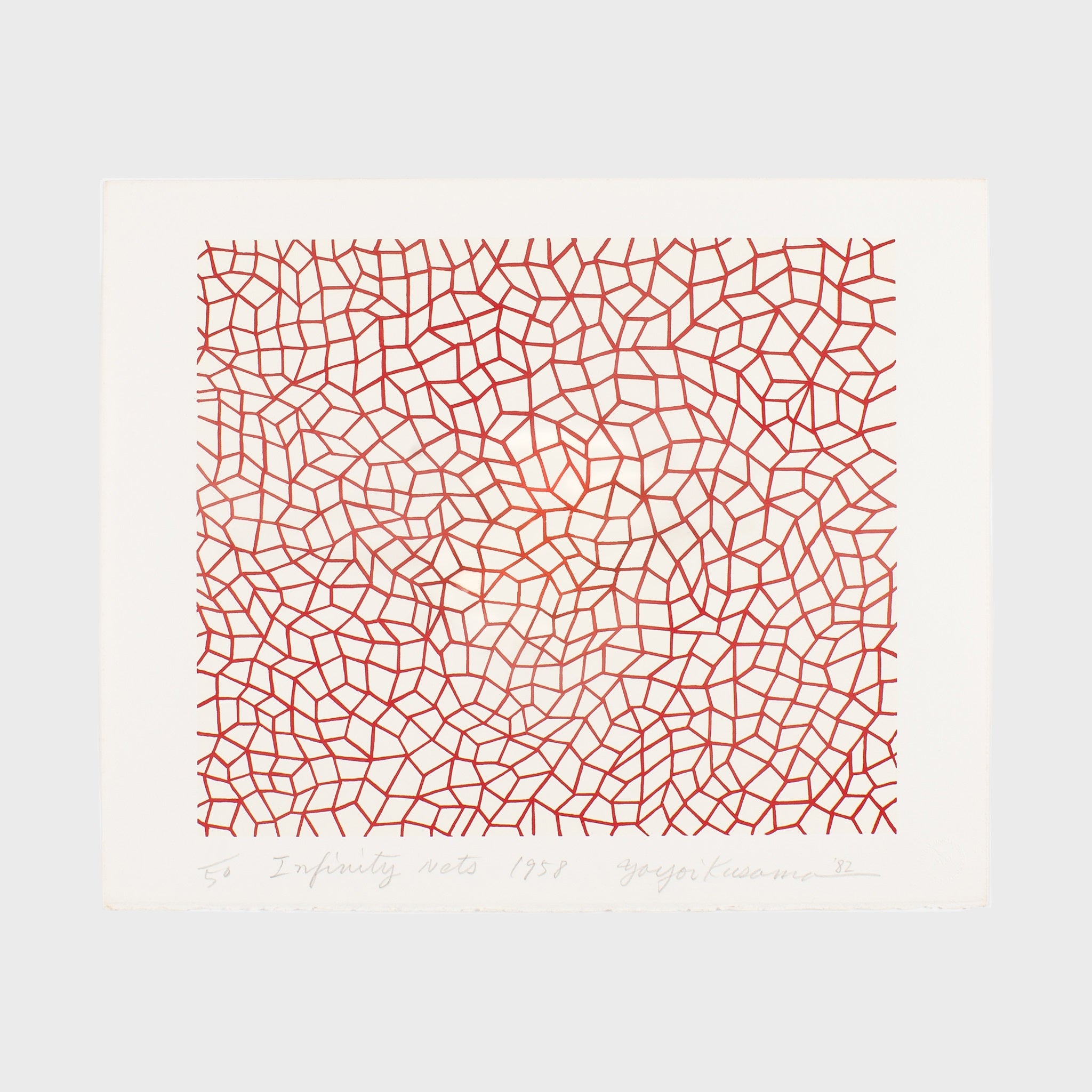
Long before the mirrored rooms and monumental pumpkins became globally recognised, Kusama was developing the language that would underpin much of her career.
Her Infinity Nets emerged in New York after she moved there in 1958. In 1959, she presented five large monochrome paintings at her first solo exhibition in New York, each covered with an intricate network of repeated marks.
The paintings can appear almost minimal from a distance. Up close, however, the viewer encounters thousands of individual gestures.
There is no obvious central image. No single mark dominates.
Instead, the pattern seems to continue beyond the edge of the canvas.
This was the beginning of one of Kusama's most important ideas: the possibility of creating an image that suggests infinity through repetition.
MoMA describes the Infinity Nets as an exploration of infinite repetition and infinite space, with the repeated marks collapsing conventional distinctions between figure and ground.
The series established a foundation for much of what followed.
The polka dot: Kusama's most recognisable language
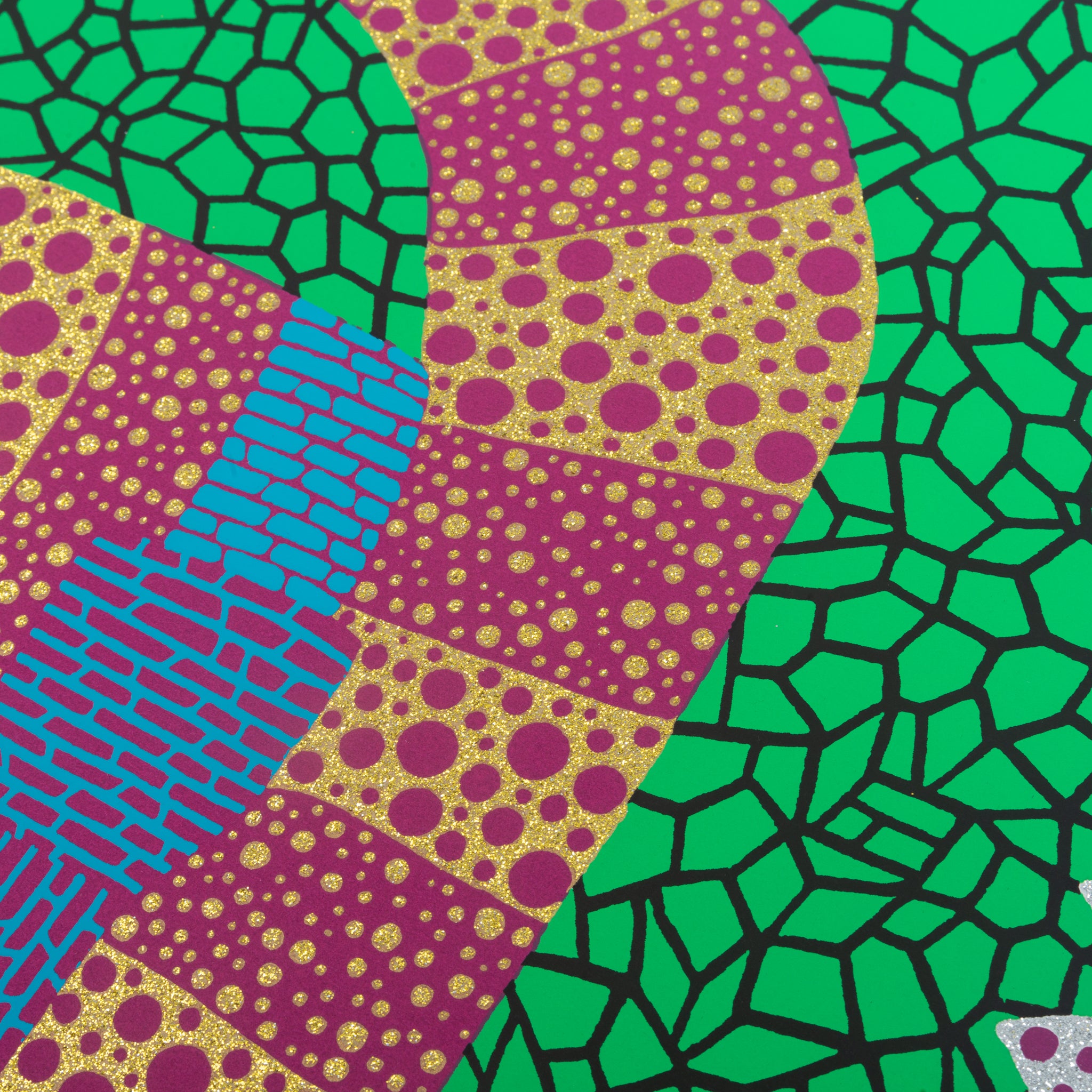
If the Infinity Net represents one side of Kusama's artistic language, the polka dot represents perhaps its most immediately recognisable expression.
Dots appear throughout her paintings, sculptures, installations and prints.
Their simplicity is deceptive.
A single dot is finite. Thousands of dots can suggest an endless field. When dots cover an object, they disrupt its sense of solidity. When they cover a room, the boundaries between object and environment begin to dissolve.
This process of proliferation and self-obliteration became fundamental to Kusama's work.
The dot could be playful and colourful, but it could also be philosophical: a way of imagining the individual as one small element within something infinite.
That tension between accessibility and depth is one reason Kusama's work has continued to resonate with such diverse audiences.
Infinity Mirror Rooms
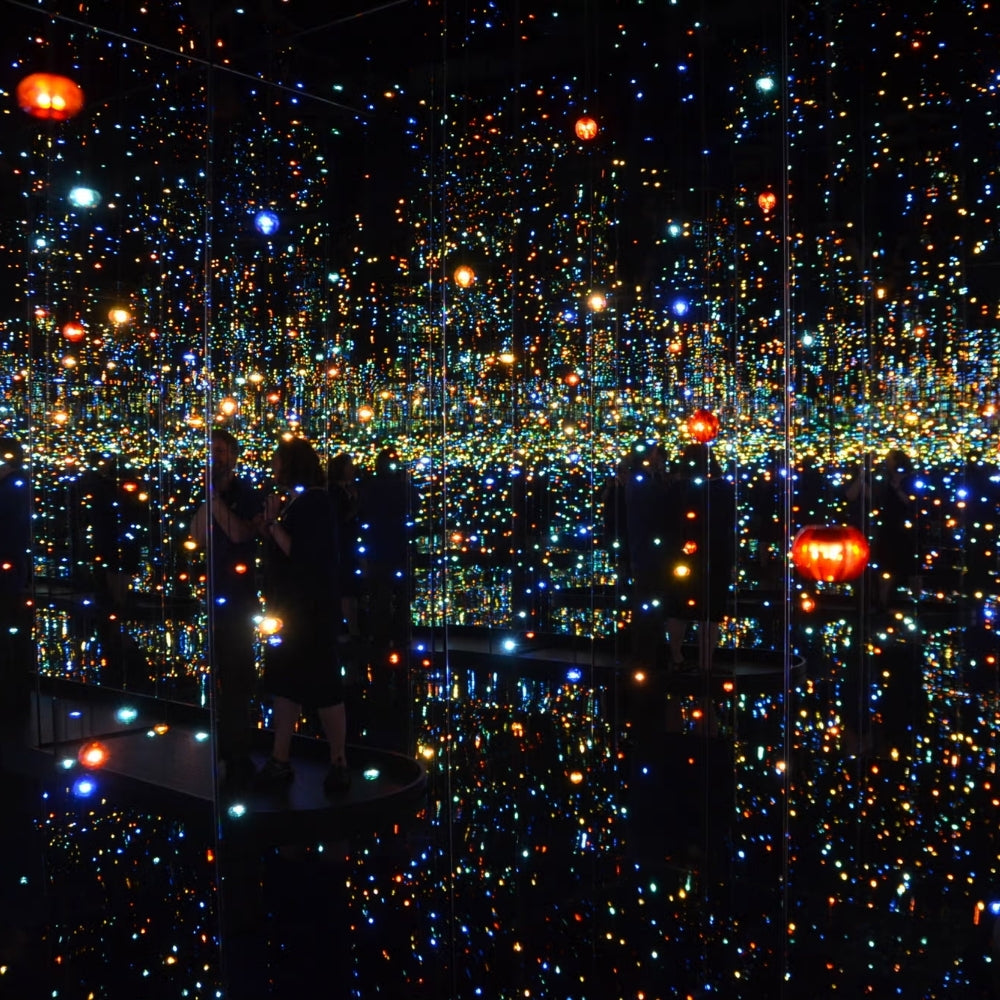
Perhaps no body of work has brought Kusama's ideas to a wider audience than her Infinity Mirror Rooms.
First developed in the 1960s, these immersive environments use mirrors, lights and repeated forms to create the sensation of an apparently limitless space.
The concept takes Kusama's fascination with repetition one step further.
Instead of looking at an image that suggests infinity, the viewer enters infinity.
The experience can be beautiful, disorientating and strangely intimate. Reflections multiply the visitor's presence until the individual seems simultaneously everywhere and nowhere.
This transformation of the viewer from observer into participant became one of Kusama's most significant contributions to contemporary installation art.
Her Infinity Mirror Rooms have subsequently become some of the most widely recognised immersive artworks in the world. Their popularity also demonstrates how successfully Kusama's ideas could cross from the avant-garde into popular culture without losing their essential identity.
Narcissus Garden
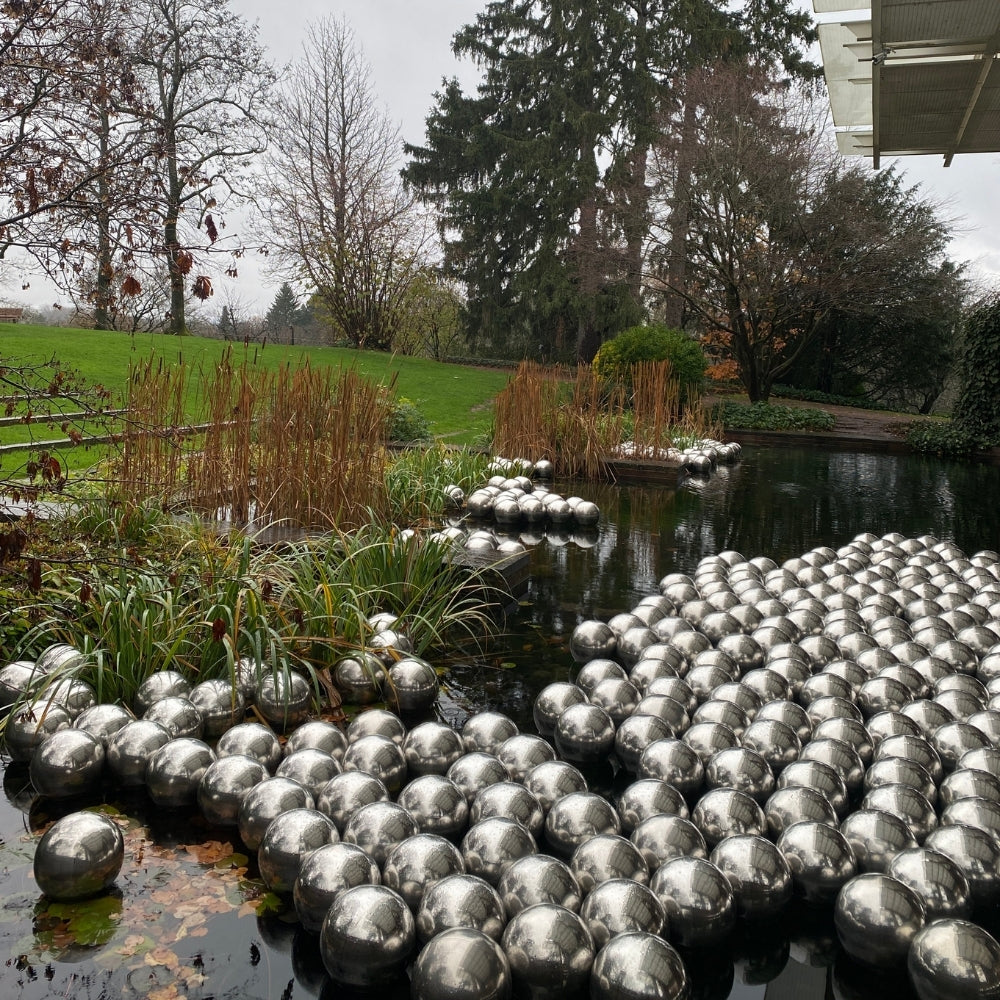
Another important work in understanding Kusama's career is Narcissus Garden, first presented at the 33rd Venice Biennale in 1966.
The installation consisted of hundreds of mirrored spheres arranged across the landscape, creating a constantly shifting field of reflections.
The work was both visually captivating and conceptually pointed.
By turning the viewer's reflection into part of the artwork, Kusama confronted ideas surrounding vanity, self-image and the art market itself.
It also demonstrated her ability to take the fundamental language of repetition and reflection and apply it beyond the conventional gallery space.
Narcissus Garden remains an important example of the conceptual ambition behind an artist whose work can sometimes be reduced to its visual appeal.
Flowers, butterflies and other recurring motifs
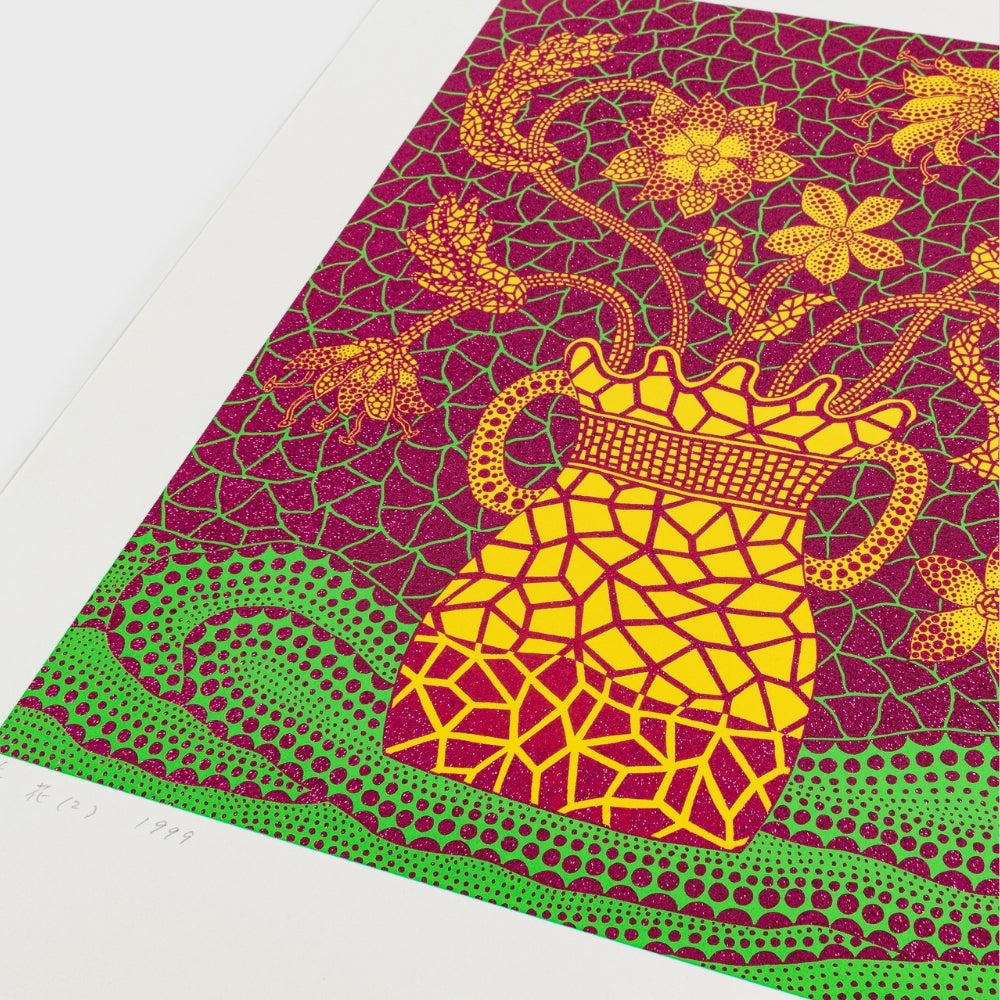
Kusama's visual world extended far beyond dots and pumpkins.
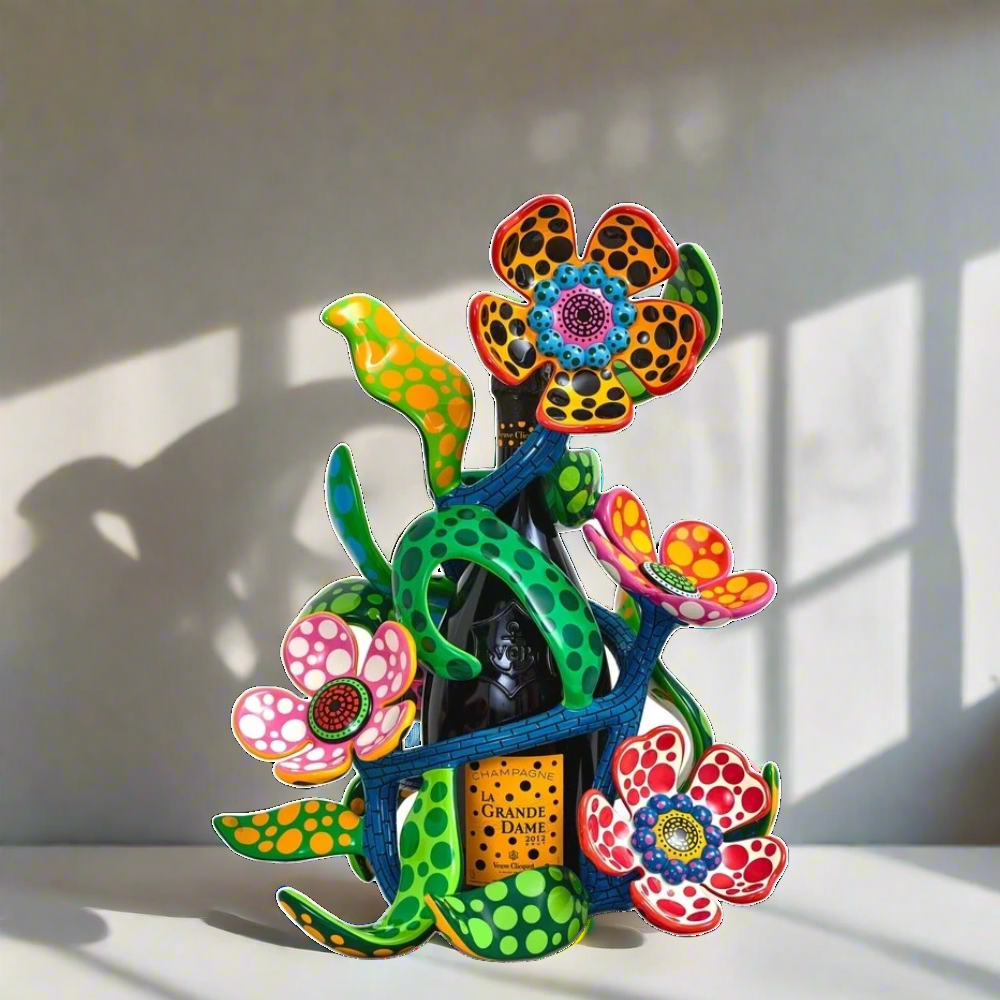
Flowers, butterflies, dresses, grapes and organic forms recur throughout her prints and other works, often transformed through intense colour, pattern and repetition.
Her use of natural forms is particularly interesting because it brings the organic world into conversation with her more abstract visual language.
A flower can become a pattern.
A butterfly can become a field of repeated colour.
A pumpkin can become an almost cosmic object.
This is one of the qualities that makes her work so recognisable: Kusama does not simply depict the world around her; she transforms it according to her own visual logic.
Kusama's prints: repetition made collectible
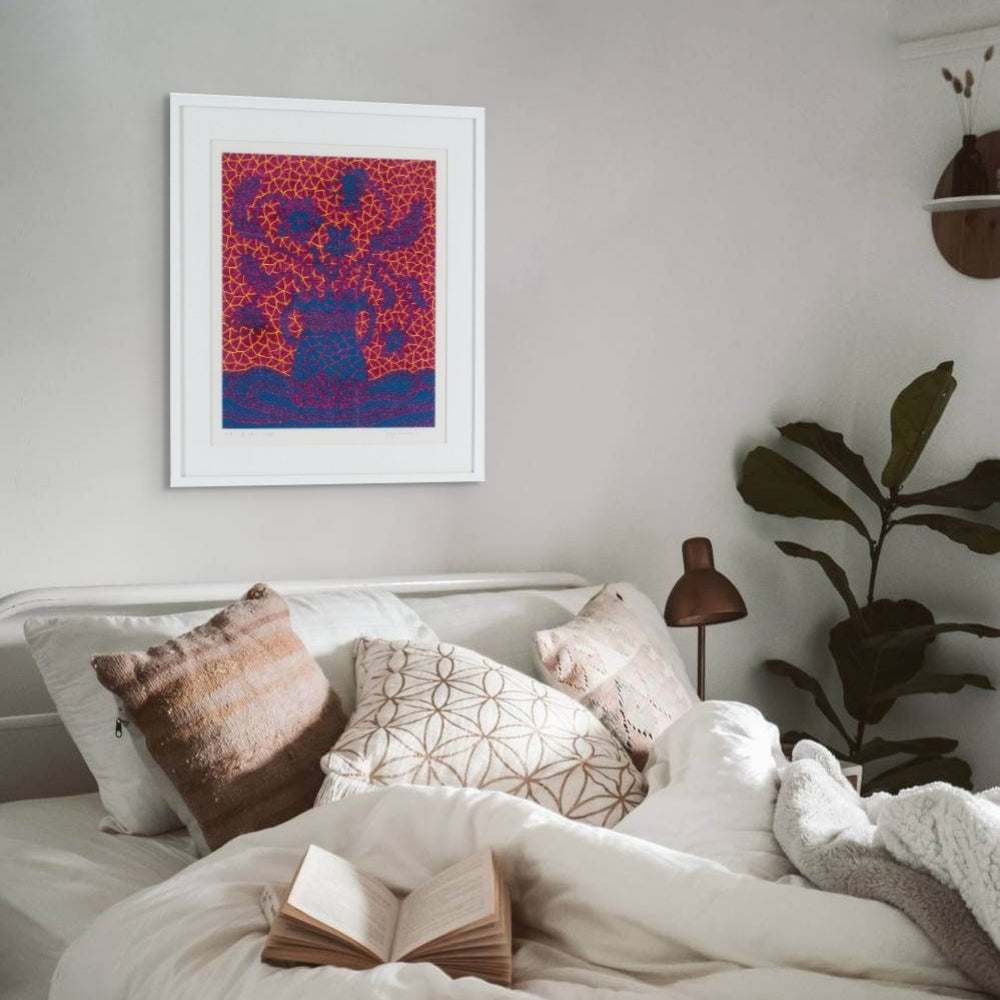
Printmaking became an increasingly important part of Kusama's practice, offering another way for her to explore repetition and proliferation.
Her prints bring together many of the motifs that have come to define her career, making them particularly compelling for collectors interested in tracing the development of her visual language.
MoMA's collection includes Kusama prints and multiples dating across different periods, including Infinity Nets (for Parkett no. 59) from 2000, a screenprint on mirror.
For a collector, a Kusama print can offer a different encounter with the artist from a sculpture or immersive installation.
The scale may be more intimate, but the ideas remain recognisable.
The dots continue.
The nets continue.
The flowers and pumpkins continue to proliferate.
Infinity becomes something that can be held, lived with and returned to.
Why these works matter
It can be tempting to think of Kusama's most famous works simply as a collection of instantly recognisable motifs.
But their importance lies in the ideas connecting them.
The Infinity Nets explore repetition across the surface of a painting.
The Accumulation sculptures bring repetition into three dimensions.
The Pumpkins transform a familiar natural form through pattern and proliferation.
The prints allow these ideas to move into another medium and reach collectors beyond the gallery.
The Infinity Mirror Rooms transform repetition into an environment in which the audience becomes part of the work.
Across all of them, Kusama returned to the same fundamental questions.
Where does the individual end?
What happens when one thing is repeated endlessly?
Can the self disappear into its surroundings?
And what might infinity feel like?
A legacy that extends beyond individual works
Yayoi Kusama's greatest achievement was not creating a single iconic artwork.
It was creating an entire artistic language.
Her dots, nets, pumpkins, mirrors and repeated forms are immediately identifiable, but they are also flexible enough to appear across paintings, sculptures, installations, prints and public artworks.
That consistency helped establish Kusama as one of the most recognisable artists of her generation.
Her work also helped change expectations around contemporary art. An artwork could be immersive. A sculpture could transform an everyday object. A print could carry the conceptual vocabulary of a much larger installation. A simple dot could become a meditation on infinity.
And an artist whose work emerged from deeply personal experiences could ultimately communicate with millions of people around the world.
Collecting Yayoi Kusama
For collectors, Kusama's work offers an unusually rich range of possibilities.
Her Pumpkin sculptures provide one of the clearest expressions of her iconic imagery. Her Pumpkin prints offer a vivid and accessible entry point into the motif. Her Infinity Net prints connect directly with one of the foundational series of her career, while works incorporating flowers, dots and other recurring forms reveal the breadth of her visual vocabulary.
Each offers a different way of engaging with an artist whose influence now extends across generations.
A collection does not need to encompass every period of Kusama's career to reflect her significance. Even a single work can carry the unmistakable language she spent a lifetime developing.
Remembering an artist who made infinity visible
Yayoi Kusama's death marks the end of an extraordinary artistic life, but not the end of her work's ability to evolve in the eyes of its audience.
Her most iconic works remain powerful because they are deceptively simple.
A dot.
A net.
A pumpkin.
A mirror.
A repeated form.
Each becomes something more through Kusama's insistence on taking it further—repeating it, multiplying it, surrounding herself and the viewer with it until the familiar begins to feel infinite.
That is perhaps the most fitting way to remember her.
Yayoi Kusama did not simply make images of infinity. She gave audiences a way to experience it.
And through the paintings, sculptures, installations and prints she leaves behind, that experience will continue.
Explore Yayoi Kusama's works
Discover a curated selection of Yayoi Kusama prints and collectible works through Lougher, including Pumpkin imagery, polka dots, flowers and other instantly recognisable elements of her extraordinary visual language.
Start Collecting Yayoi Kusama


Yayoi Kusama Remembered: Her Life, Art and Enduring Legacy
Lougher joins the art world in remembering Yayoi Kusama, who has died aged 97. Her studio confirmed that she died at a hospital in Tokyo on 14 August 2026, following an extraordinary life devoted a...