

David Hockney Life 2012 – Limited Edition iPad Drawing for Sale
About the Artwork
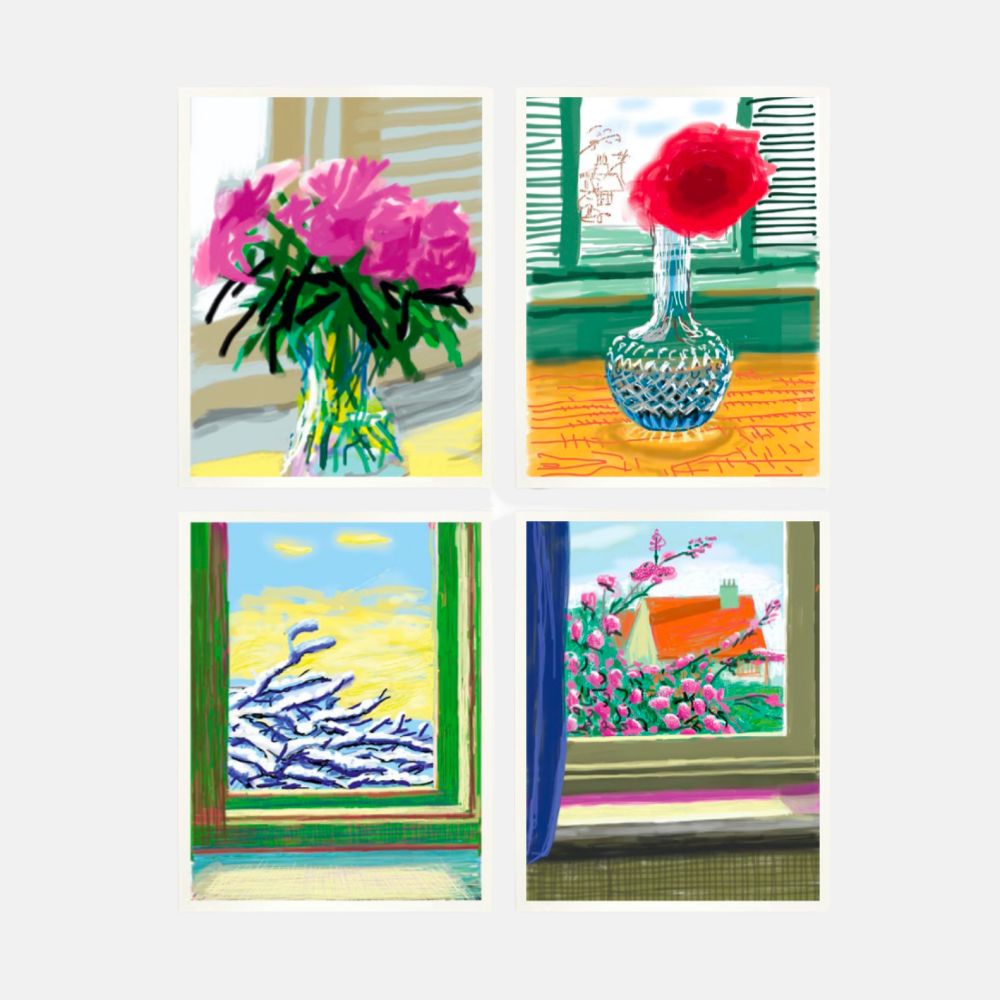
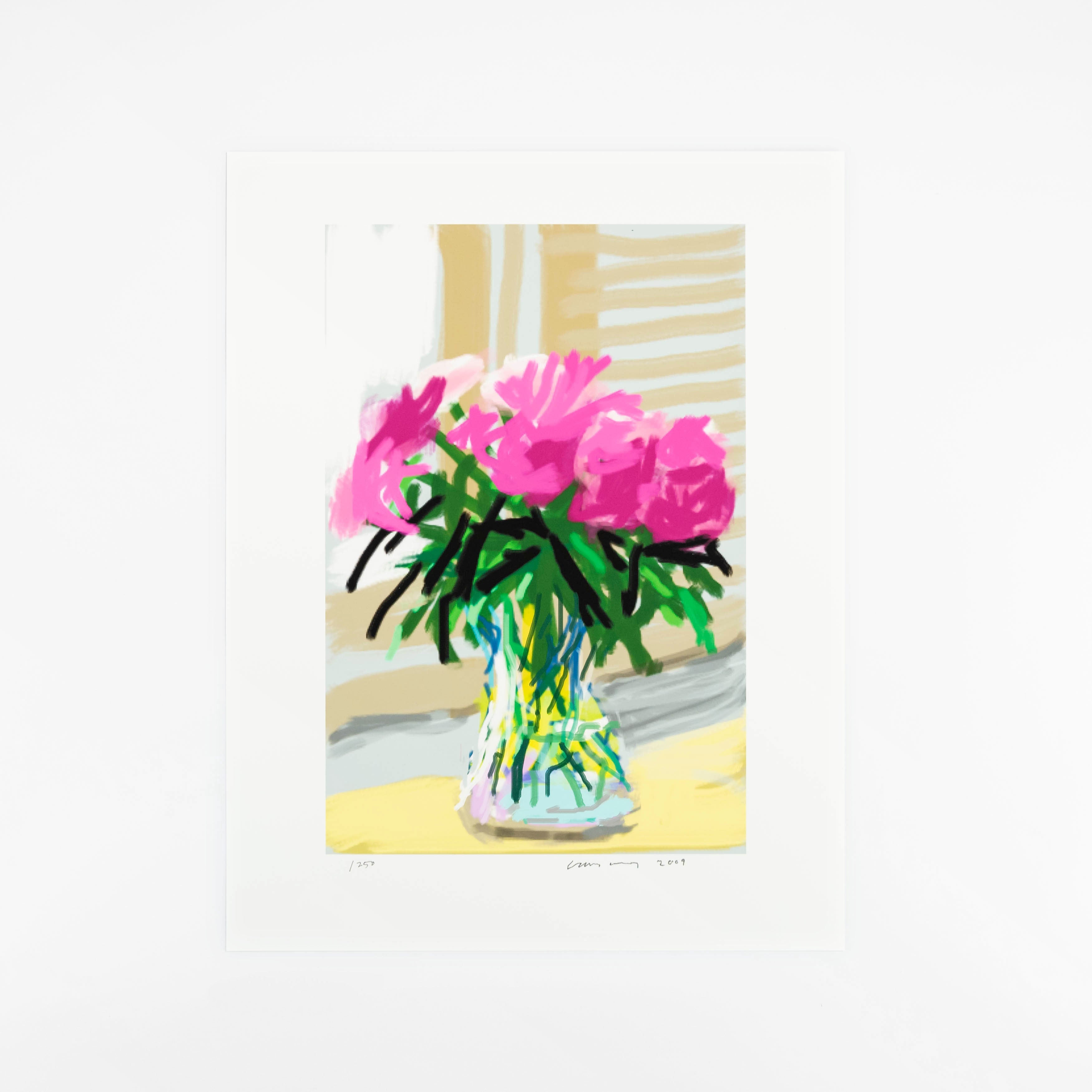
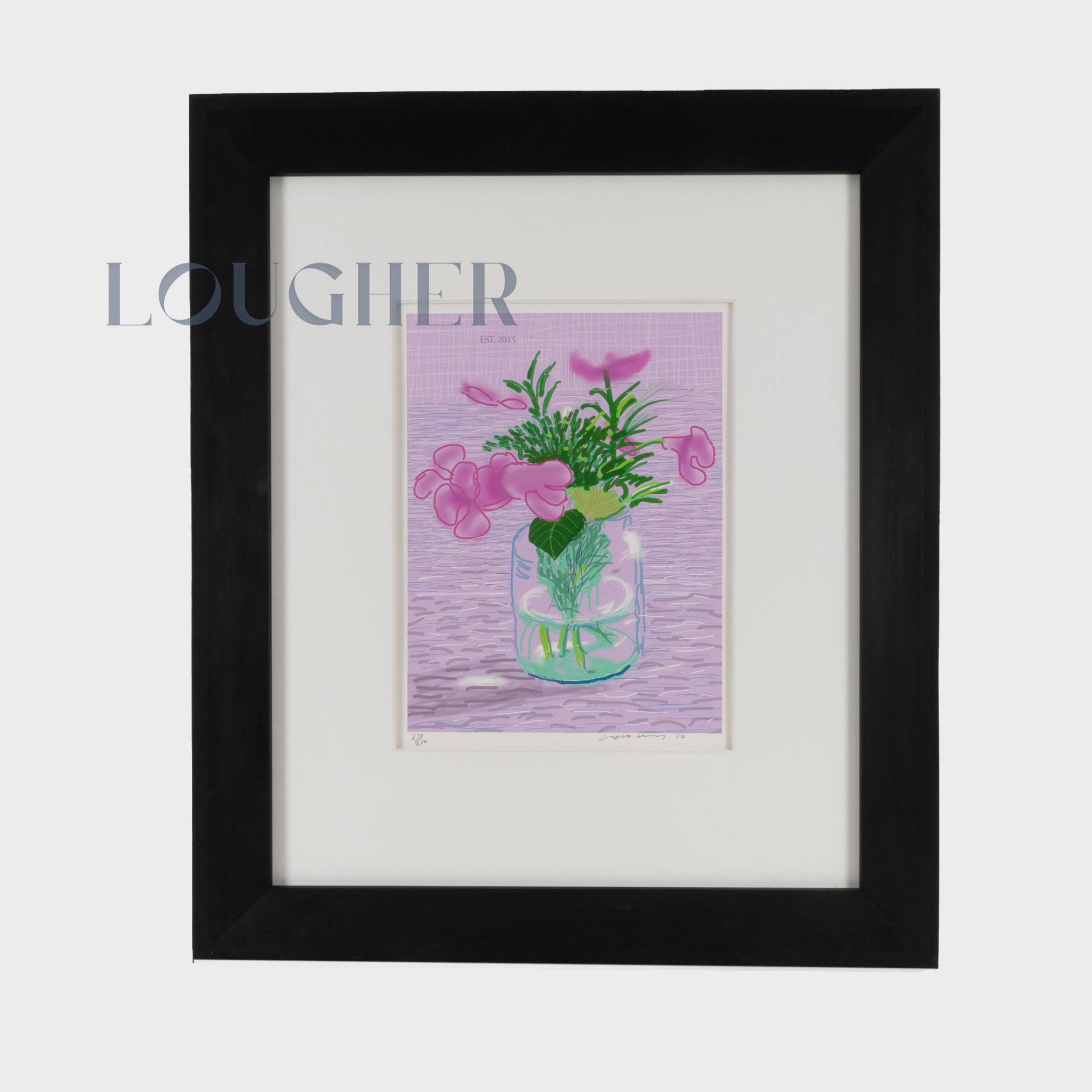
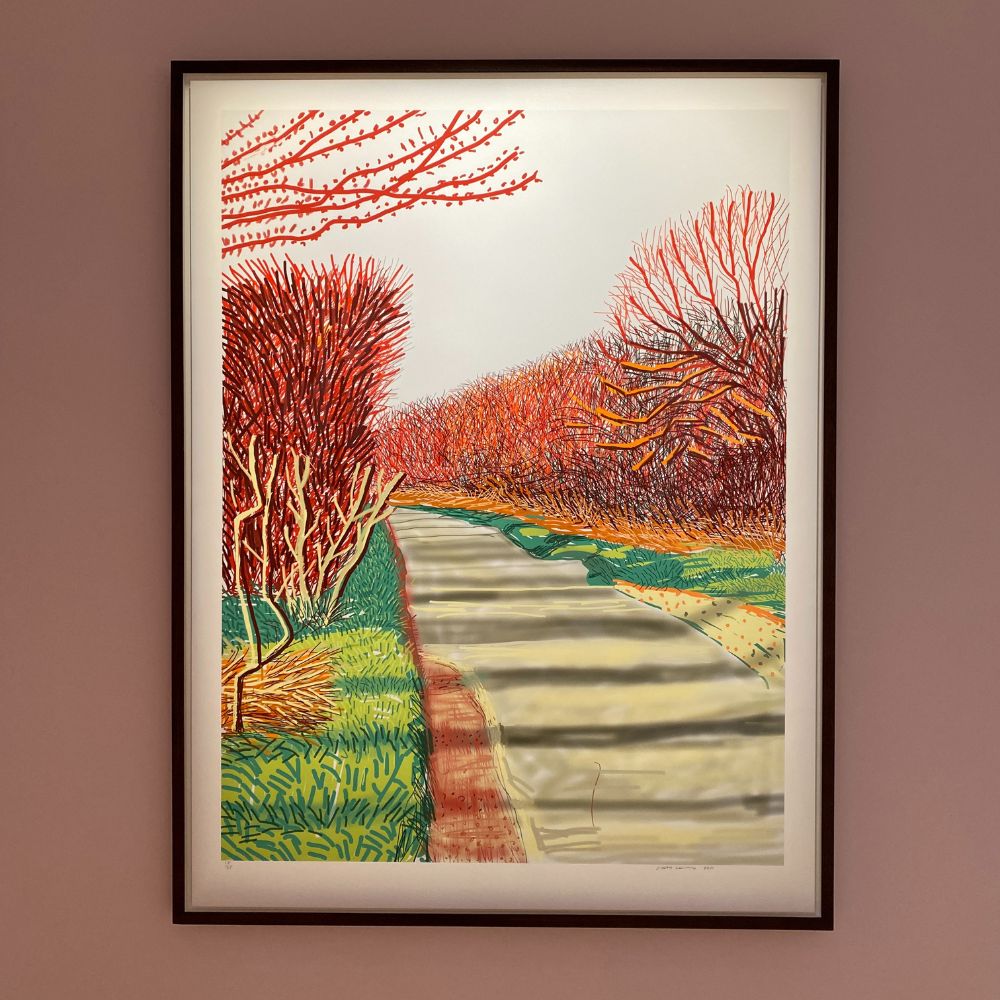
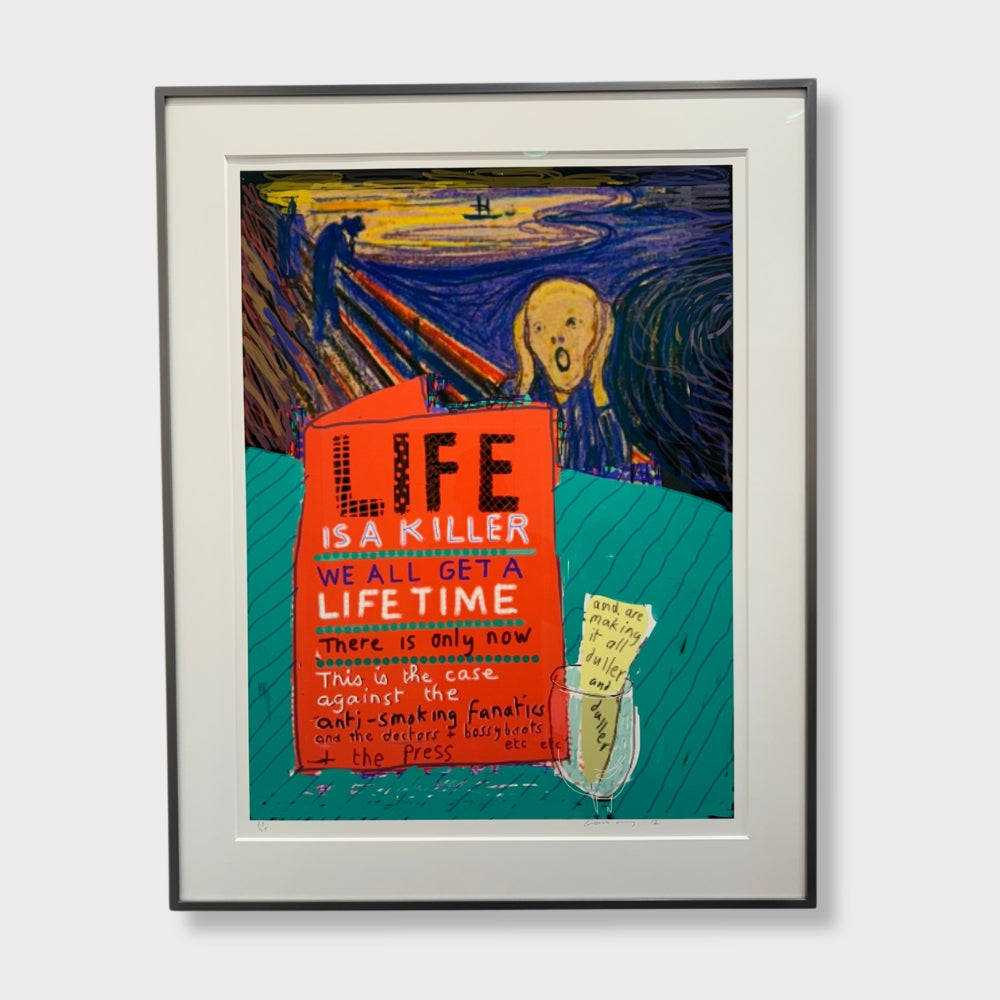
David Hockney’s Life, created in 2012, is a vibrant example of the artist’s pioneering use of the iPad as a drawing instrument. Combining saturated colour, expressive line, handwritten text and layered imagery, the work demonstrates how Hockney transformed a piece of emerging digital technology into a serious medium for drawing.
The work is an iPad drawing printed in colours on wove paper, numbered 11/25. The sheet measures 94.2 × 71.2 cm, giving the image a substantial physical presence despite its digital origins. Sotheby’s records the work as executed in 2012 and as number 11 from an edition of 25.
That combination of digital creation and physical edition is central to the importance of Life. Hockney did not approach the iPad simply as a convenient replacement for a sketchbook. He recognised that the technology offered new possibilities for colour, luminosity, line and immediacy. The iPad became another way of drawing — one that could be used spontaneously and at considerable scale.
Hockney's interest in digital drawing developed rapidly. After experimenting with the iPhone, he began working with the iPad in 2010. The larger screen allowed him to develop more ambitious compositions while retaining the immediacy of drawing directly with his hand. The Royal Academy notes that Hockney's iPhone and iPad drawings form part of his broader, decades-long engagement with new technologies and different forms of image-making.
Life belongs to an especially significant moment in that development. In 2012, Hockney's iPad drawings were presented alongside major landscape works in the Royal Academy's landmark A Bigger Picture exhibition. The exhibition attracted almost 600,000 visitors and included drawings made on the artist's iPad.
For collectors, this places Life within a particularly important chapter of Hockney's career: the point at which digital drawing moved decisively from technological experiment into an established part of his artistic practice.
Artwork Description
Life is immediately recognisable through its energetic use of colour and line.
Rather than treating the iPad as a neutral digital canvas, Hockney exploits the medium's capacity for intense colour and fluid mark-making. The composition brings together areas of saturated colour, graphic lines and text, creating a visual language that feels spontaneous and immediate.
The work's physical scale is significant. At 94.2 × 71.2 cm, the sheet is considerably larger than a conventional sketchbook page. The image consequently retains the immediacy of a drawing while operating at a scale associated with more substantial works on paper. Sotheby's confirms the sheet dimensions and the edition of 25.
The handwritten quality of the image is particularly important. Hockney's digital drawings retain the sense of an artist drawing directly in response to an idea or visual stimulus. The technology does not erase the evidence of the hand; instead, it translates the gesture into a new medium.
This is one of the most interesting aspects of Hockney's digital practice. A drawing made on an iPad can be luminous, layered and intensely coloured in a way that is difficult to achieve with conventional drawing materials. At the same time, the gesture remains recognisably Hockney's.
The physical edition adds another dimension. Life exists as a tangible work on paper despite originating entirely as a digital drawing. It therefore occupies an unusual position within Hockney's printmaking and edition practice: neither a conventional print created from a traditional plate nor a purely digital image, but a limited physical edition generated from an original iPad drawing.
The edition size is only 25, with the present work numbered 11/25.
This scarcity is particularly relevant when considering Hockney's digital works as part of his wider collecting market. Rather than being mass-produced digital images, these works were conceived as limited, physical art objects.
The title Life is also appropriate to the work's wider concerns. Hockney has consistently been interested in observation, perception and the experience of looking. His iPad practice extended those interests into a medium that allowed him to record visual impressions quickly and directly.
The National Portrait Gallery's research into Hockney's 2012 iPad drawings similarly demonstrates how the artist used the technology for sustained drawing projects, including a sequence of self-portraits made over twenty days.
About David Hockney
David Hockney is one of the most important British artists of the post-war period, with a career spanning painting, drawing, printmaking, photography, collage and digital image-making.
Emerging in London during the early 1960s, Hockney became associated with British Pop Art, although his practice has always resisted a single stylistic classification. His work moved between portraiture, landscape, still life, photography and experiments with different forms of perspective and representation.
Technology has been a recurring element of that experimentation.
Long before the iPad, Hockney worked with Polaroid photography, photographic joiners, fax machines and video. His attraction to these technologies was not simply about novelty. Each offered a different way of seeing and constructing an image.
His adoption of the iPhone and iPad therefore represents a continuation of a longstanding interest rather than a sudden change of direction. The Royal Academy describes his digital drawings as part of this broader history of technological experimentation.
Hockney began experimenting with drawing on the iPhone in 2009 and moved to the iPad in 2010. The larger screen expanded what he could do with colour, light and line.
The iPad also suited Hockney's longstanding belief in the importance of drawing. The device could be picked up instantly, allowing him to work wherever he was and to record an impression without preparing a traditional studio setup.
Hockney himself described the iPad as an "endless piece of paper" in a 2012 interview, an observation that captures why the technology was so well suited to his practice.
The timing of Life is therefore crucial. In 2012, Hockney's digital drawings were receiving major institutional attention. The Royal Academy's A Bigger Picture presented iPad drawings alongside his large-scale East Yorkshire landscapes, demonstrating that digital work could occupy the same institutional space as major paintings and traditional works on paper.
This gives Life a significance beyond its attractive colour and graphic composition. It is evidence of an established artist actively reshaping his practice in response to a new technology.
Rather than replacing Hockney's traditional approach to drawing, the iPad expanded it.
Why Collect This Work
A significant early digital work: Life dates from 2012, an important period in Hockney's development of iPad drawing.
A scarce edition: The work is numbered 11/25, making it one of only 25 physical examples of this image.
A bridge between digital art and traditional collecting: Created on an iPad but realised as a physical work on wove paper, Life connects digital image-making with Hockney's long history of drawing and printmaking.
Part of a major technological shift in Hockney's career: Hockney's move from iPhone to iPad drawing represented an important extension of his decades-long interest in new technologies.
Created during a major institutional moment: 2012 was the year of the Royal Academy's major A Bigger Picture exhibition, which included Hockney's iPad drawings.
Substantial scale: Measuring 94.2 × 71.2 cm, the work has the physical presence of a large work on paper.
Distinctive visual language: The combination of vivid colour, graphic line and handwritten elements demonstrates the expressive possibilities Hockney found in digital drawing.
Established market interest: Hockney's iPad works continue to appear at major international auction houses, demonstrating sustained collector interest in this part of his practice.

Collectability for David Hockney iPad Prints
David Hockney has a broad and established international market encompassing unique paintings, works on paper, prints, photography and digital works.
His iPad drawings are particularly interesting within that market because they represent an identifiable period in the artist's development while also possessing a relatively straightforward edition structure. The physical works are limited editions rather than unlimited digital files, making them accessible to collectors who want to own a tangible example of Hockney's digital practice.
The present work is 11/25, while a comparable example of Life offered by Phillips is numbered 20/25. Phillips catalogues that example as a 2012 iPad drawing in colours printed on wove paper, with an estimate of £20,000–30,000.
This provides useful context for the market positioning of the series, although individual examples can vary according to condition, provenance, edition number and market circumstances.
The significance of Hockney's iPad works also extends beyond their edition size. They belong to an important moment in the history of contemporary drawing, when digital devices were beginning to alter the possibilities of making and distributing images.
Hockney was unusually well positioned to explore this transition. By the time he began using the iPad, he had spent decades experimenting with ways to challenge conventional ideas of perspective, composition and representation. The new technology therefore became another means of extending questions that had already shaped his career.
His iPad drawings were sufficiently important to be included in major institutional exhibitions. The Royal Academy's 2012 A Bigger Picture exhibition brought them into direct dialogue with Hockney's large-scale landscapes, placing digital drawings within the central narrative of his practice rather than presenting them as a technological aside.
For collectors, that historical positioning matters.
Life represents Hockney at the intersection of two histories: the long tradition of drawing and the emergence of digital image-making. It is an editioned work, but it also records a technological moment that has since become part of the everyday visual culture of the 21st century.
The work's provenance provides additional context. Sotheby's records Annely Juda Fine Art, London, as the provenance, with the present owner having acquired the work from the gallery.
For those searching for David Hockney art for sale, David Hockney prints for sale, David Hockney iPad drawings or David Hockney limited editions, Life offers a particularly distinctive proposition: a scarce physical edition documenting a pivotal stage in one of Britain's most influential artistic careers.
Artwork Details
Artist: David Hockney
Title: Life
Catalogue identifier: Untitled (1159)
Year: 2012
Medium: iPad drawing printed in colours on wove paper
Edition: 11/25
Edition size: 25
Dimensions: 94.2 × 71.2 cm (37⅛ × 28 in.)
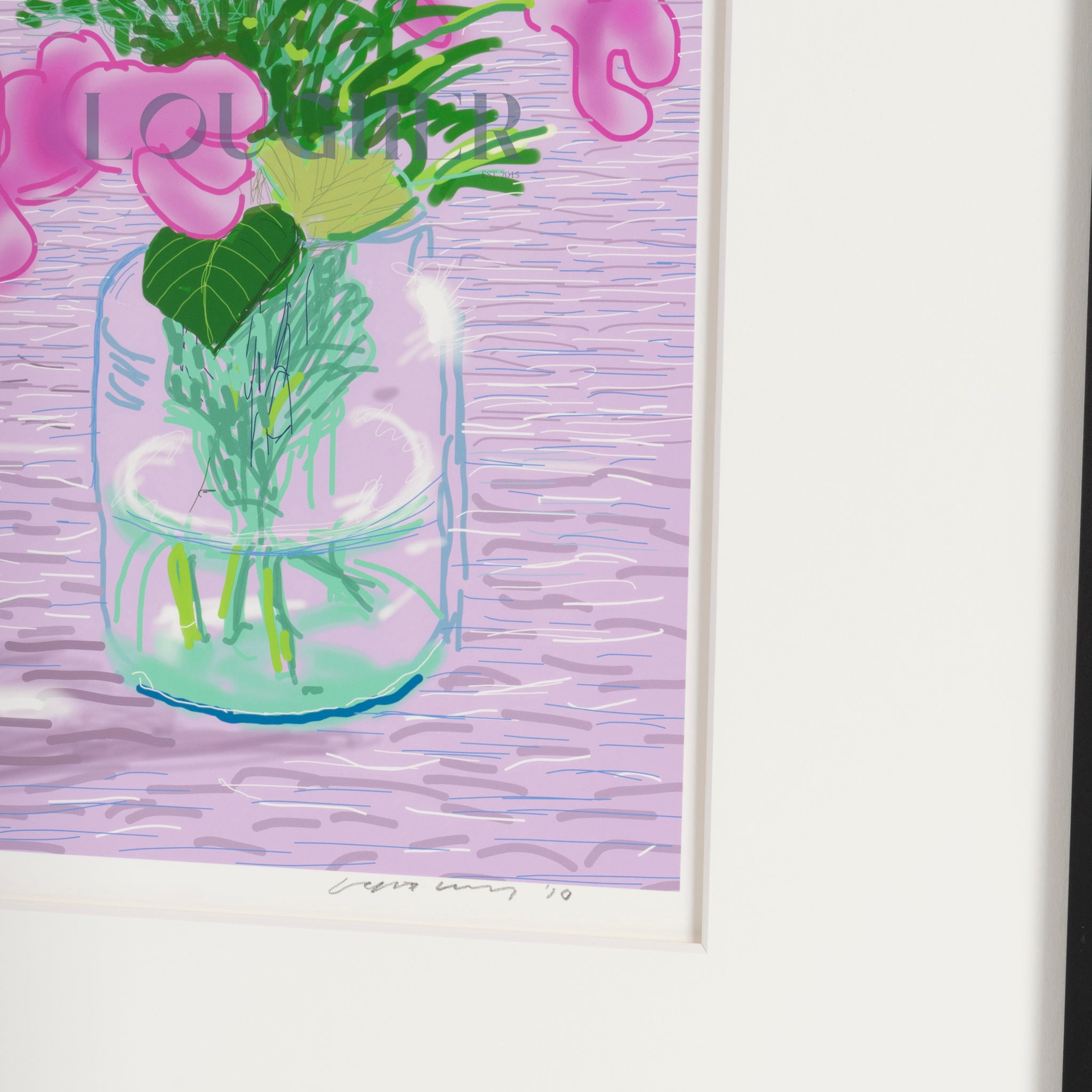
Signature: Signed, dated 2012 and numbered 11/25 on the bottom edge
Provenance: Annely Juda Fine Art, London; acquired from the above by the present owner
Auction reference: Sotheby's, Contemporary Day Auction, Lot 321
Sotheby's confirms the medium, date, dimensions, edition number and provenance for the specific work.
Availablity at Lougher Contemporary
Life represents a compelling opportunity to acquire a scarce example of David Hockney's early iPad practice. Created in 2012 and limited to just 25 examples, it captures the moment when one of Britain's most important artists translated his longstanding commitment to drawing into a new digital medium.
For collectors, its importance lies not simply in the technology used to make it, but in how naturally Hockney absorbed that technology into an artistic language developed over decades.
Lougher Contemporary's dedicated David Hockney collection offers collectors access to works spanning his printmaking and edition practice, including digital works and iPad drawings.
Collectors can also explore Lougher's wider prints and editions collection and broader contemporary art selection.
For collectors seeking a specific Hockney work or edition, Lougher Contemporary can also assist with bespoke sourcing.
Start Collecting David Hockney